
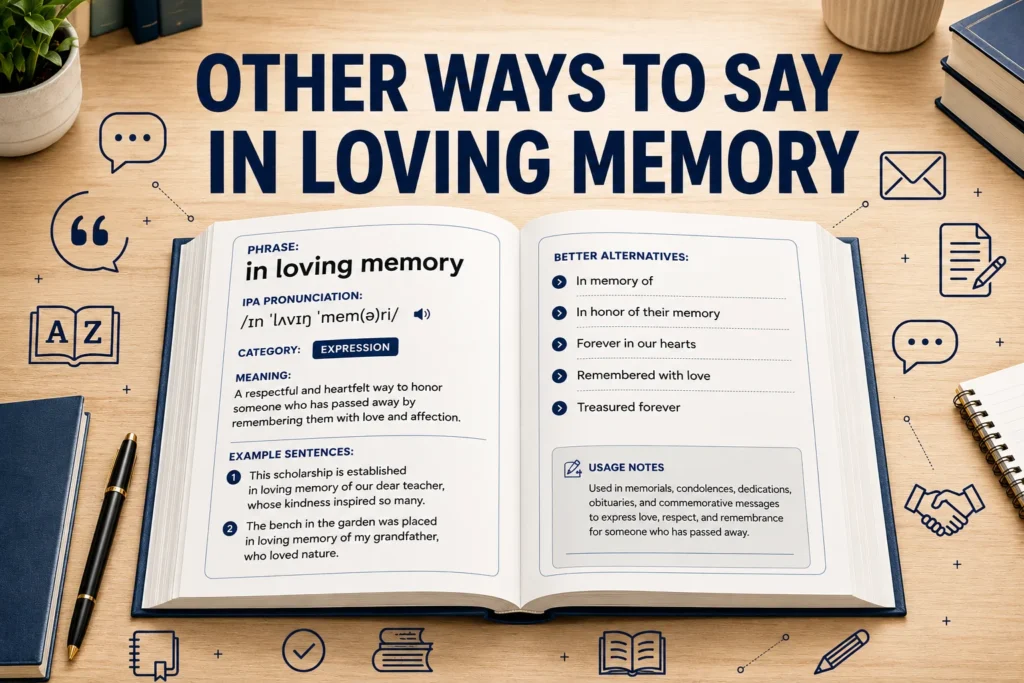
The phrase “in loving memory” is one of the most meaningful ways to honor someone who has passed away. It expresses affection, remembrance, and respect while acknowledging the lasting impact a person has had on family, friends, colleagues, or a community. Although it is widely used on memorial cards, sympathy messages, tribute pages, and commemorative events, many people look for other ways to say “in loving memory” to make their message feel more personal, formal, or appropriate for a specific setting.
Whether you’re writing a condolence email, preparing a workplace tribute, creating a memorial program, sending flowers, or sharing a remembrance on social media, choosing the right words matters. The best alternative depends on your relationship with the deceased, the tone you want to convey, and the audience receiving the message.
This guide explores the meaning of “in loving memory,” when to use it, and the best professional, formal, and heartfelt alternatives. Each option includes its tone, ideal use case, and a practical example to help you express sympathy and remembrance with care and respect.
What Does “In Loving Memory” Mean?
“In loving memory” is a tribute phrase used to honor and remember someone who has died. It conveys enduring love, respect, and remembrance, emphasizing that the person’s life and legacy continue to be cherished.
Literal Meaning
The phrase literally means:
“Remembering someone with love, affection, and lasting respect.”
It reflects the emotional bond that continues even after a person’s passing.
Example:
This tree was planted in loving memory of our beloved grandfather.
Tone of “In Loving Memory”
The phrase has a tone that is:
- Respectful
- Compassionate
- Heartfelt
- Warm
- Dignified
- Timeless
Because of its gentle and sincere nature, it is appropriate for both personal and professional memorial messages.
Purpose of Using “In Loving Memory”
People use “in loving memory” to:
- Honor someone’s life
- Express lasting affection
- Pay tribute to a loved one
- Dedicate gifts or donations
- Introduce memorial speeches
- Write sympathy cards
- Create memorial plaques and programs
- Recognize a colleague or community member
The phrase helps preserve a person’s memory while offering comfort to those who continue to remember them.
Emotional Context
Unlike ordinary expressions of sympathy, “in loving memory” carries deep emotional significance. It communicates not only sadness over a loss but also gratitude, admiration, and appreciation for the person’s life.
For this reason, it is commonly used in:
- Funeral programs
- Memorial services
- Obituaries
- Sympathy cards
- Charity donations
- Workplace tributes
- Anniversary remembrances
- Scholarship dedications
Its enduring tone makes it suitable for formal ceremonies as well as personal messages.
Examples of “In Loving Memory”
Example 1
This scholarship is established in loving memory of Sarah Williams, whose kindness inspired everyone around her.
Example 2
We dedicate today’s event in loving memory of our dear colleague, whose leadership will never be forgotten.
Example 3
Donations may be made in loving memory of James Carter to support cancer research.
Example 4
Our family gathered today in loving memory of our beloved mother.
Example 5
This bench was placed in loving memory of those who served our community with honor.
When Is It Appropriate to Use “In Loving Memory”?
The phrase works well in many respectful situations. Understanding where it fits best ensures your message feels sincere and appropriate.
1. Memorial and Tribute Messages
This is the most common setting.
Example:
We gather today in loving memory of our cherished friend and mentor.
Best for:
- Funeral programs
- Memorial ceremonies
- Anniversary tributes
- Dedication events
2. Workplace Communication
Organizations often honor employees, founders, or retired leaders with respectful memorial messages.
Example:
We remember John Smith in loving memory and thank him for his years of dedicated service.
Appropriate for:
- Internal announcements
- Company newsletters
- Memorial pages
- Retirement tributes after passing
- Scholarship funds
3. Client and Community Communication
Businesses sometimes acknowledge the passing of valued clients, partners, or community members.
Example:
Our thoughts remain with the family as we honor Michael Thompson in loving memory.
This wording remains compassionate while maintaining a professional tone.
4. Networking and Professional Organizations
Professional associations often recognize influential members through memorial posts or annual events.
Example:
This year’s leadership award is presented in loving memory of Dr. Emily Parker.
5. Charitable Donations and Memorial Gifts
Many charities accept gifts dedicated to someone who has passed away.
Example:
This donation is made in loving memory of Robert Johnson.
The phrase respectfully acknowledges the reason for the contribution.
30 Alternatives to “In Loving Memory”
Below are thoughtful alternatives grouped by tone and purpose.
Professional Alternatives
1. In Memory Of
Tone: Professional and timeless
Best use: Memorial plaques, workplace tributes, charitable donations
Example:
This award is presented in memory of our respected colleague.
2. In Honor of Their Memory
Tone: Respectful
Best use: Formal commemorations
Example:
We plant this tree in honor of their memory.
3. Remembering With Gratitude
Tone: Appreciative
Best use: Company newsletters and community events
Example:
Today we are remembering with gratitude a remarkable leader.
4. Honoring a Cherished Life
Tone: Warm and respectful
Best use: Memorial speeches
Example:
We gather today honoring a cherished life filled with compassion.
5. Forever Remembered
Tone: Emotional but professional
Best use: Memorial displays and plaques
Example:
Forever remembered, forever appreciated.
6. Remembered With Respect
Tone: Formal
Best use: Professional organizations
Example:
He will always be remembered with respect for his dedication.
Formal Alternatives
7. In Reverent Memory
Tone: Highly formal
Best use: Religious and ceremonial events
Example:
We gather in reverent memory of those who served.
8. In Everlasting Remembrance
Tone: Elegant
Best use: Memorial programs
Example:
This service is held in everlasting remembrance of our loved ones.
9. In Tribute To
Tone: Professional
Best use: Dedications and ceremonies
Example:
This scholarship is established in tribute to an inspiring educator.
10. In Commemoration Of
Tone: Official
Best use: Public memorials
Example:
This monument stands in commemoration of those who sacrificed.
11. With Deepest Respect
Tone: Formal
Best use: Corporate memorial statements
Example:
We honor her legacy with deepest respect.
12. In Lasting Tribute
Tone: Dignified
Best use: Memorial events
Example:
This garden remains in lasting tribute to our founder.
Heartfelt and Friendly Alternatives
13. Forever in Our Hearts
Tone: Warm and emotional
Best use: Family tributes
Example:
You will remain forever in our hearts.
14. Always Remembered
Tone: Gentle
Best use: Sympathy cards
Example:
You are always remembered with love.
15. Never Forgotten
Tone: Strong and meaningful
Best use: Memorial inscriptions
Example:
Your kindness will be never forgotten.
16. Lovingly Remembered
Tone: Compassionate
Best use: Obituaries
Example:
She is lovingly remembered by family and friends
17. Remembered With Love
Tone: Warm
Best use: Memorial cards
Example:
He is remembered with love every day.
18. Treasured Forever
Tone: Personal
Best use: Family memorials
Example:
Your memories are treasured forever.
Email and Written Message Alternatives
19. We Fondly Remember
Tone: Professional and kind
Best use: Workplace emails
Example:
We fondly remember Susan’s dedication and generosity.
20. We Honor Their Legacy
Tone: Respectful
Best use: Company announcements
Example:
Today we honor their legacy of service and excellence.
21. Their Memory Lives On
Tone: Hopeful
Best use: Memorial newsletters
Example:
Through their achievements, their memory lives on.
22. Celebrating a Life Well Lived
Tone: Positive
Best use: Celebration of life events
Example:
We are celebrating a life well lived and the joy it brought to others.
23. Remembering Their Legacy
Tone: Professional
Best use: Organizational tributes
Example:
We continue remembering their legacy through our annual award.
24. Honoring Their Life and Contributions
Tone: Formal
Best use: Workplace memorials
Example:
Today we are honoring their life and contributions to our organization.
Workplace and Organizational Alternatives
25. In Appreciation of a Lasting Legacy
Tone: Professional
Best use: Corporate memorial events
Example:
This recognition is presented in appreciation of a lasting legacy.
26. Dedicated to Their Memory
Tone: Respectful
Best use: Memorial projects
Example:
This conference room is dedicated to their memory.
27. Remembering an Extraordinary Life
Tone: Inspirational
Best use: Award ceremonies
Example:
Today we are remembering an extraordinary life that inspired countless people.
28. A Lasting Tribute
Tone: Elegant
Best use: Memorial plaques
Example:
This sculpture serves as a lasting tribute to our founder.
29. Preserving Their Legacy
Tone: Professional
Best use: Foundations and scholarships
Example:
Our mission continues preserving their legacy through education.
30. In Celebration of Their Legacy
Tone: Warm and uplifting
Best use: Memorial events and charitable initiatives
Example:
Today’s fundraiser is held in celebration of their legacy and lifelong commitment to the community.
Quick Comparison Table
The table below compares popular alternatives to “in loving memory” based on tone and the situations where they work best.
| Alternative | Tone | Best Use |
| In Memory Of | Professional | Memorial plaques, donations, tributes |
| In Honor of Their Memory | Respectful | Formal ceremonies |
| Remembering With Gratitude | Appreciative | Workplace newsletters |
| Honoring a Cherished Life | Warm | Memorial speeches |
| Forever Remembered | Emotional | Memorial displays |
| Remembered With Respect | Formal | Corporate tributes |
| In Reverent Memory | Highly formal | Religious services |
| In Everlasting Remembrance | Elegant | Funeral programs |
| In Tribute To | Professional | Awards and dedications |
| In Commemoration Of | Official | Public memorials |
| With Deepest Respect | Formal | Corporate condolences |
| In Lasting Tribute | Dignified | Memorial events |
| Forever in Our Hearts | Heartfelt | Family memorials |
| Always Remembered | Gentle | Sympathy cards |
| Never Forgotten | Meaningful | Memorial inscriptions |
| Lovingly Remembered | Compassionate | Obituaries |
| Remembered With Love | Warm | Memorial cards |
| Treasured Forever | Personal | Family tributes |
| We Fondly Remember | Professional | Workplace emails |
| We Honor Their Legacy | Respectful | Company announcements |
| Their Memory Lives On | Hopeful | Memorial newsletters |
| Celebrating a Life Well Lived | Positive | Celebration of life events |
| Remembering Their Legacy | Professional | Organizational tributes |
| Honoring Their Life and Contributions | Formal | Workplace memorials |
| Dedicated to Their Memory | Respectful | Memorial projects |
| A Lasting Tribute | Elegant | Memorial plaques |
| Preserving Their Legacy | Professional | Foundations and scholarships |
| In Celebration of Their Legacy | Uplifting | Charity events |
Email Examples
Choosing the right wording depends on your audience. Here are examples for common professional situations.
1. Client Condolence Email
Subject: Our Deepest Sympathy
Dear Mr. Wilson,
We were saddened to learn of your recent loss.
Please accept our sincere condolences. We join you in remembering with gratitude the remarkable life and kindness of your loved one.
Our thoughts are with you and your family during this difficult time.
Kind regards,
The ABC Team
Why it works: It is compassionate, respectful, and appropriate for professional relationships.
2. Email to Employees
Subject: Honoring Our Colleague
Dear Team,
It is with great sadness that we share the passing of our colleague, Jennifer Smith.
Today we honor her legacy of professionalism, kindness, and dedication. Jennifer’s contributions to our organization will continue to inspire us.
Our thoughts remain with her family and loved ones.
Why it works: It recognizes the employee’s impact while maintaining a professional tone.
3. Email to a Colleague
Hi David,
I wanted to let you know that we’ll be observing a moment of silence tomorrow in memory of Michael.
His friendship and commitment to our team will always be appreciated.
Thank you.
Why it works: It is simple, sincere, and respectful.
4. Customer Service Message
Dear Ms. Taylor,
On behalf of everyone at Green Valley Bank, we extend our heartfelt condolences.
We remember with respect your loved one’s lasting impact and hope our support brings you comfort during this time.
Please let us know if we can assist with any account-related matters.
Sincerely,
Customer Support
Why it works: It balances empathy with professionalism.
5. Networking Message
Dear Professor Adams,
I was deeply saddened to hear about Dr. Wilson’s passing.
His mentorship influenced many professionals, and he will be remembered with gratitude for his dedication to education.
My sincere condolences.
Best regards,
Emma
Why it works: It respectfully acknowledges the individual’s legacy while remaining appropriate for a professional relationship.
6. Meeting or Event Follow-Up
Dear Attendees,
Thank you for joining today’s memorial gathering.
Together, we celebrated a remarkable life and honored a cherished legacy that continues to inspire our community.
We appreciate your presence and support.
Kind regards,
Event Committee
Why it works: It closes the event with warmth and appreciation.
Common Mistakes When Using “In Loving Memory”
Although “in loving memory” is a timeless expression, it should be used thoughtfully. Avoid these common mistakes to ensure your message feels sincere and appropriate.
1. Overusing the Phrase
Repeating “in loving memory” several times in the same message can make the writing feel repetitive.
Less effective:
In loving memory of John…
We gather in loving memory…
This event is in loving memory…
Better:
Alternate with phrases such as:
- In honor of their memory
- Remembering with gratitude
- Honoring their legacy
- Forever remembered
This creates a smoother and more engaging tribute.
2. Choosing a Tone That Doesn’t Fit
A highly emotional phrase may not suit every professional setting.
Too personal for a corporate announcement:
Forever in our hearts.
Better:
We honor their legacy.
Choose language that reflects your audience and purpose.
3. Using Casual Language in Formal Tributes
Expressions that are too informal can reduce the dignity of a memorial message.
Less appropriate:
We’ll always miss you.
More appropriate:
Your contributions will always be remembered.
Formal settings benefit from respectful and timeless wording.
4. Forgetting the Person’s Legacy
A tribute should recognize more than the loss—it should celebrate the person’s life and impact.
Instead of writing only:
In loving memory.
Add meaningful context:
In loving memory of a dedicated teacher whose kindness shaped generations of students.
Specific details make tributes more personal and memorable.
5. Mixing Positive Celebrations with Solemn Messages Incorrectly
Words like “celebration” can be uplifting, but they may not suit every culture or ceremony.
For traditional funeral announcements, phrases like “in remembrance of” or “in tribute to” are often more appropriate.
6. Ignoring Basic Email Etiquette
When sending a memorial or condolence email:
- Begin with a respectful greeting.
- Express sympathy sincerely.
- Keep the message concise.
- Avoid overly casual language.
- Close with a thoughtful sign-off.
Example:
Please accept our heartfelt condolences. We honor your loved one’s remarkable legacy and are thinking of you during this difficult time.
Related Phrases
These expressions share similar meanings with “in loving memory” and can be used in memorials, sympathy messages, workplace tributes, or commemorative events.
| Phrase | Meaning | Example |
| In Memory Of | Honors someone who has passed away. | This scholarship is awarded in memory of our founder. |
| In Honor Of | Pays tribute to someone’s life or achievements. | We gathered in honor of her remarkable service. |
| In Tribute To | Publicly recognizes a person’s impact. | This concert is held in tribute to a beloved musician. |
| Forever Remembered | Their memory will never fade. | She will be forever remembered by our team. |
| Never Forgotten | Emphasizes lasting remembrance. | His generosity will never be forgotten. |
| Remembered With Love | Expresses affection and remembrance. | He is remembered with love by family and friends. |
| Always in Our Hearts | Highlights an enduring emotional bond. | You will always be in our hearts. |
| Honoring Their Legacy | Focuses on lasting achievements. | We continue honoring their legacy through this award. |
| Remembering With Gratitude | Reflects appreciation. | We remember her with gratitude every day. |
| With Deepest Respect | Shows admiration and honor. | We pay tribute with deepest respect. |
| Dedicated to Their Memory | Marks a lasting dedication. | This library is dedicated to their memory. |
| In Everlasting Remembrance | Formal and ceremonial. | We gather in everlasting remembrance today. |
| A Lasting Tribute | Represents an enduring memorial. | This monument is a lasting tribute. |
| Cherished Forever | Highlights enduring affection. | Your memory will be cherished forever. |
| In Peaceful Remembrance | Conveys calm reflection. | We meet in peaceful remembrance of those we lost. |
| Celebrating Their Legacy | Focuses on achievements and influence. | We are celebrating their legacy of service. |
| Honoring a Life Well Lived | Celebrates a meaningful life. | Today’s ceremony honors a life well lived. |
“In Loving Memory” vs. Other Common Alternatives
The best alternative depends on your audience, the level of formality, and the purpose of your message.
| Phrase | Tone | Formality | Best Use |
| In Loving Memory | Heartfelt | Medium | Sympathy cards, memorials |
| In Memory Of | Neutral | High | Plaques, donations, dedications |
| In Tribute To | Respectful | High | Awards, ceremonies |
| Honoring Their Legacy | Professional | Medium | Workplace communications |
| Remembering With Gratitude | Appreciative | Medium | Newsletters, speeches |
| Forever Remembered | Emotional | Medium | Memorial displays |
| Never Forgotten | Strong | Medium | Inscriptions |
| Dedicated to Their Memory | Respectful | High | Buildings, scholarships |
| In Commemoration Of | Official | Very High | Public monuments |
| Celebrating a Life Well Lived | Positive | Medium | Celebration of life events |
Which Alternative Should You Choose?
- For memorial plaques: In Memory Of
- For workplace tributes: We Honor Their Legacy
- For sympathy cards: Forever in Our Hearts
- For charitable donations: Dedicated to Their Memory
- For formal ceremonies: In Tribute To or In Commemoration Of
- For celebration of life events: Celebrating a Life Well Lived
Selecting wording that reflects both the occasion and the audience helps you express remembrance with sincerity, dignity, and compassion.
Cultural Usage of “In Loving Memory”
The phrase “in loving memory” is widely recognized across English-speaking countries. However, the preferred wording may vary depending on culture, workplace norms, and the purpose of the message. Understanding these differences helps you choose language that feels appropriate and respectful.
US English
In the United States, “in loving memory” is one of the most common memorial expressions. It appears frequently in:
- Funeral programs
- Sympathy cards
- Obituaries
- Charity donations
- Memorial websites
- Workplace tribute announcements
Americans also commonly use alternatives such as:
- In memory of
- Forever remembered
- Honoring their legacy
- Celebrating a life well lived
- Remembered with love
These phrases balance warmth with respect.
UK English
In British English, memorial language often leans slightly more formal and understated.
Common expressions include:
- In memory of
- In tribute to
- In remembrance
- Remembered with respect
- Honouring their memory
- With deepest respect
These alternatives suit memorial services, workplace announcements, and official communications.
Corporate Communication
Many organizations acknowledge the passing of employees, founders, clients, or business partners.
Instead of highly emotional wording, companies often prefer professional alternatives such as:
- We honor their legacy.
- We remember their contributions.
- Their dedication will always be remembered.
- In recognition of their service.
- We pay tribute to their lasting impact.
These expressions respectfully recognize the individual while maintaining a professional tone.
Customer Service
Businesses occasionally send condolence messages to customers or their families.
Professional wording includes:
- Please accept our sincere condolences.
- We remember your loved one with respect.
- Our thoughts are with you during this difficult time.
- We honor their memory.
- Wishing you comfort and peace.
These phrases communicate empathy without sounding overly personal.
Networking and Professional Relationships
When writing to busine*s contacts or professional acquaintances, respectful language is often the best choice.
Suitable expressions include:
- We remember their remarkable contributions.
- Their legacy continues to inspire.
- They will be fondly remembered.
- We honor their achievements.
- Their influence will not be forgotten.
These alternatives acknowledge the person’s impact while remaining appropriate for professional communication.
(FAQs)
What is another way to say “in l*ving memory”?
Some of the best alternatives include:
- In memory of
- In tribute to
- Honoring their legacy
- Forever remembered
- Remembered with love
- Always in our hearts
- Dedicated to their memory
- In everlasting remembrance
Each phrase offers a slightly different tone while expressing remembrance and respect.
Is “in loving memory” appropriate for professional writing?
Yes. It is appropriate for workplace memorials, condolence emails, company newsletters, and tribute events. For more formal business communication, phrases such as “honoring their legacy” or “in memory of” may be better suited.
What is the most formal alternative to “in loving memory”?
Formal alternatives include:
- In commemoration of
- In tribute to
- In reverent memory
- In everlasting remembrance
- With deepest respect
These expressions are ideal for official ceremonies, public memorials, and organizational announcements.
What should I write instead of “in loving memory” on a memorial plaque?
Good options include:
- In memory of
- Forever remembered
- A lasting tribute
- Dedicated to their memory
- Honoring a cherished life
Choose wording that reflects the tone and purpose of the memorial.
Which alternative works best in a sympathy card?
For personal sympathy cards, warm expressions are often most meaningful, such as:
- Forever in our hearts
- Remembered with love
- Always remembered
- Cherished forever
- Never forgotten
These phrases express affection and lasting remembrance.
How do I honor someone’s memory in a business email?
Keep your message sincere and professional. You might write:
We honor their legacy and extend our heartfelt condolences to their family.
Or:
We remember their dedication and the positive impact they made on our organization.
Is “in memory of” the same as “in loving memory”?
They are similar but differ slightly in tone.
- In loving memory emphasizes affection and emotional connection.
- In memory of is more neutral and suitable for both personal and formal contexts.
Both are widely accepted.
Can I use “in loving memory” for a colleague?
Yes. It is appropriate if your organization prefers a warm and heartfelt message. If a more formal tone is needed, alternatives such as “we honor their legacy” or “remembered with respect” are excellent choices.
What are some respectful memorial phrases for workplace communication?
Examples include:
- We honor their legacy.
- Remembering their contributions.
- In tribute to a valued colleague.
- Their dedication will always be remembered.
- We remember them with gratitude.
These expressions maintain professionalism while showing genuine respect.
What is the best synonym for “in loving memory”?
There is no single perfect synonym because each phrase has a unique nuance. However, the closest alternatives are:
- In memory of
- In tribute to
- Remembered with love
- Forever remembered
- Dedicated to their memory
Choose the phrase that best fits the audience and occasion.
Final Summary
Finding the right alternative to “in loving memory” allows you to honor someone’s life with sincerity, compassion, and respect. While the original phrase remains timeless and meaningful, different situations call for different expressions. For professional settings, “We h*nor their legacy,” “In memory of,” and “Remembering their c*ntributions” work especially well. For formal ceremonies, “In tribute to” and “In commemoration of” provide a dignified tone. For personal messages, heartfelt expressions like “Forever in our hearts” and “Remembered with love” convey warmth and affection. By choosing words that match the occasion, audience, and relationship, you can create a thoughtful tribute that celebrates a life well lived while offering comfort to those who continue to remember.
Conclusion
Words have the power to preserve memories and express emotions that are often difficult to put into writing. Although “in loving memory” remains one of the most heartfelt tribute phrases, using thoughtful alternatives can make your message more personal, professional, or appropriate for a particular audience. Whether you’re preparing a memorial program, writing a condolence email, creating a workplace tribute, or dedicating a charitable gift, choosing respectful language helps honor a person’s life with dignity and compassion. The best memorial messages focus not only on loss but also on celebrating a lasting legacy, inspiring others, and keeping cherished memories alive for generations to come.