Looking for other ways to say “pretty” in professional writing, business emails, conversations, or everyday English? You’re not alone. While “pretty” is a common and versatile adjective, using it repeatedly can make your writing sound repetitive. Whether you’re complimenting a colleague, describing a design, praising a presentation, or writing marketing content, choosing a more precise alternative helps your message sound polished, natural, and engaging.
The best synonym depends on the context. Some alternatives are formal and suitable for workplace communication, while others are friendly, expressive, or ideal for casual conversations. In this guide, you’ll discover 30 professional, formal, and friendly alternatives to “pretty”, complete with meanings, tone, best use cases, and real-world examples.
What Does “Pretty” Mean?
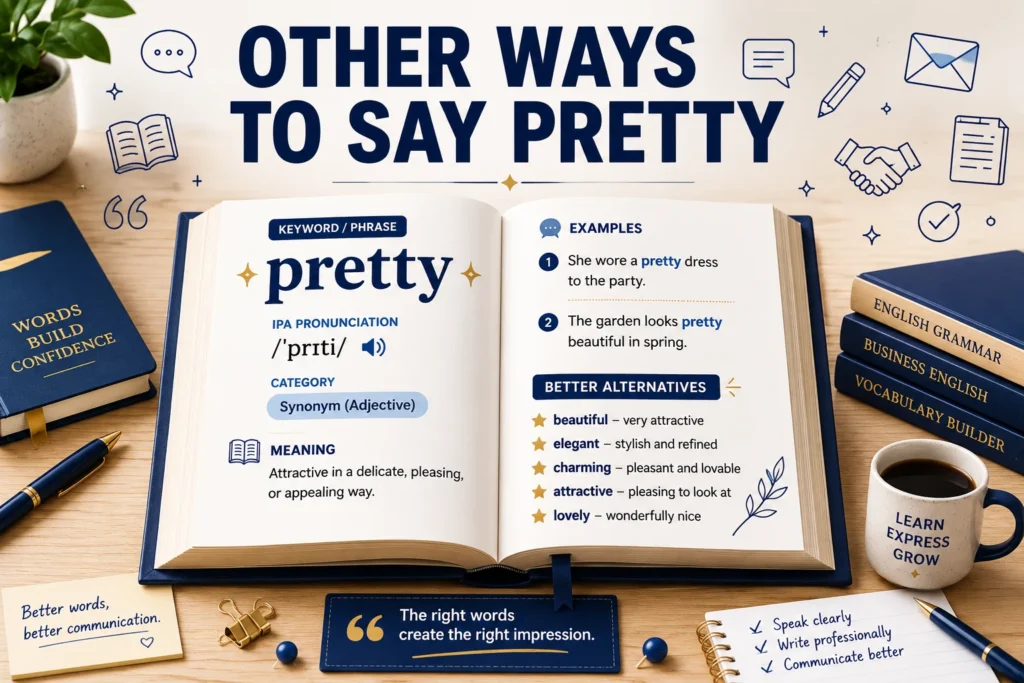
The word “pretty” usually describes someone or something that is attractive, pleasing, appealing, or visually beautiful. Depending on the context, it can also mean fairly or quite, as in “pretty good” or “pretty busy.”
In this article, we focus on “pretty” as a way to describe beauty, appearance, or attractiveness.
Literal Meaning
“Pretty” means:
- Attractive in a pleasant or delicate way
- Visually appealing
- Nice-looking
- Charming
Examples:
- She wore a pretty blue dress.
- That’s a pretty garden.
- The office has a pretty view of the city.
Tone
The word “pretty” generally sounds:
- Friendly
- Positive
- Polite
- Casual
- Complimentary
Because it is less intense than words like “beautiful” or “stunning,” it works well in both personal and professional settings.
Purpose
People use “pretty” to:
- Give compliments
- Describe attractive people
- Praise places or objects
- Describe appealing designs
- Express admiration politely
Emotional Context
Calling something “pretty” usually communicates appreciation without sounding exaggerated.
Example:
The presentation has a pretty design.
This compliment feels warm, genuine, and professional.
Professional Usage
Although “pretty” is acceptable in many situations, choosing a more specific synonym often makes your communication sound stronger and more refined.
Business Emails
Example:
Your proposal includes an elegant layout that is easy to follow.
Workplace Communication
Example:
The new office design looks modern and attractive.
Client Communication
Example:
The updated branding has a sophisticated appearance.
Networking
Example:
Your portfolio features beautiful visual design.
Customer Service
Example:
We’re glad you enjoyed the attractive packaging of our product.
15 Professional & Polite Alternatives to “Pretty”
1. Beautiful
Tone: Warm and complimentary
Best Use: General compliments, artwork, scenery, and special occasions
Example:
The conference venue was beautiful and professionally designed.
2. Attractive
Tone: Professional
Best Use: Business, marketing, products, and design
Example:
The website has an attractive layout that improves the user experience.
3. Elegant
Tone: Sophisticated
Best Use: Fashion, branding, presentations, and interior design
Example:
Your presentation features an elegant color palette.
4. Charming
Tone: Friendly
Best Use: People, cafés, neighborhoods, and events
Example:
The hotel has a charming atmosphere.
5. Lovely
Tone: Warm and polite
Best Use: Everyday compliments and emails
Example:
That’s a lovely idea for the team celebration.
6. Stunning
Tone: Strong compliment
Best Use: Photography, architecture, and exceptional designs
Example:
The final marketing campaign looks stunning.
7. Gorgeous
Tone: Enthusiastic
Best Use: Fashion, beauty, and creative work
Example:
The brochure has gorgeous illustrations.
8. Appealing
Tone: Professional
Best Use: Marketing, advertising, and product descriptions
Example:
The updated packaging is more appealing to customers.
9. Delightful
Tone: Positive and refined
Best Use: Hospitality, customer service, and experiences
Example:
We had a delightful discussion during the networking event.
10. Graceful
Tone: Elegant
Best Use: People, movement, and artistic performances
Example:
Her graceful presentation impressed the audience.
11. Refined
Tone: Formal
Best Use: Professional design, writing, and branding
Example:
The new logo has a refined appearance.
12. Sophisticated
Tone: Professional
Best Use: Corporate branding and luxury products
Example:
The company’s new website has a sophisticated design.
13. Stylish
Tone: Modern
Best Use: Fashion, offices, and creative industries
Example:
The office reception area looks stylish and welcoming.
14. Eye-Catching
Tone: Marketing-focused
Best Use: Advertisements, graphics, and websites
Example:
The advertisement uses eye-catching visuals.
15. Attractive-Looking
Tone: Neutral and descriptive
Best Use: Products, packaging, and presentations
Example:
The product has attractive-looking packaging that stands out on store shelves.
Part 1 Summary
The word “pretty” is simple, friendly, and widely understood, but it isn’t always the most precise choice. Depending on your audience and purpose, alternatives such as “elegant,” “attractive,” “appealing,” “stylish,” or “sophisticated” can make your writing sound more professional and descriptive. Choosing the right synonym helps you give compliments naturally, describe designs accurately, and improve both business and everyday communication.
16. Exquisite
Tone: Elegant and luxurious
Best Use: Fine art, jewelry, fashion, luxury brands, and architecture
Example:
The hotel lobby features exquisite interior design.
17. Magnificent
Tone: Powerful and impressive
Best Use: Buildings, landscapes, events, and large-scale projects
Example:
The company’s new headquarters is magnificent.
18. Splendid
Tone: Formal and positive
Best Use: Professional compliments and written communication
Example:
You did a splendid job organizing the conference.
19. Polished
Tone: Professional
Best Use: Presentations, reports, documents, and branding
Example:
The proposal has a polished and professional appearance.
20. Tasteful
Tone: Sophisticated
Best Use: Interior design, branding, fashion, and decor
Example:
The office renovation features tasteful decorations.
21. Impressive
Tone: Professional and complimentary
Best Use: Business achievements, presentations, and designs
Example:
Your portfolio contains impressive visual work.
22. Captivating
Tone: Strong and engaging
Best Use: Photography, storytelling, advertising, and speeches
Example:
The presentation included captivating visuals.
23. Radiant
Tone: Warm and expressive
Best Use: Personal compliments and celebrations
Example:
She looked radiant during the award ceremony.
24. Classy
Tone: Friendly yet professional
Best Use: Fashion, restaurants, branding, and events
Example:
The restaurant has a classy atmosphere.
25. Neat
Tone: Casual and workplace-friendly
Best Use: Office organization, documents, and workspace
Example:
Your report has a neat and organized layout.
26. Well-Designed
Tone: Professional
Best Use: Websites, presentations, apps, and products
Example:
The website is well-designed and easy to navigate.
27. Visually Appealing
Tone: Professional
Best Use: Marketing, graphic design, and presentations
Example:
The brochure is visually appealing and easy to read.
28. Pleasing
Tone: Neutral
Best Use: Customer feedback, products, and environments
Example:
The updated office has a pleasing color scheme.
29. Alluring
Tone: Elegant and persuasive
Best Use: Luxury marketing, travel, and lifestyle writing
Example:
The resort offers an alluring beachfront experience.
30. Striking
Tone: Bold and descriptive
Best Use: Architecture, fashion, photography, and branding
Example:
The building features a striking modern design.
Quick Comparison Table
| Alternative | Tone | Best Use |
| Beautiful | Warm | General compliments |
| Attractive | Professional | Business and marketing |
| Elegant | Sophisticated | Branding and presentations |
| Charming | Friendly | Places and people |
| Lovely | Warm | Everyday communication |
| Stunning | Strong | Creative work |
| Appealing | Professional | Products and advertising |
| Sophisticated | Professional | Corporate branding |
| Stylish | Modern | Fashion and offices |
| Well-Designed | Professional | Websites and presentations |
| Visually Appealing | Professional | Marketing materials |
| Polished | Professional | Reports and documents |
Email Examples
1. Client Email
Subject: Branding Presentation
Dear Sarah,
Thank you for your feedback. We have updated the proposal with a more elegant and professional design that better reflects your brand.
Kind regards,
James
2. Email to a Manager
Hello David,
I’ve completed the presentation. The final version has a polished layout and improved visuals for tomorrow’s meeting.
3. Email to a Colleague
Hi Emma,
Great work on the new brochure! The design looks stylish and visually appealing.
4. Customer Email
Dear Customer,
We’re delighted that you found our packaging attractive and easy to use. Thank you for your valuable feedback.
5. Networking Email
Hello Michael,
It was a pleasure meeting you yesterday. I was impressed by your company’s sophisticated branding and innovative ideas.
6. Meeting Follow-up
Thank you for attending today’s meeting.
Your presentation was engaging, well-designed, and highly informative. We look forward to working with you.
Common Mistakes When Using “Pretty”
1. Using “Pretty” in Every Compliment
Instead of repeating “pretty,” choose more specific words like:
- Elegant
- Attractive
- Stylish
- Beautiful
- Sophisticated
2. Choosing Informal Words in Business Communication
Avoid overly casual compliments like:
That’s pretty cool.
Instead, say:
That’s an impressive solution.
or
The design is visually appealing.
3. Using Strong Words Too Often
Words like “stunning” or “gorgeous” can lose impact if used repeatedly. Reserve them for exceptional situations.
4. Using the Wrong Synonym
Different situations require different vocabulary.
Instead of:
The report is beautiful.
Use:
The report is polished and well-organized.
5. Ignoring Professional Tone
When communicating with clients or executives, prefer words such as:
- Refined
- Sophisticated
- Polished
- Elegant
- Professional-looking
Related Phrases
| Phrase | Meaning | Example |
| Beautiful | Very attractive | The office has beautiful décor. |
| Attractive | Pleasing to look at | The brochure is attractive. |
| Elegant | Stylish and refined | She wore an elegant suit. |
| Sophisticated | Modern and polished | The branding looks sophisticated. |
| Stylish | Fashionable | The reception area is stylish. |
| Well-designed | Planned effectively | The website is well-designed. |
| Visually appealing | Attractive visually | The presentation is visually appealing. |
| Graceful | Smooth and elegant | She gave a graceful speech. |
| Charming | Pleasant | The café has a charming atmosphere. |
| Delightful | Enjoyable | It was a delightful experience. |
| Refined | High quality | The design feels refined. |
| Tasteful | Good aesthetic sense | The decorations are tasteful. |
| Captivating | Holds attention | The video is captivating. |
| Eye-catching | Easily noticed | The advertisement is eye-catching. |
| Striking | Very noticeable | The artwork is striking. |
| Appealing | Attractive | The product is appealing to customers. |
Phrase Comparison
| Phrase | Formality | Tone | Best Use |
| Pretty | Medium | Friendly | Everyday descriptions |
| Beautiful | Medium | Warm | General compliments |
| Attractive | High | Professional | Marketing and business |
| Elegant | High | Sophisticated | Presentations and branding |
| Stylish | Medium | Modern | Fashion and workplaces |
| Sophisticated | High | Professional | Corporate communication |
| Refined | High | Formal | Luxury branding |
| Well-Designed | High | Professional | Products and websites |
| Polished | High | Professional | Reports and presentations |
| Visually Appealing | High | Neutral | Marketing materials |
Part 2 Summary
Using a wider variety of words instead of “pretty” helps your communication become more precise and professional. Whether you’re describing a presentation, website, office, product, or person, selecting the right synonym creates a stronger impression. Expressions such as “elegant,” “polished,” “well-designed,” “visually appealing,” and “sophisticated” are especially effective in workplace communication, business emails, and client interactions because they sound polished while remaining natural and easy to understand.
Cultural Usage
The word “pretty” is common in English, but the preferred alternative often depends on the country, audience, and level of formality. In professional communication, choosing a more specific word can make your writing sound more polished and appropriate.
1. US English
In American English, “pretty” is frequently used in everyday conversation to describe people, places, products, and designs. In business settings, however, professionals often choose more descriptive words.
Common Alternatives
- Attractive
- Beautiful
- Elegant
- Stylish
- Well-designed
- Appealing
Example
The new website has an attractive and modern design.
2. UK English
British English often favors more refined and understated vocabulary, especially in professional writing.
Common Alternatives
- Lovely
- Elegant
- Tasteful
- Charming
- Refined
- Sophisticated
Example
The conference venue was elegant and tastefully decorated.
3. Corporate Communication
Corporate environments usually avoid vague compliments like “pretty.” Instead, professionals use words that describe quality, design, or effectiveness more precisely.
Recommended Alternatives
- Professional-looking
- Polished
- Sophisticated
- Well-designed
- Visually appealing
- Refined
Example
The updated proposal has a polished and professional appearance.
4. Customer Service
Customer service communication should sound positive, encouraging, and sincere.
Recommended Alternatives
- Attractive
- Appealing
- Beautiful
- Delightful
- Stylish
Example
We’re delighted that you found the product packaging attractive and easy to use.
5. Networking
Networking conversations often involve complimenting presentations, portfolios, or creative work.
Recommended Alternatives
- Impressive
- Elegant
- Sophisticated
- Well-designed
- Stylish
Example
Your portfolio is impressive and professionally presented.
(FAQs)
What is the best professional alternative to “pretty”?
Some of the best professional alternatives include:
- Attractive
- Elegant
- Sophisticated
- Polished
- Well-designed
- Visually appealing
These words are suitable for business emails, presentations, reports, and client communication.
What is a formal synonym for “pretty”?
Formal alternatives include:
- Elegant
- Refined
- Sophisticated
- Exquisite
- Tasteful
- Magnificent
These words are commonly used in professional writing and formal descriptions.
Is “pretty” appropriate in business communication?
Yes, but it isn’t always the strongest choice. In many workplace situations, words like “attractive,” “polished,” or “well-designed” sound more precise and professional.
What can I say instead of “pretty” in an email?
You can use:
- Attractive
- Elegant
- Appealing
- Sophisticated
- Stylish
- Professional-looking
Choose the word that best fits the object or person you’re describing.
Which alternative works best for presentations?
Excellent choices include:
- Polished
- Professional-looking
- Well-designed
- Elegant
- Visually appealing
Example:
Your presentation is visually appealing and easy to follow.
Which synonym is best for describing products?
Good options include:
- Attractive
- Appealing
- Stylish
- Elegant
- Eye-catching
These words are widely used in product descriptions and marketing content.
What’s the difference between “pretty” and “beautiful”?
Pretty usually d*scribes s*mething pleasant or moderately attractive, while beautiful expresses stronger admiration and is often used for exceptional beauty.
Can I use “pretty” to describe professional work?
You can, but words such as polished, well-designed, professional-looking, or impressive usually sound more appropriate in business communication.
Which alternatives sound most natural in the workplace?
Common workplace choices include:
- Polished
- Attractive
- Elegant
- Well-designed
- Sophisticated
- Impressive
Why should I use alternatives to “pretty”?
Using different words improves clarity, expands your vocabulary, avoids repetition, and helps you communicate more professionally. It also all*ws you to choose a compliment that matches the context more accurately.
Final Summary
The best alternative to “pretty” depends on what you’re describing and who you’re speaking to.
Best Professional Options
- Attractive
- Polished
- Sophisticated
- Well-designed
- Visually appealing
Best Formal Options
- Elegant
- Refined
- Exquisite
- Tasteful
- Magnificent
Best Casual Options
- Lovely
- Charming
- Stylish
- Gorgeous
- Beautiful
Best for Business Ema*ils
- Attractive
- Professional-looking
- Polished
- Elegant
- Appealing
Conclusion
Finding better alternatives to “pretty” helps you communicate with greater accuracy, confidence, and professionalism. Although “pretty” is a friendly and widely understood word, using more descriptive alternatives such as “elegant,” “attractive,” “polished,” “well-designed,” or “sophistic*ted” makes your writing stronger and more engaging. Whether you’re describing a presentation, product, website, office, or person, selecting the right word ensures your compliment matches the situation and audience. Expanding your vocabulary also improves business communication, enhances email etiquette, and helps you express appreciation in a clear, polished, and memorable way.