
Introduction
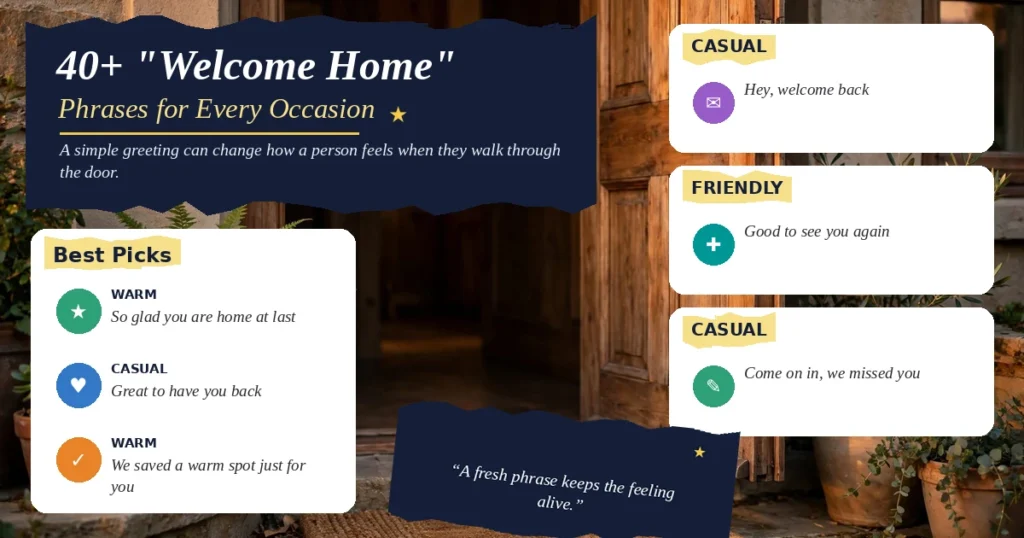
If you want other ways to say welcome home, you already understand something important about language. A simple greeting can change how a person feels when they walk through the door. It can turn a normal arrival into a warm moment, and it can show that you noticed the trip, the effort, or the time away. The classic phrase works well, but it can start to feel flat when you use it every single time. A fresh phrase keeps the feeling alive.
People return home after many kinds of days. Some come back from a long trip, a hard day at work, school, a hospital stay, or a visit to another city. Some return after months away, and some return after only a few hours. Each return deserves a greeting that fits the moment. A short and cheerful phrase suits a friend who pops in for dinner. A softer and warmer phrase suits a family member who has been away for a long time. A polite and respectful phrase suits a guest, a client, or a coworker you host at your home office.
This guide gives you clear and practical choices. You will learn what the phrase means, when to use a formal version, and when to keep it light and casual. You will find 40 alternatives in five tone groups, with a note on tone and a short example for each one. You will also find a quick comparison table, email examples, common mistakes to avoid, related phrases, a phrase comparison, and cultural notes. By the end, you will not need to repeat the same greeting again. You will pick the right words with confidence, and the person you greet will feel the difference right away.
Meaning
The phrase welcome home means much more than a simple hello at the door. It tells a person that they belong in this place, that you missed them while they were away, and that you feel glad they returned safe and sound. It marks the end of a journey and the start of comfort, rest, and familiar routines. It also works as a kind of invitation. It says you can relax now, you can put your bags down, and you do not need to hurry anymore.
People use the phrase in homes, in messages, on cards, and in speeches. A parent says it to a child who returns from camp. A partner says it to a spouse who returns from a business trip. Friends say it when someone moves into a new house. Neighbors say it when a family returns to the street after a long absence. In each case, the core meaning stays the same, even when the tone changes. The words carry warmth, care, and relief.
The phrase also works well because it is short and clear. It does not need a long explanation. It puts the focus on the person, not on the house itself. When you say it, you honor the person and their return. When you choose a different version, you keep that core meaning and add a shade of feeling. A playful version adds humor. A formal version adds respect. A tender version adds closeness. The best alternative keeps the meaning clear while it matches the relationship and the moment.
You can also use the phrase when someone returns to a group, a team, or a community, not only to a house. A teacher may welcome a student back to class after an illness. A manager may welcome an employee back to the office after leave. A host may welcome guests back to a holiday home they visited before. In all of these cases, home means a familiar and safe place where the person belongs. That broad use makes the phrase useful in daily life, and it explains why so many good alternatives exist.
Professional usage
In a professional setting, you still want warmth, but you also want respect and clear boundaries. You do not want a greeting that sounds too personal, too playful, or too casual for the relationship. A polite welcome works best when you greet a client at a company guest house, a colleague who returns from leave, or a visitor who arrives at a home office for a meeting. The tone should feel kind and organized, not overly familiar.
Start with a clear welcome, then add a helpful detail. You can mention that you prepared the room, saved a seat, or kept notes ready. That detail shows care without crossing a line. For example, you can say that you are glad they arrived safely and that everything is ready for them. You can also thank them for their travel effort. That kind of sentence works well in an email before arrival, in a message on the day of arrival, and in person at the door.
Avoid jokes about a long absence, personal health, or family matters unless you know the person well. Keep the focus on comfort and next steps. A good professional greeting answers three quiet questions: Do you belong here, is everything ready, and what happens next. When your words answer those questions, the visitor relaxes and trusts you more.
You can also use a professional welcome in writing. A short note on a desk, a message in a team chat, or a line at the start of a meeting can set a positive tone. Keep the note short, use the person’s name, and avoid slang. If you write to a team, use a plural form and thank the whole group. If you write to one person, keep the message personal but still professional. A well chosen phrase can make a return to work feel smooth rather than awkward, and it can help a new working relationship start on a strong and friendly note.
Alternatives
The alternatives below fall into five tone groups. Each group fits a different kind of moment. Read the tone note before you pick a phrase, and use the example as a guide for your own sentence. You can change the name, the detail, or the ending to fit your own situation. The goal is a greeting that sounds like you, not like a copied line from a card.
Warm and heartfelt phrases
These phrases suit family, close friends, and loved ones after a long absence. They carry deep feeling and work best in person, on a call, or in a handwritten note.
- So glad you are home at last — Warm and emotional, best for a long-awaited return. Example: So glad you are home at last, we kept your room just as you left it.
- This house missed you so much — Tender and personal, best for family members. Example: This house missed you so much, it feels complete again now that you are here.
- You are home, and my heart feels full — Soft and loving, best for a partner or child. Example: You are home, and my heart feels full now that I can see you again.
- Welcome back to where you belong — Warm and reassuring, best after a hard trip. Example: Welcome back to where you belong, take your time and settle in slowly.
- We saved a warm spot just for you — Caring and gentle, best for a returning loved one. Example: We saved a warm spot just for you at the table and on the couch.
- It feels right now that you are back — Quiet and sincere, best for a close friend or sibling. Example: It feels right now that you are back, the house was too quiet without you.
- Home feels like home again with you here — Emotional and direct, best for family reunions. Example: Home feels like home again with you here, so stay a while and rest.
- We have been counting the days until today — Loving and joyful, best after months apart. Example: We have been counting the days until today, and now we can finally celebrate together.
Casual and friendly phrases
These phrases suit friends, neighbors, and relaxed visits. They sound natural, easy, and upbeat, and they work well in texts and at the door.
- Hey, welcome back — Light and easy, best for a quick friendly greeting. Example: Hey, welcome back, come in and tell me all about your trip.
- Great to have you back — Cheerful and simple, best for friends and neighbors. Example: Great to have you back, the street felt empty without you around.
- You made it — Relaxed and supportive, best after a long journey. Example: You made it, drop your bags and grab a cold drink first.
- Good to see you again — Friendly and natural, best for a repeat visit. Example: Good to see you again, we kept the guest room ready for you.
- Come on in, we missed you — Warm and casual, best for a close friend. Example: Come on in, we missed you, and dinner is almost ready.
- Back at last, huh — Playful and light, best among close friends. Example: Back at last, huh, you picked a perfect day to return.
- Nice to have you home again — Easy and kind, best for family and friends. Example: Nice to have you home again, your favorite chair is still waiting for you.
- Glad you are back safe and sound — Caring but casual, best after travel. Example: Glad you are back safe and sound, tell us about the trip over tea.
Playful and fun phrases
These phrases suit moments when humor helps everyone relax. Use them with people who enjoy jokes and who know your style well.
- The house threw a party without you, but now it is complete — Funny and warm, best for close friends. Example: The house threw a party without you, but now it is complete, so come join the fun.
- Guess who is back in town — Teasing and joyful, best for a friend with a big personality. Example: Guess who is back in town, we already planned a welcome dinner for you.
- Your kingdom awaits you — Silly and royal, best for a light family joke. Example: Your kingdom awaits you, your highness, and your bed is freshly made.
- The couch missed you more than we did — Humorous and affectionate, best for siblings and partners. Example: The couch missed you more than we did, but we missed you a lot too.
- Welcome back, world traveler — Fun and admiring, best after a big trip. Example: Welcome back, world traveler, we want every story and every photo.
- Home sweet home, and here you are — Cheerful and classic, best for a happy return. Example: Home sweet home, and here you are, right where you should be.
- We kept the snacks safe for you — Light and funny, best for kids and friends. Example: We kept the snacks safe for you, though it was a very hard job.
- Look who finally came home — Teasing and loving, best among close family. Example: Look who finally came home, we saved you the best seat at dinner.
Formal and polite phrases
These phrases suit guests, clients, coworkers, and hosts who want a respectful tone. They work well in emails, cards, and formal welcomes.
- It is a pleasure to welcome you home — Polite and warm, best for guests and clients. Example: It is a pleasure to welcome you home, we hope your stay feels comfortable.
- We are delighted to have you back — Formal and gracious, best for a returning guest. Example: We are delighted to have you back, and your room is ready for you.
- Welcome back, and thank you for joining us again — Respectful and kind, best for repeat visitors. Example: Welcome back, and thank you for joining us again, we value your visit.
- We trust your journey was pleasant, and we are glad you arrived safely — Formal and caring, best after long travel. Example: We trust your journey was pleasant, and we are glad you arrived safely.
- Please make yourself at home — Polite and classic, best for any guest. Example: Please make yourself at home, and let us know if you need anything at all.
- We are pleased to welcome you back to our home — Gracious and formal, best for a hosted stay. Example: We are pleased to welcome you back to our home, and we hope you enjoy your time here.
- Your return is most welcome — Short and formal, best for notes and cards. Example: Your return is most welcome, and we look forward to spending time together.
- We hope you feel at ease during your stay — Gentle and professional, best for a guest house or rental. Example: We hope you feel at ease during your stay, and please ask us for anything you need.
Short and sweet phrases
These phrases suit texts, cards, banners, and quick hellos. They are easy to remember and easy to send in the moment.
- Welcome back home — Simple and clear, best for any quick greeting. Example: Welcome back home, we missed you.
- Home at last — Short and joyful, best for a text after arrival. Example: Home at last, time to relax and enjoy the evening.
- So good to see you — Warm and brief, best at the door. Example: So good to see you, come inside and get comfortable.
- Back where you belong — Gentle and short, best for family. Example: Back where you belong, and we are happy about it.
- Missed you, welcome back — Direct and sweet, best for a close friend. Example: Missed you, welcome back, let us catch up over coffee.
- Glad you are here — Simple and kind, best for any guest. Example: Glad you are here, your room is ready and waiting.
- Welcome home, friend — Friendly and short, best for a card or text. Example: Welcome home, friend, we saved you a seat at the table.
- You are back, hooray — Cheerful and light, best for kids and family. Example: You are back, hooray, let us celebrate your return tonight.
With 40 choices in five tones, you can stop repeating the same line. Pick a warm phrase for family, a light phrase for friends, a funny phrase for a relaxed moment, a formal phrase for guests, and a short phrase for texts and cards. The right choice shows that you thought about the person, not just about the greeting. Keep a few favorites in mind, and change the detail to fit the day. A small change in wording can turn a normal hello into a memory the person keeps.
Quick comparison
Use this table when you need a fast choice. Find the situation, check the best tone, and copy the example phrase or adapt it to your own words.
| Situation | Best tone | Example phrase | Why it works |
|---|---|---|---|
| Family returns after months away | Warm and heartfelt | So glad you are home at last | Shows deep care and relief |
| Friend drops by for dinner | Casual and friendly | Hey, welcome back | Sounds relaxed and natural |
| Sibling returns from a trip | Playful and fun | Look who finally came home | Adds humor and closeness |
| Client arrives at a guest house | Formal and polite | It is a pleasure to welcome you home | Shows respect and care |
| Quick text after arrival | Short and sweet | Home at last | Clear, fast, and joyful |
| Coworker returns from leave | Formal and polite | We are delighted to have you back | Professional yet warm |
| Child returns from camp | Warm and heartfelt | We have been counting the days until today | Shows excitement and love |
| Neighbor returns to the street | Casual and friendly | Great to have you back | Friendly without being too personal |
The table works because it links the moment to the tone. A mismatch can feel odd. A playful joke may fall flat with a formal guest, and a stiff formal line may feel cold to a close sibling. When you match the tone to the relationship, the greeting feels natural. Keep this table in mind, and you will rarely choose the wrong phrase again.
Email examples
These short examples show how to use a warm greeting in a message. Change the name and the detail to fit your own situation, and keep the tone close to your relationship with the reader.
Example 1 — To a parent returning from a trip:
Subject: So glad you are home
Hi Mom, so glad you are home at last. I hope the flight was smooth and that you can rest today. We kept your room ready, and dinner is at seven. Let me know if you need anything before then.
Example 2 — To a friend who moved back to town:
Subject: Great to have you back
Hi Alex, great to have you back in town. It feels like old times already. Come by for coffee this weekend, and bring your stories from the road. We missed you a lot.
Example 3 — To a guest arriving at a rental:
Subject: Welcome back to our home
Dear Sarah, we are pleased to welcome you back to our home. Your room is ready, the key is in the usual place, and fresh towels are on the bed. Please make yourself at home, and contact us if you need anything.
Example 4 — To a coworker returning from leave:
Subject: We are delighted to have you back
Hi Jordan, we are delighted to have you back. Your desk is ready, and the team kept your notes in order. Take your time to settle in today, and join us for lunch when you feel ready.
Example 5 — To a sibling with humor:
Subject: Look who finally came home
Hi Sam, look who finally came home. We saved you the best seat at dinner, and yes, the couch missed you more than we did. Come hungry, and bring your appetite and your stories.
Each example starts with the greeting, adds a helpful detail, and ends with a kind next step. That simple shape works for almost every welcome message. It keeps the note warm without making it too long, and it gives the reader something clear to do next. Use it for emails, texts, cards, and chat messages, and adjust the formality to match the reader.
Common mistakes
Even a kind greeting can miss the mark when the tone or the timing feels off. Watch for these common mistakes, and your welcome will land the way you intend it to land.
- Using a joke with a formal guest: A playful line can feel rude to a client, a new coworker, or a distant relative. Save humor for people who know your style.
- Repeating the same phrase every time: When you say the same line for every return, it starts to sound automatic. Change the phrase to match the person and the moment.
- Making the greeting about yourself: A welcome should focus on the person who returned, not on your own effort, worry, or schedule. Keep the spotlight on them.
- Asking too many questions at the door: A tired traveler does not want an interview. Offer rest, food, or a quiet moment first, and save questions for later.
- Forgetting the person’s name: A name makes a greeting feel personal. Use it when you can, especially in cards, texts, and emails.
- Using a stiff phrase with close family: A very formal line can feel cold to a partner, child, or sibling. Choose warmth and closeness for the people closest to you.
- Overdoing the welcome: A long speech at the door can feel overwhelming. Keep the first greeting short, then add warmth through actions like a meal, a clean room, or a quiet chat.
When you avoid these mistakes, your greeting feels thoughtful rather than forced. The person feels seen, not managed. That small difference matters a lot after a long trip or a hard day.
Related phrases
If you liked these welcome phrases, you may also find these guides useful. Each one gives you fresh words for a common kind of message, so you can keep your writing warm and varied.
- I appreciate your help
- Thank you for taking care of this
- Other ways to say I understand
- Ways to say I miss you
- Ways to say my pleasure to help
- Looking forward to your call
Phrase comparison
Some greetings sound alike, but they carry different feelings. This section helps you tell them apart, so you pick the one that fits best.
- Welcome home vs. Welcome back: Welcome home points to a house or a place of belonging. Welcome back points to a return to any place, such as a job, a school, or a team. Use welcome home for a house, and welcome back for a wider return.
- Glad you are home vs. Glad you are here: Glad you are home stresses the home itself and a long absence. Glad you are here works for any visit, even a short one. The first feels more personal, the second feels more general.
- We missed you vs. We have been counting the days: We missed you is simple and honest. We have been counting the days is stronger and more emotional. Use the stronger line only when the absence truly felt long.
- Please make yourself at home vs. Come on in, we missed you: The first is polite and formal, best for guests. The second is casual and warm, best for close friends. The choice tells the listener how formal the visit feels.
- Home at last vs. So glad you are home at last: Home at last is short and joyful, best for a text. So glad you are home at last is warmer and more personal, best in person or in a card. Both work, but the longer form carries more feeling.
When you compare phrases this way, you see that small word changes shift the tone a lot. A formal word adds distance and respect. A casual word adds closeness and ease. A longer sentence adds emotion. Use that knowledge to shape your greeting on purpose, not by accident.
Cultural usage
Welcome greetings vary across cultures, but the core feeling stays warm in most places. In the United States, people often greet a returning family member with a hug, food, and a cheerful phrase at the door. In the United Kingdom, a welcome may be quieter and more polite, with tea and a calm greeting. In many South Asian homes, a returning guest may receive sweets, a special meal, and a warm blessing. In many Middle Eastern homes, a guest receives coffee, dates, and a generous welcome that stresses honor and care.
In some cultures, a welcome includes a small ritual. A family may light a lamp, hang a banner, or prepare a favorite dish. In other cultures, the welcome stays simple, with a handshake or a smile and a short phrase. The words matter less than the warmth behind them, but the right words still help. A phrase that fits the culture shows respect and awareness.
When you greet someone from another culture, keep your phrase simple and kind. Avoid slang they may not know, and avoid jokes that depend on local humor. A clear and warm line, such as we are delighted to have you back, works across many settings. If you know a greeting from their own culture, you can add it with care and respect. That extra effort often means a lot, and it turns a simple hello into a bridge between people.
No matter where you live, a welcome home greeting works best when it feels honest. People can tell when words come from the heart and when they sound copied. Use a phrase from this guide as a starting point, then add your own detail, your own name, and your own warmth. That personal touch is what makes a greeting last in memory.
Frequently asked questions
What is the best way to say welcome home to a family member?
Use a warm and personal phrase, such as so glad you are home at last, and add a small detail, like a favorite meal or a ready room. Family members value feeling missed and cared for, so keep the tone sincere and direct.
Can I say welcome home in a text message?
Yes, a short phrase works very well in a text. Try home at last, so good to see you, or welcome back home. Keep the message short, add the person’s name when you can, and follow it with a simple plan, like a time to meet.
What should I say to a guest who stays at my house for the first time?
Use a polite phrase, such as please make yourself at home or it is a pleasure to welcome you home. Then add a helpful detail, like where to find towels, the Wi-Fi code, or the breakfast time. That mix of warmth and help makes a guest feel at ease.
How do I welcome a coworker back from leave without sounding too personal?
Use a professional phrase, such as we are delighted to have you back. Keep the focus on work readiness and support, not on personal health or private details. Offer help to catch up, and keep the message short and kind.
Is welcome back the same as welcome home?
Not quite. Welcome home points to a house or a place of belonging, while welcome back works for any return, such as a job, a school, or a team. Use welcome home for a house, and welcome back for a wider return.
What is a funny way to say welcome home?
Try a light joke that fits the person, such as the couch missed you more than we did or your kingdom awaits you. Use humor only with people who enjoy jokes and who know your style, and avoid jokes with formal guests.
How can I write welcome home on a card?
Keep the card short and warm. Write a phrase such as welcome back home or home feels like home again with you here, then add one personal sentence about the person. Sign the card with your name, and keep the handwriting clear and neat.
What do I say when someone returns after a long illness?
Use a gentle and caring phrase, such as glad you are back safe and sound or welcome back to where you belong. Avoid jokes about health, and focus on comfort, rest, and support. Offer help in a practical way, like a meal or a quiet visit.
Can I use welcome home for a new house, not just a return?
Yes, you can use it when someone moves into a new home for the first time. In that case, the phrase means welcome to your new home, and it marks a fresh start. Phrases such as welcome back home still work, but welcome to your new home fits a first move even better.
What is a short welcome home message for a banner?
Use a short and bold phrase, such as welcome back home, home at last, or so good to see you. Keep the banner to a few words, use large letters, and add the person’s name when the banner is for one person.
Should I say welcome home to a neighbor I barely know?
Yes, but keep it light and friendly. A simple great to have you back or good to see you again works well. Avoid very personal lines, and do not ask about private details. A brief greeting builds good neighborly feeling.
How do I welcome someone home in a work chat message?
Use a short and professional line, such as welcome back, we missed you around the office, or we are delighted to have you back. Keep the tone kind and work focused, and offer help to catch up on tasks.
What if I feel shy about saying a warm phrase out loud?
Start with a short and simple line, such as glad you are here or so good to see you. A short line still carries warmth, and it feels easier to say than a long emotional speech. You can also write the greeting on a card if speaking feels hard.
Can children use these phrases too?
Yes, many of these phrases suit children, especially the short and playful ones. Try home at last, you are back, hooray, or welcome home, friend. Help a child add a drawing or a small gift to make the welcome even sweeter.
What is the most polite way to say welcome home to an older guest?
Use a respectful phrase, such as it is a pleasure to welcome you home or your return is most welcome. Speak clearly, offer a comfortable seat, and ask what they need. Respect and care matter more than fancy words.
Conclusion
A good welcome home greeting does more than fill a silence at the door. It tells a person that they matter, that their return brings joy, and that this place feels right because they are in it. You now have 40 phrases in five tones, a quick comparison table, email examples, and clear notes on mistakes, related phrases, and cultural use. You do not need to use the same line every time. You can choose a warm line for family, a light line for friends, a funny line for a relaxed moment, a formal line for guests, and a short line for texts and cards.
The best greeting is the one that fits the person in front of you. Think about the relationship, the length of the absence, and the mood of the day. Then pick a phrase, add a small detail, and say it with a smile. A prepared room, a favorite meal, or a quiet moment to rest can add even more warmth than words alone. When words and actions match, the welcome feels real, and the person remembers it long after the day ends.
Keep this guide close for the next return, move, or visit. Try a new phrase each time, and notice which ones feel most natural to you. Over time, you will build your own set of favorites, and you will greet people with ease and confidence. For a clear sense of the word itself, see how Cambridge defines welcome as a friendly greeting when someone arrives.