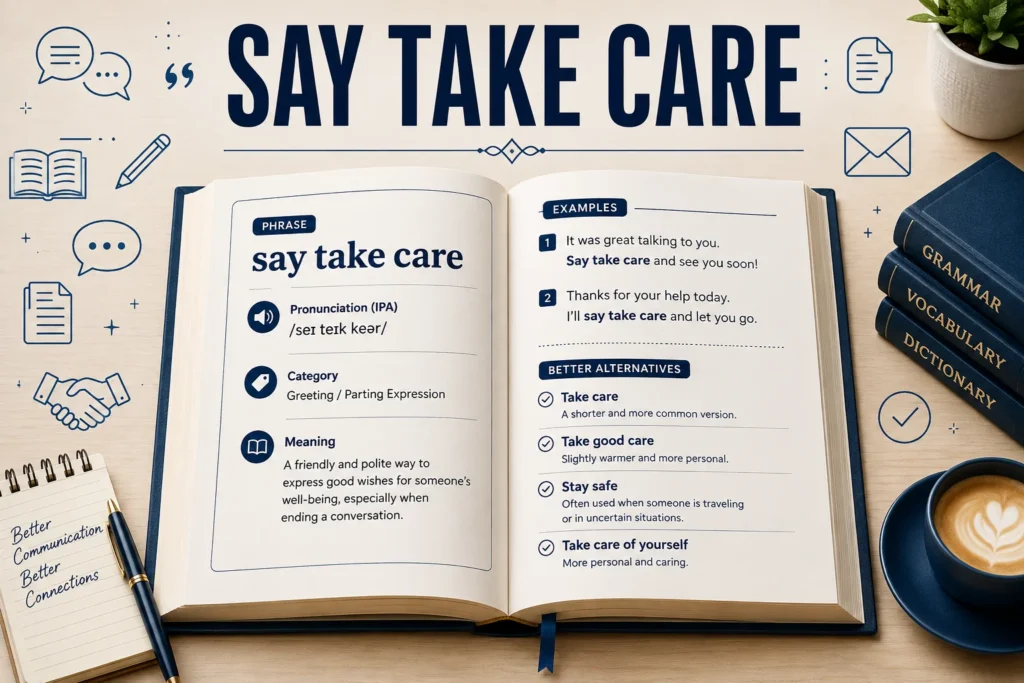
Looking for professional ways to say “take care”? While “take care” is one of the most common ways to end a conversation or email, it isn’t always the best choice for every situation. In business communication, client emails, workplace conversations, and networking, choosing a more suitable closing can make your message sound warmer, more professional, and more memorable.
Whether you’re ending an email to a client, saying goodbye to a coworker, following up after a meeting, or writing a professional farewell message, using the right alternative shows respect and strengthens relationships.
This guide shares over 55 professional, formal, friendly, and workplace alternatives to “take care.” Each expression includes its meaning, tone, best use case, and an example to help you choose the perfect phrase for every situation.
What Does “Take Care” Mean?
“Take care” is a friendly expression used to wish someone good health, safety, happiness, or well-being before ending a conversation or message.
Although simple, it communicates kindness, concern, and respect.
Literal Meaning
The phrase literally means:
Look after yourself and stay safe.
It encourages the other person to protect their health, happiness, and overall well-being.
Tone
“Take care” usually sounds:
- Friendly
- Polite
- Warm
- Caring
- Professional (depending on context)
Purpose
People commonly use “take care” to:
- End emails politely
- Say goodbye
- Wish someone well
- Show concern
- Build positive relationships
- End conversations naturally
Emotional Context
Unlike a simple “goodbye,” the phrase “take care” expresses genuine concern. It tells the other person that you value them and hope everything goes well.
For this reason, it is common in business communication, customer service, networking, and everyday conversations.
Examples
Thank you for your time today. Take care, and I look forward to hearing from you.
Workplace
It was great working with you. Take care and best of luck in your new role.
Client
Thank you for choosing our services. Take care, and please reach out if you need anything else.
Networking
It was wonderful meeting you today. Take care, and let’s stay connected.
When Is It Appropriate to Say “Take Care”?
Emails
“Take care” works well as a closing in professional emails when you already have a friendly relationship with the recipient.
Example
Thank you again for your support. Take care.
Workplace
Coworkers often use it when leaving work, ending meetings, or saying goodbye before weekends or holidays.
Example
Have a great weekend. Take care!
Clients
Customer-facing professionals can use it after building a positive relationship with a client.
Example
Thank you for your business. Take care, and we hope to work with you again soon.
Networking
Networking conversations often end with warm but professional closings.
Example
It was a pleasure meeting you. Take care, and stay in touch.
Customer Service
Customer service representatives frequently use this phrase because it sounds caring without being overly formal.
Example
Thank you for contacting our support team. Take care!
Professional Alternatives to “Take Care”
These alternatives work well in business emails, workplace communication, client messages, LinkedIn conversations, and professional networking.
1. Wishing You Well
Meaning: Expresses sincere hopes for someone’s well-being.
Tone: Professional
Best Use Case: Business emails
Example
Wishing you well, and thank you for your time today.
2. All the Best
Meaning: Wishes someone success and happiness.
Tone: Professional
Best Use Case: Farewell emails
Example
All the best with your upcoming project.
3. Best Wishes
Meaning: Offers respectful good wishes.
Tone: Professional
Best Use Case: Client communication
Example
Best wishes for continued success.
4. Stay Safe
Meaning: Encourages someone to remain healthy and protected.
Tone: Warm Professional
Best Use Case: Travel, health-related situations
Example
Stay safe during your trip.
5. Wishing You Continued Success
Meaning: Expresses hopes for ongoing achievements.
Tone: Professional
Best Use Case: Career conversations
Example
Wishing you continued success in your new position.
6. Have a Wonderful Day
Meaning: Ends the conversation positively.
Tone: Friendly Professional
Best Use Case: Customer service
Example
Have a wonderful day, and thank you for contacting us.
7. Have a Great Weekend
Meaning: A natural Friday email closing.
Tone: Friendly Professional
Best Use Case: Workplace emails
Example
Have a great weekend. I’ll see you on Monday.
8. Until Next Time
Meaning: Suggests another meeting or conversation.
Tone: Professional
Best Use Case: Networking
Example
Until next time, thank you for meeting with me.
9. Stay Well
Meaning: Wishes someone continued health.
Tone: Professional
Best Use Case: Client emails
Example
Stay well, and thank you for your partnership.
10. Have a Great Day
Meaning: Friendly email closing.
Tone: Professional
Best Use Case: Everyday emails
Example
Have a great day!
11. Looking Forward to Speaking Again
Meaning: Ends positively while encouraging future communication.
Tone: Professional
Best Use Case: Networking
Example
Looking forward to speaking again soon.
12. Stay Healthy
Meaning: Expresses concern for someone’s well-being.
Tone: Caring
Best Use Case: Healthcare and wellness
Example
Stay healthy, and thank you again.
13. Keep Doing Great Things
Meaning: Encourages continued success.
Tone: Inspirational
Best Use Case: Farewell messages
Example
Keep doing great things. Your future looks bright.
14. It Was Great Connecting With You
Meaning: Appreciates a recent interaction.
Tone: Professional
Best Use Case: LinkedIn and networking
Example
It was great connecting with you today.
15. Wishing You the Very Best
Meaning: Offers heartfelt encouragement.
Tone: Professional
Best Use Case: Career changes
Example
Wishing you the very best in your new journey.
Formal Alternatives
These expressions are ideal for official correspondence, executive communication, recommendation letters, and formal business emails.
16. Please Accept My Best Wishes
Meaning: Offers respectful good wishes.
Tone: Very Formal
Best Use Case: Business letters
Example
Please accept my best wishes for your continued success.
17. I Wish You Every Success
Meaning: Expresses sincere support.
Tone: Formal
Best Use Case: Professional correspondence
Example
I wish you every success in your future endeavors.
18. My Sincere Regards
Meaning: A respectful professional closing.
Tone: Formal
Best Use Case: Executive emails
Example
My sincere regards, and thank you for your assistance.
19. Warmest Regards
Meaning: Combines professionalism with warmth.
Tone: Formal
Best Use Case: Client communication
Example
Warmest regards, and have a wonderful week.
20. Wishing You Continued Good Health
Meaning: Expresses concern for well-being.
Tone: Formal
Best Use Case: Retirement messages
Example
Wishing you continued good health and happiness.
21. May All Go Well for You
Meaning: A respectful expression of goodwill.
Tone: Formal
Best Use Case: Farewell messages
Example
May all go well for you in your next chapter.
22. I Hope Everything Goes Well
Meaning: Shows sincere concern.
Tone: Professional
Best Use Case: Clients and coworkers
Example
I hope everything goes well with your upcoming presentation.
23. May You Continue to Thrive
Meaning: Wishes long-term success.
Tone: Formal
Best Use Case: Leadership communication
Example
May you continue to thrive both personally and professionally.
24. Wishing You Peace and Success
Meaning: Offers balanced good wishes.
Tone: Formal
Best Use Case: Retirement and farewell speeches
Example
Wishing you peace and success in the years ahead.
25. Sending My Best Regards
Meaning: Ends communication respectfully.
Tone: Professional
Best Use Case: Business emails
Example
Sending my best regards, and thank you once again.
Featured Snippet: Best Professional Ways to Say “Take Care”
If you’re looking for a professional way to say “take care,” some of the best alternatives include wishing you well, all the best, best wishes, stay well, have a great day, wishing you the very best, looking forward to speaking again, warmest regards, I wish you every success, and sending my best regards. These expressions work well in business emails, workplace communication, networking, client conversations, and customer service because they sound warm, respectful, and professional.
Friendly Alternatives to “Take Care”
These expressions are ideal for friends, family, close coworkers, classmates, and casual conversations while still sounding polite and thoughtful.
26. See You Soon
Meaning: Suggests you’ll meet again in the near future.
Tone: Friendly
Best Use Case: Friends, coworkers, regular clients
Example
See you soon. Have a great week!
27. Catch You Later
Meaning: An informal way to say goodbye.
Tone: Casual
Best Use Case: Friends and close colleagues
Example
Catch you later. Have a great evening!
28. Have a Good One
Meaning: Wishes someone a pleasant day.
Tone: Casual
Best Use Case: Everyday conversations
Example
Thanks for stopping by. Have a good one!
29. Enjoy the Rest of Your Day
Meaning: Encourages someone to have a pleasant remainder of the day.
Tone: Friendly Professional
Best Use Case: Customer service and business emails
Example
Thank you for your time. Enjoy the rest of your day.
30. Stay Positive
Meaning: Encourages optimism.
Tone: Supportive
Best Use Case: Challenging situations
Example
Stay positive. Everything will work out.
31. Keep Smiling
Meaning: Wishes someone happiness.
Tone: Warm
Best Use Case: Friends and coworkers
Example
Keep smiling and enjoy your week!
32. Have Fun
Meaning: Wishes someone an enjoyable experience.
Tone: Casual
Best Use Case: Vacations and social events
Example
Have fun on your trip!
33. Stay Awesome
Meaning: Compliments the person while saying goodbye.
Tone: Casual
Best Use Case: Friends and creative workplaces
Example
Stay awesome, and I’ll talk to you soon.
34. Take It Easy
Meaning: Encourages someone to relax.
Tone: Friendly
Best Use Case: Informal conversations
Example
You’ve had a busy week. Take it easy!
35. See You Around
Meaning: Suggests you’ll meet again.
Tone: Friendly
Best Use Case: Coworkers and acquaintances
Example
See you around. Have a great day!
Email Alternatives to “Take Care”
These alternatives sound polished and work well in business emails, client communication, and professional correspondence.
36. Thank You Again
Meaning: Ends an email with appreciation.
Tone: Professional
Best Use Case: Client emails
Example
Thank you again for your time today.
37. Thank You for Your Time
Meaning: Shows appreciation.
Tone: Professional
Best Use Case: Business meetings
Example
Thank you for your time. I look forward to hearing from you.
38. Looking Forward to Your Reply
Meaning: Encourages future communication.
Tone: Professional
Best Use Case: Follow-up emails
Example
Looking forward to your reply.
39. Looking Forward to Working With You
Meaning: Expresses enthusiasm about future collaboration.
Tone: Professional
Best Use Case: New clients
Example
Looking forward to working with you.
40. Please Don’t Hesitate to Reach Out
Meaning: Invites future communication.
Tone: Professional
Best Use Case: Customer support
Example
Please don’t hesitate to reach out if you have any questions.
41. We Appreciate Your Business
Meaning: Thanks a customer.
Tone: Professional
Best Use Case: Customer service
Example
We appreciate your business and hope to serve you again soon.
42. Thank You for Your Trust
Meaning: Appreciates confidence in your business.
Tone: Professional
Best Use Case: Client relationships
Example
Thank you for your trust and continued support.
43. Have a Productive Week
Meaning: Wishes someone success.
Tone: Professional
Best Use Case: Monday emails
Example
Have a productive week!
44. Have a Wonderful Evening
Meaning: Time-specific farewell.
Tone: Friendly Professional
Best Use Case: Late-day emails
Example
Have a wonderful evening.
45. Speak With You S*on
Meaning: Indicates an*ther conversation is expected.
Tone: Professional
Best Use Case: Projects and meetings
Example
Speak with you soon.
Workplace Alternatives to “Take Care”
These phrases work well between coworkers, managers, HR teams, and employees.
46. Have a Great Rest of Your Week
Meaning: Wishes someone an enjoyable week.
Tone: Professional
Best Use Case: Midweek conversations
Example
Have a great rest of your week!
47. Good Luck With Your Project
Meaning: Encourages success.
Tone: Professional
Best Use Case: Team communication
Example
Good luck with your project.
48. Keep Up the Great Work
Meaning: Recognizes good performance.
Tone: Encouraging
Best Use Case: Managers
Example
Keep up the great work.
49. Wishing You a Successful Week
Meaning: Encourages productivity.
Tone: Professional
Best Use Case: Weekly team emails
Example
Wishing you a successful week ahead.
50. Thanks for Your Hard Work
Meaning: Shows appreciation.
Tone: Professional
Best Use Case: Employee recognition
Example
Thanks for your hard work this week.
51. Keep Doing Amazing Work
Meaning: Encourages continued excellence.
Tone: Positive
Best Use Case: Team leaders
Example
Keep doing amazing work!
52. Have a Relaxing Weekend
Meaning: Wishes someone time to recharge.
Tone: Professional
Best Use Case: Friday emails
Example
Have a relaxing weekend!
53. Enjoy Your Time Off
Meaning: Appropriate before vacations.
Tone: Professional
Best Use Case: Leave and holidays
Example
Enjoy your time off. You’ve earned it.
54. Hope to Work Together Again
Meaning: Expresses interest in future collaboration.
Tone: Professional
Best Use Case: Project completion
Example
Hope to work together again soon.
55. Thank You for Everything
Meaning: A heartfelt farewell.
Tone: Warm Professional
Best Use Case: Retirement and resignations
Example
Thank you for everything. It has been a pleasure working with you.
Quick Comparison Table
| Alternative | Tone | Best Use |
| Wishing You Well | Professional | Business emails |
| All the Best | Professional | General farewell |
| Best Wishes | Professional | Clients |
| Stay Well | Professional | Health and wellness |
| Have a Great Day | Friendly Professional | Daily emails |
| Warmest Regards | Formal | Executive communication |
| See You Soon | Friendly | Coworkers |
| Enjoy the Rest of Your Day | Friendly Professional | Customer service |
| Thank You Again | Professional | Email sign-off |
| Looking Forward to Your Reply | Professional | Follow-up emails |
| Speak With You Soon | Professional | Meetings |
| Have a Productive Week | Professional | Workplace |
| Keep Up the Great Work | Encouraging | Employee recognition |
| Enjoy Your Time Off | Professional | Vacation farewell |
| Thank You for Everything | Warm Professional | Retirement |
Professional Email Examples
Client
Thank you for your continued partnership. We appreciate your trust and look forward to working with you again. Wishing you well.
Manager
Thank you for your guidance and support. Have a wonderful week, and I look forward to our next meeting.
Colleague
It was great working with you today. Have a relaxing evening, and see you tomorrow.
Customer
Thank you for choosing our company. We appreciate your business. Have a wonderful day!
Networking Contact
It was a pleasure connecting with you. I hope we stay in touch. Wishing you all the best.
Meeting Follow-Up
Thank you for meeting with me today. I appreciate your insights and lo*ok forward to speaking again soon.
Common Mistakes
1. Using “Take Care” in Every Email
Repeating the same closing can make your communication feel repetitive.
Instead, rotate phrases like:
- Best wishes
- Wishing you well
- All the best
- Have a great day
- Warmest regards
2. Choosing a Tone That Doesn’t Match
Avoid casual expressions such as “Catch you later” in formal business emails.
Instead, use:
- Best wishes
- Warmest regards
- Wishing you continued success
3. Being Too Formal With Close Coworkers
A formal sign-off can sound distant.
Instead of:
Please accept my sincere regards.
Use:
Have a great weekend!
4. Forgetting the Context
Choose a farewell that fits the situation.
Examples:
- Vacation → Enjoy your time off.
- Friday → Have a relaxing weekend.
- Client → Wishing you well.
- Meeting → Looking forward to speaking again.
Related Phrases
| Phrase | Meaning | Example |
| All the best | General farewell | All the best with your new job. |
| Best wishes | Respectful goodbye | Best wishes for your future. |
| Stay safe | Wish someone safety | Stay safe on your trip. |
| Stay well | Wish good health | Stay well, and thank you. |
| Have a great day | Positive farewell | Have a great day! |
| Have a nice weekend | Friday farewell | Have a nice weekend. |
| Until next time | Expect future contact | Until next time! |
| Goodbye | Standard farewell | Goodbye and thank you. |
| Farewell | Formal goodbye | Farewell and best wishes. |
| See you soon | Friendly goodbye | See you soon! |
| Keep in touch | Stay connected | Let’s keep in touch. |
| Looking forward to hearing from you | Follow-up | Looking forward to hearing from you. |
| Warm regards | Professional closing | Warm regards, Sarah |
| Kind regards | Business email closing | Kind regards, James |
| Wishing you success | Encouragement | Wishing you success in everything you do. |
Phrase Comparison: “Take Care” vs. Common Alternatives
Although “take care” is one of the most common farewell expressions in English, it is not always the best choice. Some alternatives sound more professional, while others feel warmer, friendlier, or more suitable for business communication.
Use the table below to choose the right expression based on your audience and situation.
| Phrase | Tone | Formality | Best Use Case |
| Take Care | Warm | Medium | Everyday conversations |
| Wishing You Well | Professional | High | Business emails |
| All the Best | Professional | Medium | Workplace farewells |
| Best Wishes | Professional | High | Clients and formal emails |
| Stay Well | Caring | Medium | Health-related messages |
| Have a Great Day | Friendly | Low | Daily conversations |
| Warmest Regards | Formal | High | Executive communication |
| Kind Regards | Professional | High | Email sign-offs |
| Looking Forward to Speaking Again | Professional | High | Networking |
| Stay Safe | Caring | Medium | Travel or emergencies |
| See You Soon | Friendly | Low | Friends and coworkers |
| Enjoy Your Time Off | Professional | Medium | Vacation messages |
| Have a Relaxing Weekend | Professional | Medium | Friday workplace emails |
| Thank You Again | Professional | High | Client emails |
| Speak With You Soon | Professional | Medium | Meeting follow-ups |
Which Alternative Should You Choose?
For business emails
- Kind regards
- Best wishes
- Wishing you well
- Thank you again
- Looking forward to your reply
For workplace communication
- Have a great weekend
- Enjoy your time off
- All the best
- Thanks for your hard work
- Have a productive week
For clients
- Wishing you well
- Best wishes
- Thank you for your trust
- We appreciate your business
- Warmest regards
For networking
- It was great connecting with you
- Looking forward to speaking again
- Until next time
- Best wishes
- Keep in touch
For casual conversations
- See you soon
- Catch you later
- Have a good one
- Take it easy
- Stay awesome
Cultural Usage
US English
In American English, “take care” is extremely common. It is considered warm, polite, and appropriate in both personal and many professional situations.
Popular alternatives include:
- Have a great day
- All the best
- Best wishes
- Stay safe
- See you soon
Americans often prefer friendly, conversational closings in emails and workplace communication.
UK English
British English tends to use slightly more reserved and traditional closings.
Common choices include:
- Kind regards
- Best wishes
- Warm regards
- All the best
- Take care
These phrases sound polite without being overly personal.
Corporate Communication
Companies usually choose professional email sign-offs instead of simply writing “take care.”
Examples include:
- Kind regards
- Best regards
- Warm regards
- Thank you again
- Wishing you continued success
These expressions are appropriate for managers, executives, HR professionals, and client-facing teams.
Customer Service
Customer service representatives often prefer warm and reassuring language.
Examples:
- Have a wonderful day.
- Thank you for contacting us.
- We appreciate your business.
- Stay safe.
- Wishing you well.
These phrases create a positive customer experience while maintaining professionalism.
Networking
Networking requires a balance between friendliness and professionalism.
Good options include:
- It was great connecting with you.
- Looking forward to speaking again.
- Until n*xt time.
- Best wishes.
- Keep in touch.
These expressions help build lasting professional relationships.
FAQs
What is a professional way to say “take care”?
Some of the best professional alternatives include:
- Wishing you well
- Best wishes
- All the best
- Warm regards
- Kind regards
- Wishing you continued success
Is “take care” professional?
Yes. It is professional in many workplace situations, especially when you already know the person. However, more formal email closings such as Kind regards or Best wishes may be more appropriate for executives or first-time clients.
What can I say instead of “take care” in an email?
Good choices include:
- Best wishes
- Warm regards
- Kind regards
- Wishing you well
- Thank you again
What is the most formal alternative?
The most formal alternatives include:
- Kind regards
- Warmest regards
- Best wishes
- My sincere regards
- Wishing you every success
Is “all the best” more professional than “take care”?
In many business situations, yes. All the best sounds slightly more polished while still feeling warm and genuine.
Can I use “take care” with clients?
Yes. It works well with long-term clients or friendly business relationships. For new clients or formal communication, consider Best wishes or Kind regards instead.
What is the best closing for a business email?
Popular professional closings include:
- Kind regards
- Best regards
- Best wishes
- Warm regards
- Thank you
Should I avoid using “take care” at work?
No. It is perfectly acceptable in most workplaces. Simply match your tone to the situation and your relationship with the recipient.
What’s the difference between “take care” and “best wishes”?
Take care focuses on someone’s well-being, while best wishes expresses general goodwill and often sounds more formal.
Which phrase is best for networking?
These work especially well:
- It was great connecting with you.
- Looking forward to speaking again.
- Best wishes.
- Keep in touch.
Can I use “take care” in customer service?
Yes. It creates a warm, caring tone and is commonly used at the end of support conversations.
What should I write instead of “t*ke care” on LinkedIn?
Professional options include:
- Wishing you continued success.
- Best wishes.
- It was great connecting with you.
- Looking forward to staying in touch.
Should I personalize my email closing?
Yes. Mentioning the meeting, project, or future collaboration makes your message feel more genuine.
Example:
Thank you for meeting with me today. Wishing you a productive week ahead.
What farewell should I use for a coworker?
Good options include:
- Have a great weekend.
- All the best.
- Enjoy your time off.
- See you soon.
- Thanks for everything.
Why should I use different alternatives?
Using a variety of farewell expressions improves readability, prevents repetition, strengthens workplace communication, and helps you match the right tone for emails, client communication, networking, and professional relationships.
Final Summary
Best Pr*fessional Alternatives
- Wishing you well
- Best wishes
- Kind regards
- Warm regards
- All the best
- Wishing you continued success
Best Formal Alternatives
- Warmest regards
- My sincere regards
- Please accept my best wishes
- Wishing you every success
- Sending my best regards
Best Casual Alternatives
- See you soon
- Catch you later
- Have a good one
- Take it easy
- Stay awesome
Best Em*il Alternatives
- Kind regards
- Best regards
- Thank you again
- Looking forward to your reply
- Warm regards
- Best wishes
Conclusion
Using professional ways to say “take care” helps you communicate with warmth, confidence, and professionalism in every situation. Whether you’re writing a business email, ending a meeting, thanking a client, networking with industry professionals, or saying goodbye to a coworker, choosing the right farewell leaves a lasting positive impression. While “take care” remains a thoughtful expression, alternatives like Wishing you well, Best wishes, All the best, Kind regards, and Warm regards can better match different audiences and levels of formality. By varying your language and considering the context, you’ll strengthen your professional communication, improve email etiquette, and build stronger workplace and client relationships.