When someone is sick, recovering from an injury, or going through a difficult health situation, saying “get well soon” is a simple way to sh*w care and support. However, the same phrase may not fit every situation. You may want a warmer message for a friend, a professional expression for a colleague, or a respectful note for a client.
That is why people search for w*ys to say get well soon. The best alternative depends on your relationship with the person, the seriousness of the situation, and the setting. A workplace message should sound supportive without becoming too personal, while a message to a close friend can be warmer and more emotional.
This guide provides practical alternatives for emails, workplace communication, clients, networking contacts, customer service, friends, and family. Each expression includes its meaning, tone, best use case, and an example.
Featured Snippet: What Are the Best W*ys to Say Get Well Soon?
The best alternatives to “get well soon” include “Wishing you a speedy recovery,” “I hope you feel better soon,” “Wishing you a smooth recovery,” “Take good care of yourself,” “I hope you’re back on your feet soon,” and “Sending you my best wishes for a full recovery.” For professional communication, “Wishing you a smooth recovery” and “Wishing you a speedy recovery” are especially appropriate.
What Does “Get Well Soon” Mean?
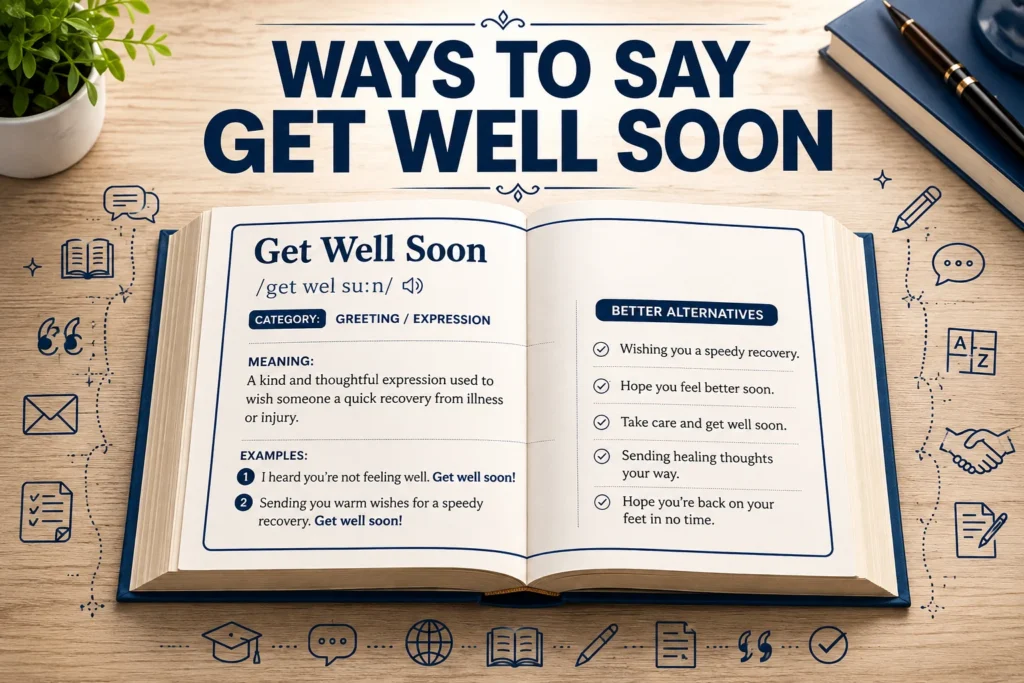
“Get well soon” is a common expression used to wish someone a quick recovery from illness, injury, or another health-related difficulty.
It does not simply describe recovery. It also communicates care, encouragement, sympathy, and goodwill.
Example
I heard that you’re not feeling well. Get well soon!
The speaker is not giving medical advice. They are simply expressing a positive wish for the person’s recovery.
Tone of “Get Well Soon”
The phrase usually sounds:
- Warm
- Caring
- Positive
- Friendly
- Supportive
- Neutral enough for many everyday situations
It can work in both personal and professional communication, but the exact wording may need adjustment.
Casual example
Get well soon! We miss you at the office.
Professional example
Wishing you a speedy recovery. Please take the time you need to rest.
Formal example
Please accept my best wishes for a full and speedy recovery.
Purpose of the Phrase
People use “get well soon” to:
- Show concern.
- Offer emotional support.
- Wish someone a quick recovery.
- Acknowledge an illness or injury.
- Maintain a caring relationship.
- Encourage someone during recovery.
Emotional Context
The phrase works best when you know the person is comfortable discussing their condition.
For a minor illness, a cheerful message may be appropriate:
Hope you feel better so*n!
For a more serious situation, a gentle expression may be better:
Wishing you strength and a smooth recovery during this difficult time.
The key is to match your message to the situation.
Professional Ways to Say “Get Well S*on”
In professional communication, the safest approach is to sound caring without asking for private medical details.
Good professional choices include:
- Wishing you a speedy recovery.
- Wishing you a smooth recovery.
- I hope you feel better soon.
- Take good care of yourself.
- Wishing you a full recovery.
- Please take the time you need to recover.
- Sending my best wishes for your recovery.
- I hope you’re back to feeling your best soon.
These expressions work well in workplace emails, professional cards, messages to clients, and notes to business contacts.
50 Alternatives to “Get Well S*on”
Professional Alternatives
1. Wishing You a Speedy Recovery
Meaning: You hope the person recovers quickly.
Tone: Warm and professional
Best use case: Colleagues, managers, clients, and business contacts
Example:
Wishing you a speedy recovery. Please take care and get plenty of rest.
2. Wishing You a Smooth Recovery
Meaning: You hope the person’s recovery goes well without major difficulties.
Tone: Professional and thoughtful
Best use case: Workplace emails and formal messages
Example:
Wishing you a smooth recovery and hoping you feel stronger each day.
3. I Hope You Feel Better Soon
Meaning: You hope the person starts feeling better quickly.
Tone: Friendly and professional
Best use case: Colleagues and acquaintances
Example:
I hope you feel better soon. Please don’t worry about the project while you’re recovering.
4. Wishing You a Full Recovery
Meaning: You hope the person completely recovers.
Tone: Professional
Best use case: More serious illnesses or injuries
Example:
Wishing you a full recovery and continued strength.
5. Take Good Care of Yourself
Meaning: You encourage the person to focus on their well-being.
Tone: Warm and supportive
Best use case: Colleagues, friends, and professional contacts
Example:
Take good care of yourself, and I hope you feel better soon.
6. Best Wishes for Your Recovery
Meaning: You are sending positive wishes during someone’s recovery.
Tone: Professional
Best use case: Cards, emails, and workplace messages
Example:
Best wishes for your recovery. We look forw*rd to hearing from you when you’re ready.
7. Sending My Best Wishes for Your Recovery
Meaning: You are expressing sincere support.
Tone: Warm and professional
Best use case: Clients, colleagues, and business contacts
Example:
Sending my best wishes for your recovery. Please take all the time you need.
8. I Hope You’re Back to Your Best Soon
Meaning: You hope the person soon returns to their normal health and energy.
Tone: Warm
Best use case: Colleagues and familiar professional contacts
Example:
I hope you’re back to your best soon. We’re all thinking of you.
9. Wishing You Strength and a Smooth Recovery
Meaning: You are offering encouragement during a difficult recovery.
Tone: Caring and respectful
Best use case: Serious illness or injury
Example:
Wishing you strength and a smooth recovery in the days ahead.
10. I Hope Your Recovery Goes Well
Meaning: You hope the recovery process progresses positively.
Tone: Neutral and professional
Best use case: Workplace communication
Example:
I hope your recovery goes well. Please let us know if you need anything from the team.
11. I Hope You’re Feeling Better Each Day
Meaning: You hope the person’s health continues to improve.
Tone: Warm
Best use case: Ongoing recovery
Example:
I hope you’re feeling better each day and getting plenty of rest.
12. Wishing You Continued Improvement
Meaning: You hope the person’s health keeps improving.
Tone: Formal and respectful
Best use case: Longer recovery periods
Example:
Wishing you continued improvement and all the best during your recovery.
13. Sending You Warm Wishes for a Quick Recovery
Meaning: You are expressing warmth and hope for a quick recovery.
Tone: Warm and professional
Best use case: Cards and supportive emails
Example:
Sending you warm wishes for a quick recovery.
14. I Hope You’re Back on Your Feet Soon
Meaning: You hope the person quickly returns to normal activity.
Tone: Friendly
Best use case: Colleagues and friends
Example:
I hope you’re back on your feet soon. The team is looking forward to having you back.
15. Wishing You Better Health Ahead
Meaning: You hope the person’s health improves.
Tone: Respectful
Best use case: General professional messages
Example:
Wishing you better health ahead and a comfortable recovery.
Formal Alternatives
16. Please Accept My Best Wishes for a Full Recovery
Meaning: A formal expression of support.
Tone: Very formal
Best use case: Formal letters and professional correspondence
Example:
Please accept my best wishes for a full recovery.
17. I Wish You a Complete and Speedy Recovery
Meaning: You hope the person fully recovers quickly.
Tone: Formal
Best use case: Official messages
Example:
I wish you a complete and speedy recovery following your recent procedure.
18. Please Accept My Sincere Wishes for Your Recovery
Meaning: A respectful expression of concern.
Tone: Formal
Best use case: Senior colleagues and formal correspondence
Example:
Please accept my sincere wishes for your recovery.
19. Wishing You a Successful Recovery
Meaning: You hope the recovery progresses well.
Tone: Formal
Best use case: Professional writing
Example:
Wishing you a successful recovery and continued strength.
20. May You Have a Smooth and Complete Recovery
Meaning: A respectful wish for full recovery.
Tone: Formal and warm
Best use case: Formal cards and personal correspondence
Example:
May you have a smooth and complete recovery.
21. With Best Wishes for Your Recovery
Meaning: A concise formal expression of goodwill.
Tone: Formal
Best use case: Cards, letters, and professional notes
Example:
With best wishes for your recovery, we hope to see you back soon.
22. Wishing You Renewed Health and Strength
Meaning: You hope the person regains health and energy.
Tone: Formal and thoughtful
Best use case: Serious or extended recovery
Example:
Wishing you renewed health and strength in the weeks ahead.
23. I Hope Your Health Continues to Improve
Meaning: You hope the person’s condition keeps getting better.
Tone: Formal
Best use case: Professional communication
Example:
I hope your health continues to improve and that your recovery remains comfortable.
24. Please Know That You Are in Our Thoughts
Meaning: You want the person to know that others are thinking about them.
Tone: Respectful and supportive
Best use case: Serious illness or difficult circumstances
Example:
Please know that you are in our thoughts as you continue your recovery.
25. We Wish You Every Success in Your Recovery
Meaning: You offer strong support and goodwill.
Tone: Formal
Best use case: Organizational messages
Example:
We wish you every success in your recovery and look forward to your return.
Friendly Alternatives
26. Hope You Feel Better Soon!
Meaning: A simple wish for quick improvement.
Tone: Friendly
Best use case: Friends and close colleagues
Example:
Hope you feel better soon! Get plenty of rest.
27. Take It Easy and Get Some Rest
Meaning: Encourages the person to rest.
Tone: Casual and caring
Best use case: Friends and close colleagues
Example:
Take it easy and get some rest. We’ll catch up when you’re feeling better.
28. Sending You Lots of Good Wishes
Meaning: You are sending positive thoughts and support.
Tone: Warm
Best use case: Friends and familiar colleagues
Example:
Sending you lots of good wishes while you recover.
29. Hope You’re Back to Feeling Like Yourself Soon
Meaning: You hope the person regains their normal energy and comfort.
Tone: Friendly
Best use case: Close relationships
Example:
Hope you’re back to feeling like yourself soon!
30. Take Care and Feel Better Soon
Meaning: Combines concern with a recovery wish.
Tone: Friendly
Best use case: Casual messages
Example:
Take care and feel better soon. We’re thinking of you!
31. Sending You Positive Thoughts
Meaning: You are offering emotional encouragement.
Tone: Warm and supportive
Best use case: Friends and acquaintances
Example:
Sending you positive thoughts as you recover.
32. Hope You’re Up and About Soon
Meaning: You hope the person returns to normal activity soon.
Tone: Friendly
Best use case: Friends and close colleagues
Example:
Hope you’re up and about soon. Take care!
33. Rest Up and Take Care
Meaning: Encourages rest and self-care.
Tone: Casual
Best use case: Texts and informal workplace messages
Example:
Rest up and take care. We’ll see you when you’re ready.
34. Sending You a Big Get-Well Wish
Meaning: A cheerful expression of support.
Tone: Casual and warm
Best use case: Friends and family
Example:
Sending you a big get-well wish!
35. Hope You’re Feeling Stronger Soon
Meaning: You hope the person regains strength.
Tone: Friendly
Best use case: Personal messages
Example:
Hope you’re feeling stronger soon. Don’t rush your recovery.
Email-Friendly Alternatives
36. I Hope You’re Feeling Better
Meaning: A polite expression of concern.
Tone: Professional and warm
Best use case: Follow-up emails
Example:
I hope you’re feeling better. Please let me know if there is anything I can do to help.
37. Wishing You a Comfortable Recovery
Meaning: You hope the recovery period is manageable and peaceful.
Tone: Professional
Best use case: Clients and colleagues
Example:
Wishing you a comfortable recovery. Please take the time you need.
38. Please Take the Time You Need to Recover
Meaning: You reassure the person that they should prioritize recovery.
Tone: Supportive and professional
Best use case: Manager-to-employee communication
Example:
Please take the time you need to recover. We’ll manage things here while you’re away.
39. We’re Thinking of You During Your Recovery
Meaning: You want the person to know they have support.
Tone: Warm and professional
Best use case: Team messages
Example:
We’re thinking of you during your recovery and wishing you all the best.
40. I Hope Your Recovery Is Going Well
Meaning: You are asking indirectly about progress while showing concern.
Tone: Professional
Best use case: Follow-up communication
Example:
I hope your recovery is going well. There is no need to respond until you’re ready.
41. Wishing You Rest and Recovery
Meaning: You hope the person gets enough rest and recovers well.
Tone: Professional and concise
Best use case: Email and cards
Example:
Wishing you rest and recovery during this time.
42. Please Focus on Your Recovery
Meaning: You encourage the person to prioritize their health.
Tone: Supportive
Best use case: Workplace communication
Example:
Please focus on your recovery. We’ll take care of the remaining tasks.
43. Sending My Warmest Wishes
Meaning: A warm expression of support.
Tone: Polished and caring
Best use case: Professional cards and messages
Example:
Sending my warmest wishes for a smooth recovery.
44. I’m Wishing You All the Best for Your Recovery
Meaning: You express sincere goodwill.
Tone: Warm and professional
Best use case: Clients, colleagues, and contacts
Example:
I’m wishing you all the best for your recovery.
45. We Look Forward to Having You Back When You’re Ready
Meaning: You show support without pressuring the person to return quickly.
Tone: Professional and thoughtful
Best use case: Workplace communication
Example:
Please take the time you need. We look forward to having you back when you’re ready.
Workplace Alternatives
46. Take the Time You Need
Meaning: The person should not feel pressured to return before they are ready.
Tone: Supportive
Best use case: Managers and colleagues
Example:
Take the time you need, and don’t worry about the project.
47. We’re All Wishing You a Smooth Recovery
Meaning: The whole team is expressing support.
Tone: Warm and professional
Best use case: Team messages
Example:
We’re all wishing you a smooth recovery and hope to see you back when you’re ready.
48. Please Focus on Getting Better
Meaning: Encourages the employee to prioritize recovery.
Tone: Caring
Best use case: Close workplace relationships
Example:
Please focus on getting better. The team has everything covered.
49. We Hope to See You Back When You’re Ready
Meaning: Shows that the team looks forward to the person’s return without applying pressure.
Tone: Warm and professional
Best use case: Workplace communication
Example:
We hope to see you back when you’re ready. Until then, take good care of yourself.
50. Sending Our Best Wishes for Your Recovery
Meaning: A group expresses support for someone’s recovery.
Tone: Professional and warm
Best use case: Team cards, workplace emails, and organizational messages
Example:
Sending our best wishes for your recovery from everyone on the team.
Quick Comparison Table
| Alternative | Tone | Formality | Best Use |
| Wishing you a speedy recovery | Warm | Professional | Clients, colleagues |
| Wishing you a smooth recovery | Thoughtful | Professional | Workplace |
| I hope you feel better soon | Friendly | Medium | Colleagues |
| Wishing you a full recovery | Respectful | Professional | Serious illness |
| Take good care of yourself | Warm | Medium | Colleagues |
| Best wishes for your recovery | Polished | Professional | Emails |
| I hope your recovery goes well | Neutral | Professional | Workplace |
| Wishing you continued improvement | Formal | High | Longer recovery |
| Please take the time you need | Supportive | Professional | Managers |
| We’re thinking of you | Warm | Medium | Team messages |
| Hope you feel better soon | Friendly | Low | Friends |
| Take it easy and get some rest | Casual | Low | Close colleagues |
| Wishing you a comfortable recovery | Caring | Professional | Clients |
| Please focus on your recovery | Supportive | Professional | Workplace |
| Sending our best wishes | Warm | Professional | Team messages |
Email Examples
Client Email
Subject: Best Wishes for Your Recovery
Dear Mr. Ahmed,
I was sorry to hear that you haven’t been feeling well. Wishing you a smooth and speedy recovery. Please take the time you need, and we can address the project whenever you are ready.
Best regards,
Daniel
Email to a Manager
Hi Sarah,
I heard that you’re recovering at home. Please take the time you need to recover. We’ll keep things moving here and make sure everything stays on track.
Wishing you a smooth recovery.
Best,
Michael
Email to a Colleague
Hi James,
Sorry to hear you’re unwell. I hope you feel better soon. Don’t worry about the meeting tomorrow; we’ll handle it.
Take care,
Emma
Customer Service Email
Dear Ms. Khan,
Thank you for your message. I’m sorry to hear that you are unwell. Wishing you a comfortable recovery. Please don’t hesitate to contact us when you are ready to continue with your request.
Kind regards,
Customer Support Team
Networking Contact
Hello David,
I was sorry to hear that you’ve been unwell. I hope your recovery is going well. There’s no need to respond now—just focus on getting better.
Wishing you all the best,
Mark
Meeting Follow-Up
Hi Team,
Thank you to everyone who attended today’s meeting. We also want to send our best wishes to Lisa, who is currently recovering.
We hope to see you back when you’re ready. In the meantime, we’ll keep everything moving.
Best,
Tom
Common Mistakes When Saying “Get Well Soon”
1. Being Too Casual
A phrase such as:
Get better already!
may sound funny between close friends, but it can sound insensitive in a professional context.
Use:
Wishing you a smooth recovery.
2. Being Too Formal
A message like:
Please accept my most profound wishes for your complete restoration to good health.
sounds unnatural in modern business communication.
A better choice is:
Wishing you a full recovery.
3. Assuming the Person Wants to Discuss Their Health
Avoid asking unnecessary personal questions.
Instead of:
What exactly happened? How serious is it?
consider:
I hope you’re doing better. Please take care.
This respects privacy.
4. Pressuring Someone to Return
Avoid:
Hope you’re back at work soon. We really need you.
This can sound like pressure.
Better:
Please take the time you need. We look forward to having you back when you’re ready.
5. Using “Get Well Soon” for Every Situation
The phrase works well for many illnesses, but it may not fit every circumstance.
For a long-term recovery, consider:
Wishing you strength and continued improvement.
For a serious situation:
Please know that you are in our thoughts.
6. Making the Message About Yourself
Avoid:
We can’t manage without you!
Even when meant kindly, this can make the person feel guilty.
Instead:
Don’t worry about work. We’ll take care of things while you recover.
7. Overwriting a Simple Message
A get-well message usually does not need a long explanation.
A short, sincere sentence often works best:
Wishing you a smooth recovery. Take good care of yourself.
Related Phrases
1. Wishing You a Speedy Recovery
A professional wish for quick improvement.
Example:
Wishing you a speedy recovery and all the best.
2. Wishing You a Full Recovery
A wish for complete recovery.
Example:
Wishing you a full recovery.
3. Take Care
A simple expression of concern.
Example:
Take care and get plenty of rest.
4. Rest Up
A casual encouragement to rest.
Example:
Rest up and take care of yourself.
5. Feel Better Soon
A shorter, friendly alternative.
Example:
Feel better soon!
6. Wishing You Strength
A supportive expression for difficult circumstances.
Example:
Wishing you strength during your recovery.
7. Best Wishes for Your Recovery
A polished professional expression.
Example:
Best wishes for your recovery.
8. Take All the Time You Need
Shows that the person should not feel pressured.
Example:
Take all the time you need to recover.
9. Thinking of You
Shows emotional support.
Example:
We’re thinking of you and wishing you well.
10. Sending You Positive Thoughts
Offers encouragement.
Example:
Sending you positive thoughts as you recover.
11. Wishing You Better Days Ahead
Offers hope for improvement.
Example:
Wishing you better days ahead.
12. Hope You’re Back to Your Best Soon
Expresses hope for a return to normal health.
Example:
Hope you’re back to your best soon.
13. Wishing You Continued Improvement
Useful when someone has already started recovering.
Example:
Wishing you continued improvement.
14. I Hope Your Recovery Goes Well
A neutral professional option.
Example:
I hope your recovery goes well.
15. Sending Warm Wishes
A warm but flexible expression.
Example:
Sending warm wishes for a comfortable recovery.
16. We’re Thinking of You
Useful for team messages.
Example:
We’re thinking of you and hoping you feel stronger soon.
17. Take Good Care of Yourself
Encourages self-care without giving medical advice.
Example:
Take good care of yourself and get plenty of rest.
18. Wishing You Comfort and Strength
Appropriate for a more difficult situation.
Example:
Wishing you comfort and strength in the days ahead.
Phrase Comparison: “Get Well Soon” vs. Alternatives
“Get Well Soon” vs. “Wishing You a Speedy Recovery”
Get well soon sounds more conversational.
Wishing you a speedy recovery sounds more polished and professional.
Use the first with friends and familiar colleagues. Use the second with clients, managers, and business contacts.
“Get Well Soon” vs. “I Hope You Feel Better Soon”
These phrases have almost the same meaning.
However, “I hope you feel better soon” often sounds more personal because it focuses directly on how the person feels.
“Get Well Soon” vs. “Wishing You a Smooth Recovery”
“Wishing you a smooth recovery” works especially well when the person faces a longer recovery period.
It sounds thoughtful without being overly emotional.
“Get Well Soon” vs. “Take Good Care of Yourself”
“Get well soon” focuses on recovery.
“Take good care of yourself” focuses on the person’s well-being.
You can combine them:
Take good care of yourself, and I hope you feel better soon.
“Get Well Soon” vs. “Please Take the Time You Need”
The second expression works especially well in workplace communication.
It tells the person that they do not need to worry about work while recovering.
Cultural Usage
US English
“Get well soon” is very common in American English. People use it in texts, greeting cards, workplace messages, and informal emails.
Professional alternatives such as:
Wishing you a speedy recovery.
are also common in business settings.
American workplace culture often favors a friendly and direct tone, so:
I hope you feel better soon.
can work well with colleagues.
UK English
British English also uses “get well soon” frequently.
Expressions such as:
I hope you’re feeling better.
and:
Wishing you a speedy recovery.
are also natural.
The phrase “I hope you’re keeping well” is common as a general greeting, but it does not specifically replace “get well soon” when someone is already ill.
Corporate Communication
Companies should keep get-well messages respectful and concise.
A manager might write:
Please take the time you need to recover. We’re wishing you a smooth recovery.
This communicates support without asking for private details.
Customer Service
Customer service messages should focus on empathy and professionalism.
Good:
I’m sorry to hear that you’re unwell. Wishing you a comfortable recovery.
Avoid overly personal questions about the customer’s medical situation.
Networking
A networking contact may require a more neutral message:
I hope your recovery is going well. Please take care, and I look forward to reconnecting when you’re feeling better.
This shows concern while maintaining professional boundaries.
Frequently Asked Questions
What is a professional way to say “get well soon”?
“Wishing you a speedy recovery” is one of the best professional alternatives. Other options include “Wishing you a smooth recovery” and “Best wishes for your recovery.”
What is a formal alternative to “get well soon”?
A formal alternative is:
Please accept my best wishes for a full recovery.
For most modern business communication, however, “Wishing you a speedy recovery” sounds more natural.
What is the best way to say “get well soon” in an email?
Use:
I hope you feel better soon.
For a more formal email:
Wishing you a smooth and speedy recovery.
How do you say “get well soon” professionally to a colleague?
You can say:
I hope you feel better soon. Please take the time you need to recover.
This sounds caring without being overly personal.
How do you say “get well soon” to a client?
A good option is:
Wishing you a smooth recovery. Please take the time you need, and we can reconnect when you’re ready.
Is “get well soon” professional?
Yes. “Get well soon” is professional enough for many everyday situations, but alternatives such as “Wishing you a speedy recovery” can sound more polished in formal business communication.
Is “hope you feel better soon” professional?
Yes. It has a friendly, natural tone and works well with colleagues, familiar clients, and other professional contacts.What is a warm way to say “get well soon”?
Try:
Take good care of yourself, and I hope you’re feeling stronger soon.
It sounds warm without becoming overly emotional.
What can I say instead of “get well soon” to a manager?
You could say:
Wishing you a smooth recovery. Please take the time you need to rest and recover.
What can I say instead of “get well soon” to an employee?
A supportive option is:
Please focus on your recovery. We’ll take care of things here while you’re away.
This avoids creating pressure to return.
What is a casual way to say “get well soon”?
Try:
Hope you feel better soon!
or:
Rest up and take care!
These work well with friends and close colleagues.
What should I say when someone is seriously ill?
Choose a gentle expression rather than a cheerful one.
For example:
Please know that you are in our thoughts. Wishing you strength and comfort during your recovery.
How do you wish someone a quick recovery?
You can say:
Wishing you a speedy recovery.
This is concise, positive, and appropriate for most situations.
How do you say “get well soon” without sounding too formal?
Use:
I hope you’re feeling better soon.
or:
Take care and get plenty of rest.
What should I avoid when sending a get-well message?
Avoid asking intrusive medical questions, making jokes about serious illness, pressuring someone to return to work, or using overly dramatic language. Keep your message sincere, respectful, and appropriate for your relationship.
Final Summary
Best Professional Options
- Wishing you a speedy recovery.
- Wishing you a smooth recovery.
- Best wishes for your recovery.
- Wishing you a full recovery.
- I hope your recovery goes well.
Best Formal Options
- Please accept my best wishes for a full recovery.
- I wish you a complete and speedy recovery.
- Please accept my sincere wishes for your recovery.
- Wishing you renewed health and strength.
Best Casual Options
- Hope you feel better soon!
- Take care and feel better soon.
- Rest up and take care.
- Take it easy and get some rest.
Best Email Options
- I hope you feel better soon.
- Wishing you a smooth recovery.
- Please take the time you need to recover.
- Sending my best wishes for your recovery.
- I hope your recovery is going well.
Best Workplace Options
- Please focus on your recovery.
- Take the time you need.
- We’re all wishing you a smooth recovery.
- We look forward to having you back when you’re ready.
- Don’t worry about work while you recover.
The best choice always depends on your relationship with the recipient and the seriousness of the situation. A short, sincere message usually works better than an elaborate one.
Conclusion
Finding the right alternative to “get well soon” helps you express care while matching the situation and relationship. For professional communication, phrases such as “Wishing you a speedy recovery,” “Wishing you a smooth recovery,” and “Please take the time you need to recover” offer warmth without sounding too personal. With friends, a simple “Hope you feel better soon!” may feel more natural. In workplace communication, always avoid creating pressure to return. Choose words that respect privacy, show genuine support, and fit the tone of your email or message. The most effective get-well message is sincere, thoughtful, and appropriate.