The phrase “have a good day” is one of the most common ways to end a conversation or email. It’s friendly, positive, and appropriate in both personal and professional settings. However, using the same closing repeatedly can sound predictable, especially in business communication.
Learning other ways to say “have a good day” helps you sound more polished, thoughtful, and professional. Whether you’re writing to a client, manager, colleague, customer, or networking contact, choosing the right closing leaves a lasting positive impression.
In this guide, you’ll discover professional, formal, friendly, and workplace-friendly alternatives to “have a good day.” You’ll also learn when to use each phrase, how they differ in tone, and which options work best in emails, meetings, customer service, and everyday conversations.
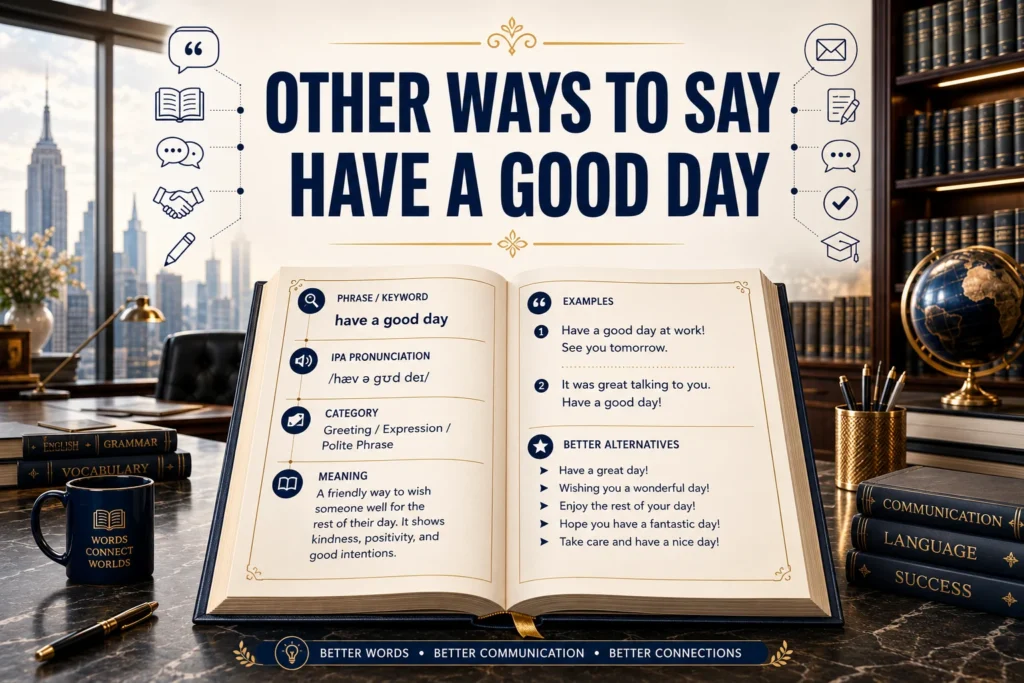
What Does “Have a Good Day” Mean?
The expression “have a good day” is a polite wish that hopes the other person enjoys a pleasant, productive, or happy day.
It is commonly used at the end of conversations, emails, phone calls, and customer interactions.
Literal Meaning
The phrase simply means:
I hope your day goes well.
It expresses goodwill without expecting anything in return.
Tone
“Have a good day” is generally:
- Friendly
- Polite
- Positive
- Professional
- Universal
Because of its neutral tone, it fits almost every situation.
Purpose
People use this phrase to:
- End conversations politely
- Close professional emails
- Leave a positive impression
- Show kindness and respect
- Strengthen professional relationships
- Create a friendly customer experience
Emotional Context
Although simple, this phrase shows courtesy and warmth. It tells the recipient that you value the interaction and wish them well.
For example:
Thank you for your time. Have a good day!
This closing feels more thoughtful than ending the email without any polite sign-off.
Examples
Example 1
Thank you for your assistance. Have a good day!
Example 2
It was great speaking with you. Have a wonderful day.
Example 3
I appreciate your support. Wishing you a great day ahead.
Example 4
Thanks again. Enjoy the rest of your day.
When Should You Use “Have a Good Day”?
This phrase works well in many professional and personal situations.
1. Business Emails
Ending an email with a positive wish creates a professional and friendly tone.
Example:
Thank you for reviewing the proposal. Have a good day!
2. Workplace Communication
Employees often use this phrase when ending chats, meetings, or internal emails.
Example:
Thanks for your help today. Have a great day!
3. Client Communication
A polite closing helps build trust and professionalism.
Example:
We appreciate your business. Have a wonderful day.
4. Customer Service
Customer service representatives frequently end conversations with positive wishes.
Example:
Thank you for contacting our support team. Have a great day!
5. Networking
Professional networking messages benefit from warm, respectful endings.
Example:
It was a pleasure connecting with you. Have a fantastic day!
Professional Alternatives to “Have a Good Day”
The following alternatives are suitable for business communication, professional emails, and workplace conversations.
1. Have a Great Day
Meaning: A slightly warmer version of “have a good day.”
Tone: Professional and friendly
Best Use Case: Everyday business communication
Example:
Thank you for your time. Have a great day!
2. Wishing You a Wonderful Day
Meaning: Expresses sincere goodwill.
Tone: Warm and professional
Best Use Case: Client emails
Example:
Wishing you a wonderful day and continued success.
3. Enjoy the Rest of Your Day
Meaning: Best used later in the day.
Tone: Friendly professional
Best Use Case: Afternoon emails
Example:
Thank you again. Enjoy the rest of your day.
4. Take Care
Meaning: A thoughtful way to end a conversation.
Tone: Friendly and caring
Best Use Case: Colleagues and networking contacts
Example:
It was great speaking with you. Take care!
5. All the Best
Meaning: Wish someone continued success.
Tone: Professional
Best Use Case: Formal emails
Example:
All the best with your new project.
6. Wishing You All the Best
Meaning: A more complete version of “All the best.”
Tone: Warm and professional
Best Use Case: Client communication
Example:
Wishing you all the best in the coming weeks.
7. Have a Wonderful Day
Meaning: A more enthusiastic version of the original phrase.
Tone: Positive
Best Use Case: Customer service
Example:
Thank you for choosing us. Have a wonderful day!
8. Have an Excellent Day
Meaning: A polished professional alternative.
Tone: Formal professional
Best Use Case: Business emails
Example:
Have an excellent day, and thank you again.
9. Wishing You a Productive Day
Meaning: Hope someone has a successful workday.
Tone: Workplace professional
Best Use Case: Coworkers and managers
Example:
Wishing you a productive day ahead.
10. Have a Pleasant Day
Meaning: A polite and classic business closing.
Tone: Formal
Best Use Case: Corporate communication
Example:
Thank you for your cooperation. Have a pleasant day.
11. Have a Fantastic Day
Meaning: Adds extra enthusiasm.
Tone: Friendly
Best Use Case: Customer interactions
Example:
Have a fantastic day, and thank you for your order.
12. Wishing You a Great Day Ahead
Meaning: Expresses optimism for the rest of the day.
Tone: Professional
Best Use Case: Email closings
Example:
Wishing you a great day ahead.
13. Hope You Have a Great Day
Meaning: Sounds personal and genuine.
Tone: Warm
Best Use Case: Networking
Example:
Hope you have a great day!
14. Enjoy Your Day
Meaning: Short and positive.
Tone: Friendly professional
Best Use Case: Everyday conversations
Example:
Thanks again. Enjoy your day!
15. Keep Smiling
Meaning: Encourages positivity.
Tone: Casual friendly
Best Use Case: Close coworkers
Example:
Keep smiling, and have an amazing day!
16. Have a Beautiful Day
Meaning: A heartfelt and cheerful wish.
Tone: Warm
Best Use Case: Friendly emails
Example:
Have a beautiful day!
17. Stay Safe
Meaning: Wishes for someone’s wellbeing.
Tone: Caring professional
Best Use Case: Travel, weather, or health-related conversations
Example:
Stay safe, and have a wonderful day.
18. Until Next Time
Meaning: Friendly closing when you’ll speak again.
Tone: Professional
Best Use Case: Ongoing projects
Example:
Until next time, take care.
19. Have a Successful Day
Meaning: Wishes success rather than just happiness.
Tone: Workplace professional
Best Use Case: Business partners and colleagues
Example:
Have a successful day, and good luck with your presentation.
20. Wishing You Continued Success Today
Meaning: Combines encouragement with professionalism.
Tone: Formal and motivating
Best Use Case: Clients and business partners
Example:
Wishing you continued success today and throughout the week.
Featured Snippet Answer
What are other ways to say “have a good day”?
Some of the best alternatives to “have a good day” include:
- Have a great day
- Have a wonderful day
- Enjoy your day
- Enjoy the rest of your day
- Wishing you a great day ahead
- Have an excellent day
- Have a pleasant day
- All the best
- Take care
- Stay safe
- Wishing you all the best
- Have a fantastic day
- Hope you have a great day
- Have a successful day
- Wishing you continued success today
Friendly Alternatives
These expressions are warm, natural, and perfect for coworkers, friends, networking contacts, and everyday conversations.
21. Have an Amazing Day
Meaning: Wish someone an especially enjoyable day.
Tone: Friendly and enthusiastic
Best Use Case: Colleagues, friends, customers
Example:
Thanks for your help today. Have an amazing day!
22. Hope Your Day Goes Well
Meaning: A sincere way to wish someone well.
Tone: Warm
Best Use Case: Professional conversations
Example:
Hope your day goes well, and thanks again.
23. Enjoy the Rest of Your Week
Meaning: Extend your good wishes beyond today.
Tone: Friendly professional
Best Use Case: Thursday or Friday emails
Example:
It was great working with you. Enjoy the rest of your week.
24. Have a Lovely Day
Meaning: A kind and cheerful farewell.
Tone: Warm and polite
Best Use Case: Customer service
Example:
Thank you for shopping with us. Have a lovely day!
25. Have a Brilliant Day
Meaning: A lively alternative, especially common in British English.
Tone: Friendly
Best Use Case: Informal workplace conversations
Example:
Have a brilliant day!
26. Hope Everything Goes Well Today
Meaning: Express support and encouragement.
Tone: Caring
Best Use Case: Before meetings or presentations
Example:
Hope everything goes well today.
27. Have Fun Today
Meaning: Wish someone an enjoyable day.
Tone: Casual
Best Use Case: Friends and close coworkers
Example:
Have fun today at the team event!
28. Make It a Great Day
Meaning: Encourage a positive mindset.
Tone: Motivational
Best Use Case: Team communication
Example:
Thanks, everyone. Make it a great day!
29. Enjoy Every Moment
Meaning: Encourage someone to appreciate the day.
Tone: Warm
Best Use Case: Friendly conversations
Example:
Enjoy every moment of your trip.
30. Have the Best Day
Meaning: An enthusiastic goodbye.
Tone: Friendly
Best Use Case: Personal and workplace conversations
Example:
Have the best day!
Email Alternatives
These phrases are excellent email sign-offs that sound polished and professional.
31. Best Wishes
Meaning: Send positive regards.
Tone: Professional
Best Use Case: Business emails
Example:
Best wishes, Emma
32. Kind Regards
Meaning: One of the most common professional email closings.
Tone: Formal
Best Use Case: Clients and managers
Example:
Kind regards, Michael
33. Warm Regards
Meaning: Slightly friendlier than “Kind regards.”
Tone: Professional and warm
Best Use Case: Existing clients
Example:
Warm regards, Sarah
34. Wishing You Continued Success
Meaning: Encourage future achievement.
Tone: Professional
Best Use Case: Business partners
Example:
Wishing you continued success.
35. Thank You Again
Meaning: Show appreciation before ending.
Tone: Professional
Best Use Case: Follow-up emails
Example:
Thank you again for your valuable feedback.
36. I Appreciate Your Time
Meaning: Express gratitude respectfully.
Tone: Professional
Best Use Case: Client communication
Example:
I appreciate your time and support.
37. Looking Forward to Speaking Again
Meaning: End positively while anticipating future contact.
Tone: Professional
Best Use Case: Networking
Example:
Looking forward to speaking again soon.
38. Until We Speak Again
Meaning: Friendly closing.
Tone: Warm professional
Best Use Case: Ongoing projects
Example:
Until we speak again, take care.
39. Thanks and Have a Wonderful Day
Meaning: Combines gratitude with a positive wish.
Tone: Professional
Best Use Case: Customer support
Example:
Thanks, and have a wonderful day!
40. Thank You and Take Care
Meaning: Friendly email ending.
Tone: Warm
Best Use Case: Internal communication
Example:
Thank you, and take care.
Workplace Alternatives
These expressions fit meetings, office chats, project updates, and professional communication.
41. Have a Productive Afternoon
Meaning: Wish someone a successful afternoon.
Tone: Professional
Example:
Have a productive afternoon!
42. Good Luck Today
Meaning: Encourage someone before an important task.
Tone: Friendly
Example:
Good luck today with your presentation.
43. Best of Luck
Meaning: Wish someone success.
Tone: Professional
Example:
Best of luck with the client meeting.
44. Keep Up the Great Work
Meaning: Encourage continued effort.
Tone: Motivational
Example:
Keep up the great work!
45. Have a Successful Week
Meaning: Wish success beyond today.
Tone: Professional
Example:
Have a successful week ahead.
46. See You Soon
Meaning: Friendly goodbye.
Tone: Casual professional
Example:
Thanks, everyone. See you soon.
47. Speak to You Soon
Meaning: End a conversation naturally.
Tone: Professional
Example:
Speak to you soon.
48. Have a Relaxing Evening
Meaning: Best used after work hours.
Tone: Warm
Example:
Have a relaxing evening.
49. Enjoy Your Weekend
Meaning: Ideal on Fridays.
Tone: Friendly professional
Example:
Enjoy your weekend!
50. Have a Safe Trip
Meaning: Wish someone safe travels.
Tone: Caring
Example:
Have a safe trip, and enjoy your visit.
Quick Comparison Table
| Alternative | Tone | Best Use |
| Have a great day | Professional | Everyday business emails |
| Have a wonderful day | Warm | Clients and customers |
| Have an excellent day | Formal | Business correspondence |
| Enjoy your day | Friendly | General conversations |
| Take care | Warm | Colleagues and networking |
| All the best | Professional | Email sign-offs |
| Stay safe | Caring | Travel or health-related messages |
| Best wishes | Professional | Formal emails |
| Warm regards | Professional | Existing business relationships |
| Have a productive day | Workplace | Internal communication |
Email Examples
Client
Dear Olivia,
Thank you for choosing our services. If you have any questions, please don’t hesitate to contact me.
Have a wonderful day!
Kind regards, Daniel
Manager
Hi James,
I’ve attached the updated report for your review.
Wishing you a productive day.
Best regards, Emma
Colleague
Hi Alex,
Thanks for helping with today’s project.
Have a great day!
See you tomorrow.
Customer
Dear Customer,
Your request has been completed successfully.
Thank you for contacting us, and have a fantastic day!
Networking Contact
Hello David,
It was a pleasure connecting with you today.
Wishing you continued success, and I hope we speak again soon.
Meeting Follow-up
Hi Team,
Thank you for today’s productive discussion.
Have a successful afternoon, and I’ll send the meeting notes shortly.
Common Mistakes
1. Repeating the Same Closing
Using “have a good day” in every email can make your communication feel repetitive. Rotate between professional alternatives to keep your writing fresh.
2. Using a Casual Phrase in a Formal Email
Avoid phrases like:
- Have fun!
- Catch you later!
- See ya!
Instead, choose:
- Have an excellent day.
- Best wishes.
- Kind regards.
3. Being Overly Formal with Friends or Coworkers
Very formal endings can sound distant in everyday workplace conversations.
Instead of:
Wishing you continued prosperity.
Use:
Have a great day!
4. Forgetting the Context
Match your closing to the situation.
- Morning: Have a great day.
- Afternoon: Enjoy the rest of your day.
- Friday: Enjoy your weekend.
- Before a presentation: Good luck today.
5. Ending Abruptly
Avoid ending an email immediately after the main message.
Instead, include a polite closing.
Example:
Thank you again for your support. Have a wonderful day!
Related Phrases
| Phrase | Meaning | Example |
| Have a great day | Friendly farewell | Have a great day! |
| Have a wonderful day | Warm farewell | Have a wonderful day! |
| Have an excellent day | Formal farewell | Have an excellent day. |
| Enjoy your day | Positive goodbye | Enjoy your day! |
| Enjoy the rest of your day | Afternoon closing | Enjoy the rest of your day. |
| Have a pleasant day | Polite farewell | Have a pleasant day. |
| Take care | Caring goodbye | Take care! |
| Stay safe | Wish wellbeing | Stay safe. |
| Best wishes | Professional sign-off | Best wishes. |
| All the best | Wish success | All the best! |
| Warm regards | Professional email closing | Warm regards. |
| Kind regards | Formal email closing | Kind regards. |
| Good luck today | Encourage success | Good luck today! |
| Have a productive day | Workplace farewell | Have a productive day. |
| Wishing you all the best | Warm professional wish | Wishing you all the best. |
Phrase Comparison
While “have a good day” is a timeless and polite expression, different situations call for different farewells. Choosing the right alternative helps you match the tone of your conversation, strengthen relationships, and sound more natural in professional communication.
| Phrase | Tone | Formality | Best Use |
| Have a good day | Neutral | Medium | Everyday conversations and emails |
| Have a great day | Friendly | Medium | Business and casual communication |
| Have a wonderful day | Warm | Medium | Clients and customers |
| Have an excellent day | Professional | High | Formal business emails |
| Have a pleasant day | Formal | High | Corporate and customer service |
| Enjoy your day | Friendly | Low | Colleagues and acquaintances |
| Enjoy the rest of your day | Professional | Medium | Afternoon emails |
| Take care | Warm | Medium | Networking and coworkers |
| All the best | Professional | High | Email sign-offs |
| Best wishes | Professional | High | Formal correspondence |
| Stay safe | Caring | Medium | Travel, health, or bad weather |
| Wishing you a productive day | Professional | Medium | Workplace communication |
| Have a successful day | Motivational | Medium | Business teams |
| Have a fantastic day | Enthusiastic | Low | Friendly customer interactions |
| Have a brilliant day | Friendly | Low | Common in UK English |
Which Alternative Should You Choose?
For clients
- Have a wonderful day.
- Have an excellent day.
- Best wishes.
For managers
- Wishing you a productive day.
- Have a pleasant day.
- All the best.
For coworkers
- Have a great day.
- Enjoy the rest of your day.
- Take care.
For customers
- Thank you, and have a wonderful day.
- Have a fantastic day.
- Have a pleasant day.
For networking
- All the best.
- Wishing you continued success.
- Take care.
Cultural Usage
Although “have a good day” is understood throughout the English-speaking world, some alternatives are more common in certain regions and professional settings.
US English
In the United States, people often prefer direct, friendly expressions.
Popular choices include:
- Have a great day.
- Have an awesome day.
- Enjoy your day.
- Take care.
These phrases are common in workplaces, retail stores, customer service, and business emails.
UK English
British English tends to favour slightly more reserved and traditional wording.
Common expressions include:
- Have a lovely day.
- Have a brilliant day.
- All the best.
- Kind regards.
These alternatives are frequently used in professional and personal communication.
Corporate Communication
In corporate environments, professionalism and clarity are important.
Recommended closings include:
- Have an excellent day.
- Best wishes.
- Kind regards.
- Wishing you a productive day.
Avoid overly casual phrases like:
- Have an awesome day!
- Catch you later!
- See ya!
unless you know the recipient well.
Customer Service
Customer-facing communication should be polite, positive, and appreciative.
Examples include:
Thank you for contacting us. Have a wonderful day!
We appreciate your business. Have a pleasant day.
These endings help create a positive customer experience.
Networking
When building professional relationships, end your message with warmth and confidence.
Good options include:
- Wishing you continued success.
- All the best.
- Take care.
- Looking forward to staying in touch.
FAQs
What is a professional way to say “have a good day”?
Some of the best professional alternatives are:
- Have an excellent day.
- Wishing you a productive day.
- Have a pleasant day.
- Best wishes.
- All the best.
Is “have a good day” professional?
Yes. It is polite, respectful, and suitable for business emails, workplace communication, and customer service.
What is a more formal alternative?
Formal alternatives include:
- Have an excellent day.
- Have a pleasant day.
- Wishing you a wonderful day.
- Best wishes.
Can I use “have a great day” in business emails?
Absolutely. It sounds natural, friendly, and professional in most industries.
Which alternative works best with clients?
Excellent choices include:
- Have a wonderful day.
- Best wishes.
- Have a pleasant day.
- Wishing you continued success.
Should I end every email with “have a good day”?
Not necessarily. Rotating your email closings keeps your writing fresh and more engaging.
What’s the difference between “have a good day” and “have a great day”?
“Have a great day” sounds slightly warmer and more enthusiastic, while “have a good day” is more neutral.
Is “take care” appropriate in professional communication?
Yes. It works well with colleagues, long-term clients, and networking contacts, although it may feel too personal in very formal situations.
What should I say instead of “have a good day” in customer service?
Try:
- Have a wonderful day.
- Have a pleasant day.
- Thank you, and have a fantastic day.
Which farewell sounds most professional?
“Best wishes” and “Have an excellent day” are among the most professional choices.
Can I use “enjoy your day” in the workplace?
Yes. It is friendly and appropriate for coworkers and internal communication.
What should I say on Friday instead of “have a good day”?
You can say:
- Enjoy your weekend.
- Have a relaxing weekend.
- Wishing you a great weekend.
What is the best email sign-off besides “have a good day”?
Popular options include:
- Kind regards.
- Warm regards.
- Best wishes.
- All the best.
How do I sound more natural in professional emails?
Match your closing to your relationship with the recipient, avoid repeating the same phrase, and keep your tone consistent throughout the email.
What is the best alternative in 2026?
Modern professional communication often favours:
- Have a great day.
- Wishing you a productive day.
- Have an excellent day.
- Best wishes.
- Enjoy the rest of your day.
These expressions sound professional, friendly, and natural.
Final Summary
The phrase “have a good day” remains one of the most useful and versatile ways to end conversations and emails. However, using different expressions helps your communication feel more personal, professional, and engaging. Whether you’re writing to a client, manager, coworker, customer, or networking contact, choosing the right farewell can leave a stronger final impression. Formal options such as “Have an excellent day” and “Best wishes” work well in business settings, while warmer alternatives like “Have a wonderful day”, “Take care”, and “Enjoy the rest of your day” create a friendly, approachable tone. By matching your closing to the situation and audience, you’ll improve your email etiquette, workplace communication, and overall professional writing.
Best Professional Options
- Have an excellent day.
- Best wishes.
- Wishing you a productive day.
- Have a pleasant day.
- All the best.
Best Formal Options
- Have an excellent day.
- Best wishes.
- Kind regards.
- Wishing you all the best.
- Have a pleasant day.
Best Casual Options
- Have a great day.
- Enjoy your day.
- Take care.
- Have an amazing day.
- Have the best day.
Best Email Options
- Best wishes.
- Kind regards.
- Warm regards.
- Have a wonderful day.
- Enjoy the rest of your day.