
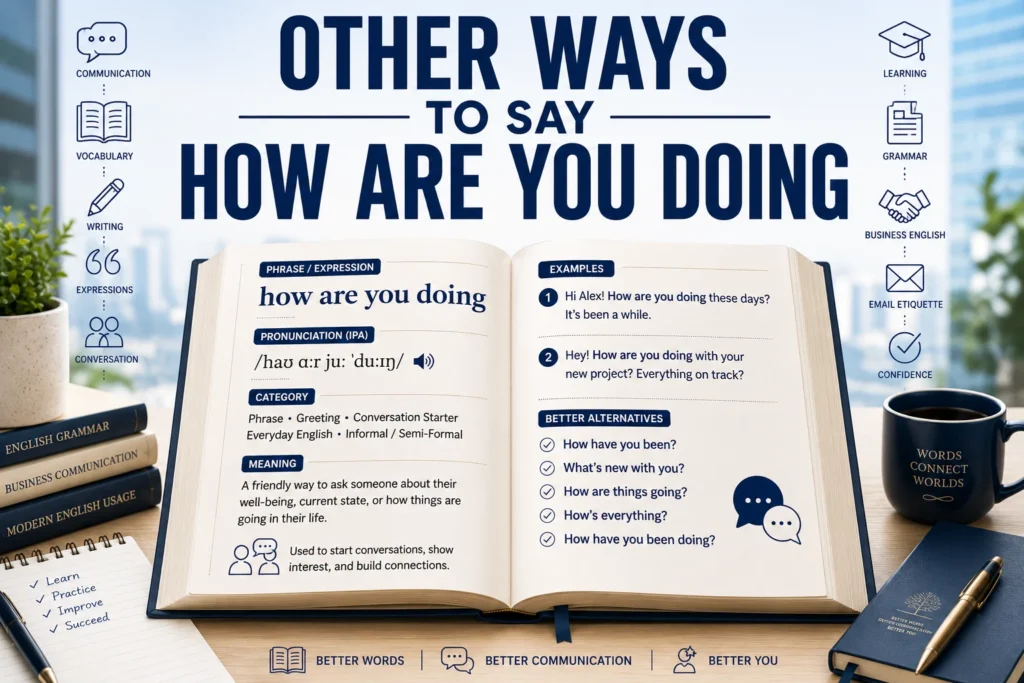
Other ways to say “how are you doing” can help you sound more professional, friendly, or natural depending on the situation. While “How are you doing?” is one of the most common English greetings, using the same phrase repeatedly can make your conversations and emails feel repetitive.
Whether you’re writing a business email, talking to a client, greeting a coworker, or meeting someone at a networking event, choosing the right alternative creates a better first impression. Some expressions are perfect for professional communication, while others work best in casual conversations with friends or family.
In this guide, you’ll learn the meaning of “How are you doing?”, when to use it, and the best alternatives for emails, workplace communication, customer service, and everyday conversations.
What Does “How Are You Doing” Mean?
The phrase “How are you doing?” is a polite greeting used to ask about someone’s well-being or how things are going in their life or work. Most of the time, it starts a conversation rather than asking for a detailed answer.
Literal Meaning
It asks how someone is feeling or how their life, work, or day is going.
Example:
- Hi David, how are you doing today?
- I’m doing well, thanks. How about you?
Tone
The tone is warm, friendly, and polite. It works in both personal and professional settings, although formal business emails often use slightly different wording.
Purpose
People use this phrase to:
- Start a conversation.
- Show politeness and respect.
- Build relationships.
- Make emails sound friendly.
- Create a positive first impression.
Emotional Context
Depending on the situation, the phrase can express:
- Kindness
- Interest
- Professional courtesy
- Concern
- Friendliness
For example, asking a colleague, “How are you doing after the busy week?” shows genuine interest rather than simply saying hello.
When Should You Use “How Are You Doing?”
This greeting is suitable for many situations.
In Emails
Use it at the beginning of friendly or semi-formal emails.
Example:
Hi Emma,
I hope you’re doing well. I wanted to follow up on our meeting yesterday.
In the Workplace
It’s a polite way to greet coworkers before discussing work.
Example:
“Good morning, Alex. How are you doing today?”
With Clients
Use a more professional version such as:
- I hope you’re doing well.
- I trust you’re doing well.
These sound more polished than simply asking, “How are you doing?”
Networking
When meeting someone after a long time, this phrase helps restart the conversation naturally.
Example:
“Hi Mark! How have you been? It’s great to see you again.”
Customer Service
Support teams often replace it with warmer greetings like:
- I hope you’re having a great day.
- I hope everything is going well.
These create a welcoming customer experience.
Professional Alternatives to “How Are You Doing”
Here are some of the best professional ways to say “How are you doing?” in emails, meetings, and workplace communication.
1. I Hope You’re Doing Well
Tone: Professional and polite
Best Use: Business emails and client communication
Example:
I hope you’re doing well. I’m reaching out regarding our upcoming project.
2. I Trust You’re Doing Well
Tone: Formal
Best Use: Senior managers, executives, and clients
Example:
I trust you’re doing well and having a productive week.
3. How Are Things Going?
Tone: Professional but friendly
Best Use: Coworkers and colleagues
Example:
How are things going with your new project?
4. How Have You Been?
Tone: Warm and conversational
Best Use: Someone you haven’t spoken to recently
Example:
It’s been a while. How have you been?
5. How’s Everything Going?
Tone: Friendly professional
Best Use: Team conversations
Example:
Hi Lisa, how’s everything going this week?
6. I Hope Everything Is Going Well
Tone: Polite
Best Use: Business emails
Example:
I hope everything is going well at your office.
7. How Are Things on Your End?
Tone: Modern workplace language
Best Use: Remote teams and online meetings
Example:
We’ve completed our part. How are things on your end?
8. I Hope You’re Having a Great Week
Tone: Positive
Best Use: Client emails
Example:
I hope you’re having a great week. I wanted to share a quick update.
9. How’s Your Day Going?
Tone: Friendly
Best Use: Coworkers and casual business chats
Example:
Hi James, how’s your day going so far?
10. Is Everything Going Well?
Tone: Polite and supportive
Best Use: Checking in with colleagues
Example:
Is everything going well with the presentation?
11. I Hope All Is Well
Tone: Formal
Best Use: Business correspondence
Example:
I hope all is well. Thank you for your quick response.
12. How’s Work Going?
Tone: Casual workplace
Best Use: Colleagues
Example:
How’s work going this week?
13. How Are You Keeping?
Tone: Polite (common in UK English)
Best Use: Professional and social conversations
Example:
Hello Sarah, how are you keeping these days?
14. I Hope Things Are Going Smoothly
Tone: Professional
Best Use: Clients and project partners
Example:
I hope things are going smoothly with your new launch.
15. It’s Great to Connect Again. How Have You Been?
Tone: Warm and professional
Best Use: Networking and reconnecting
Example:
It’s great to connect again. How have you been since our last meeting?
Formal Alternatives
These expressions are ideal for business emails, official meetings, and professional communication.
16. How Do You Do?
Tone: Very formal
Best Use: Formal introductions
Example: Good afternoon, Mr. Brown. How do you do?
17. I Hope This Message Finds You Well
Tone: Professional
Best Use: Business emails
Example: I hope this message finds you well. I’m writing to discuss your proposal.
18. I Hope You Are Keeping Well
Tone: Formal and polite
Best Use: Clients and senior professionals
Example: I hope you are keeping well.
19. I Trust Everything Is Going Well
Tone: Formal
Best Use: Corporate communication
Example: I trust everything is going well at your office.
20. I Hope Life Is Treating You Well
Tone: Warm yet professional
Best Use: Long-term clients and business contacts
Example: I hope life is treating you well.
21. I Hope Your Week Is Going Well
Tone: Professional
Best Use: Midweek business emails
Example: I hope your week is going well.
22. I Hope All Is Going Smoothly
Tone: Professional
Best Use: Project communication
Example: I hope all is going smoothly with your new project.
23. How Have Things Been?
Tone: Neutral
Best Use: Reconnecting after some time
Example: It’s been a while. How have things been?
24. I Hope You’re Having a Productive Week
Tone: Corporate
Best Use: Workplace emails
Example: I hope you’re having a productive week.
25. I Hope Everything Is Running Smoothly
Tone: Formal
Best Use: Client follow-ups
Example: I hope everything is running smoothly on your end.
Friendly Alternatives
These greetings sound natural in everyday conversations.
26. What’s New?
Tone: Casual
Example: Hey! What’s new?
27. How’s Life?
Tone: Friendly
Example: Hi! How’s life these days?
28. How’s Everything?
Tone: Casual
Example: How’s everything going?
29. How’s It Going?
Tone: Relaxed
Example: Hey Alex, how’s it going?
30. What’s Going On?
Tone: Informal
Example: Hi! What’s going on?
31. How Are Things?
Tone: Friendly
Example: How are things at your new job?
32. Everything Good?
Tone: Casual
Example: Everything good today?
33. How’s Your Week Been?
Tone: Friendly
Example: How’s your week been so far?
34. How Have You Been Doing?
Tone: Caring
Example: It’s nice to see you again. How have you been doing?
35. Hope You’re Having a Great Day
Tone: Warm
Example: Hope you’re having a great day!
Email Alternatives
These are excellent choices for business emails.
36. I Hope You’re Well
Best Use: General business emails
37. I Hope You’re Having a Wonderful Day
Best Use: Customer communication
38. I Hope This Email Finds You Well
Best Use: Formal emails
39. I Hope Things Are Going Well for You
Best Use: Clients
40. I Wanted to Check In
Best Use: Follow-up emails
41. Just Checking In
Best Use: Friendly follow-ups
42. I Hope Everything Is Going According to Plan
Best Use: Projects
43. I Hope Business Is Going Well
Best Use: Business partners
44. I Hope You’re Enjoying Your Week
Best Use: Networking
45. Thank You for Your Time—I Hope You’re Doing Well
Best Use: Professional follow-up
Workplace Alternatives
46. How’s the Project Going?
Example: How’s the project going this week?
47. How Are Things at Work?
Example: How are things at work lately?
48. How’s Your Team Doing?
Example: How’s your team doing after the launch?
49. How’s Everything on Your Side?
Example: We’ve finished our tasks. How’s everything on your side?
50. Hope Work Is Going Well
Example: Hope work is going well this week.
Quick Comparison Table
| Alternative | Tone | Best Use |
| I hope you’re doing well | Professional | Business emails |
| I trust you’re doing well | Formal | Clients |
| How have you been? | Friendly | Reconnecting |
| How are things going? | Professional | Workplace |
| How’s everything? | Casual | Friends |
| How’s it going? | Informal | Everyday conversation |
| I hope this message finds you well | Formal | |
| How are things on your end? | Professional | Remote work |
| What’s new? | Casual | Friends |
| Hope you’re having a great day | Friendly | Customer service |
Email Examples
1. Client
Hi David,
I hope you’re doing well. I wanted to follow up on our recent discussion regarding the proposal.
Best regards,
2. Manager
Good morning,
I hope your week is going well. I’ve completed the requested report and attached it for your review.
3. Colleague
Hi Sarah,
How are things going? Let me know if you need any help with the presentation.
4. Customer
Hello,
I hope you’re having a wonderful day. Thank you for contacting our support team.
5. Networking Contact
Hi James,
It was great meeting you last week. I hope you’re doing well and look forward to staying in touch.
6. Meeting Follow-up
Hello Emma,
Thank you for meeting with me today. I hope everything is going well, and I look forward to our next discussion.
Common Mistakes to Avoid
Even though “How are you doing?” is a simple greeting, it’s important to use it correctly. Here are some common mistakes people make.
1. Using Casual Greetings in Formal Emails
Avoid writing “Hey! How’s it going?” to a client or senior manager. Instead, use “I hope you’re doing well.”
2. Repeating the Same Greeting
If every email starts with “How are you doing?”, your writing can feel repetitive. Rotate between different professional alternatives.
3. Choosing the Wrong Tone
Use formal greetings with clients and managers, and casual greetings with friends or close coworkers.
4. Asking Without Responding
If someone asks, “How are you doing?”, it’s polite to answer briefly before continuing the conversation.
5. Making It Too Personal
In professional settings, avoid asking detailed personal questions unless you know the person well.
Related Phrases
These expressions have similar meanings and are useful in different situations.
| Phrase | Meaning | Example |
| How have you been? | Asking after a long time | How have you been since we last met? |
| How’s everything? | General greeting | How’s everything going? |
| How’s life? | Casual greeting | How’s life these days? |
| What’s new? | Asking for updates | Hi! What’s new? |
| How’s your day going? | Asking about today | How’s your day going? |
| How are things? | General check-in | How are things at work? |
| Hope you’re well | Email greeting | Hope you’re well. |
| Hope all is well | Formal email | Hope all is well with you. |
| I trust you’re well | Formal greeting | I trust you’re well. |
| Everything okay? | Showing concern | Everything okay today? |
| How’s work? | Workplace greeting | How’s work going? |
| How’s business? | Business contacts | How’s business this month? |
| Nice to see you again | Friendly greeting | Nice to see you again! |
| Good to hear from you | Email reply | Good to hear from you. |
| Hope you’re having a good week | Business email | Hope you’re having a good week. |
Phrase Comparison
| Phrase | Formality | Best Use |
| How are you doing? | Neutral | Daily conversations |
| I hope you’re doing well | Professional | Business emails |
| I trust you’re doing well | Very Formal | Clients & executives |
| How have you been? | Friendly | Reconnecting |
| How’s it going? | Casual | Friends |
| Hope all is well | Professional | Email openings |
| How are things on your end? | Professional | Remote teams |
| What’s new? | Informal | Friends |
Which One Should You Choose?
- For business emails: I hope you’re doing well.
- For clients: I trust you’re doing well.
- For coworkers: How are things going?
- For networking: How have you been?
- For friends: How’s it going?
Cultural Usage
US English
Americans commonly use:
- How are you doing?
- How’s it going?
- What’s up?
- How have you been?
These greetings are friendly and often don’t require a detailed answer.
UK English
British English often includes:
- How are you?
- How are you keeping?
- You alright?
- How have you been?
Some expressions, such as “You alright?”, are common greetings rather than questions about health.
Corporate Communication
In business, choose polite and professional greetings such as:
- I hope you’re doing well.
- I trust you’re doing well.
- I hope your week is going well.
Customer Service
Customer support teams often use:
- I hope you’re having a great day.
- I hope everything is going well.
- Thank you for reaching out.
Networking
When reconnecting with someone, use:
- It’s great to connect again.
- How have you been?
- I hope you’ve been doing well.
FAQs
Is “How are you doing?” professional?
Yes. It is professional in conversations, but “I hope you’re doing well” is usually better for business emails.
What is the most professional alternative?
I hope you’re doing well and I trust you’re doing well are excellent choices.
Can I use it in customer service?
Yes, but warmer greetings like “I hope you’re having a great day” often sound more welcoming.
Is “How’s it going?” formal?
No. It is informal and best for friends or close coworkers.
What should I say instead in an email?
Use “I hope this email finds you well” or “I hope you’re doing well.”
What’s the difference between “How are you?” and “How are you doing?”
“How are you doing?” sounds slightly warmer and more conversational.
Is “How have you been?” better after a long time?
Yes. It’s the natural choice when reconnecting with someone.
Can I use “Hope all is well” in emails?
Yes. It’s a common and professional email greeting.
Which greeting is best for managers?
I hope your week is going well or I hope you’re doing well.
Which greeting is best for clients?
I trust you’re doing well is polite and professional.
Is “How are things on your end?” appropriate at work?
Yes. It’s widely used in remote and hybrid workplaces.
Should every email begin with a greeting?
A brief greeting is recommended, but avoid repeating the exact same phrase every time.
What is a friendly alternative?
How’s everything?, How’s life?, and What’s new?
What is a formal alternative?
I trust you’re doing well or I hope this message finds you well.
What’s the best overall replacement?
I hope you’re doing well works in most professional situations and is one of the safest alternatives.
Final Summary
Choosing the right alternative to “How are you doing?” depends on your audience and purpose. In professional communication, phrases like “I hope you’re doing well” and “I trust you’re doing well” create a polished and respectful tone. For coworkers and networking, “How are things going?” or “How have you been?” sound natural and engaging. In casual conversations, expressions such as “How’s everything?” and “How’s it going?” keep the interaction friendly. Using a variety of greetings improves your workplace communication, email etiquette, and overall professional communication skills.
Conclusion
Knowing other ways to say “how are you doing” helps you communicate with confidence in every situation. Whether you’re writing a business email, speaking with a client, greeting a coworker, or catching up with a friend, choosing the right expression makes your message feel more natural and thoughtful. Professional greetings build trust, while friendly alternatives create stronger personal connections. Instead of repeating the same phrase, use a mix of formal, professional, and casual options that match the context. Small changes in your greetings can leave a lasting positive impression and improve your communication every day.