
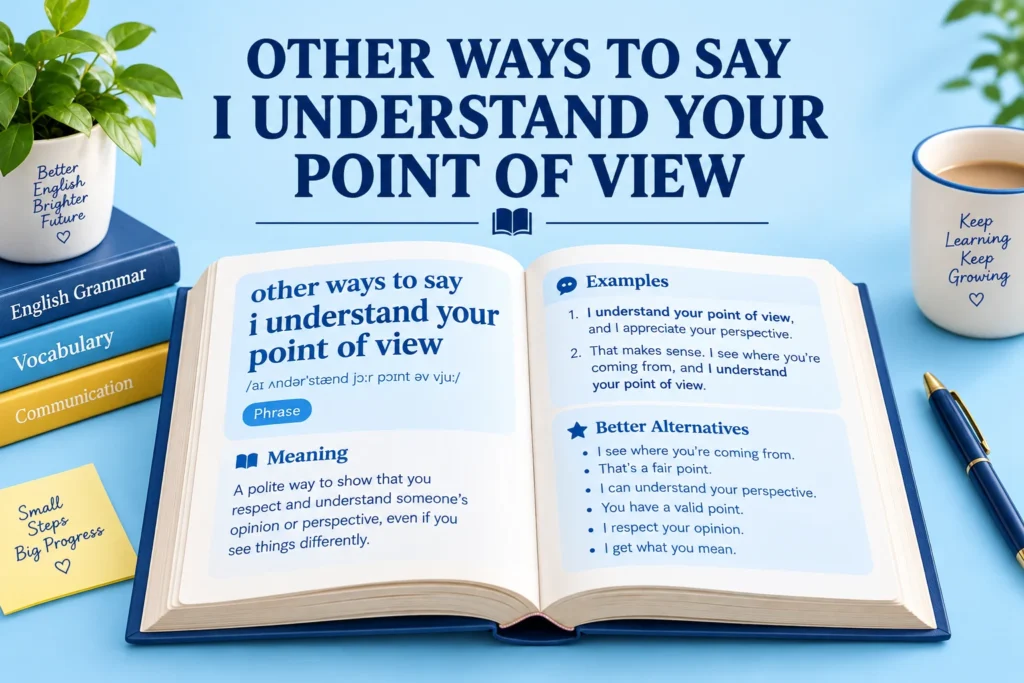
Knowing other ways to say “I understand your point of view” can make your communication sound more natural, professional, and thoughtful. The phrase shows that you recognize another person’s opinion, feelings, reasoning, or concerns, even when you do not completely agree with them.
In workplace communication, the right wording matters. You may want to acknowledge a client’s concern, respond to a manager, handle a disagreement with a colleague, or show respect during a business discussion. Instead of repeating “I understand your point of view,” you can choose a phrase that matches the situation and tone.
Some alternatives sound formal and professional, while others feel warmer and more conversational. The best choice depends on your relationship with the person and the purpose of your message.
This guide explains the meaning of the phrase and provides 50 practical alternatives for emails, meetings, customer service, networking, and everyday professional communication.
What Does “I Understand Your Point of View” Mean?
“I understand your point of view” means that you understand how another person sees a situation or why they have a particular opinion.
It does not necessarily mean that you agree with them.
For example:
“I understand your point of view, but I think we should consider another option.”
Here, the speaker acknowledges the other person’s reasoning without accepting their conclusion.
Literal Meaning
The phrase communicates three basic ideas:
- I understand what you are saying.
- I understand why you think that way.
- I recognize your perspective.
Tone
“I understand your point of view” usually sounds:
- Polite
- Respectful
- Professional
- Neutral
- Calm
- Diplomatic
It works especially well when people have different opinions.
Purpose
People commonly use the phrase to:
- Acknowledge another opinion
- Reduce tension
- Show respect
- Respond to criticism
- Handle disagreements
- Build professional relationships
- Demonstrate active listening
- Move a discussion forward
Emotional Context
The phrase can also communicate empathy. When someone explains a difficult situation, saying that you understand their point of view can show that you listened carefully.
For example:
“I understand your point of view, and I can see why this situation has been frustrating.”
This sounds more empathetic than simply saying, “Okay.”
Professional Usage of “I Understand Your Point of View”
Emails
The phrase works well in professional emails when you need to acknowledge someone’s position.
Example:
“I understand your point of view regarding the proposed deadline. However, we may need additional time to complete the testing.”
This approach keeps the conversation respectful while allowing you to present another opinion.
Workplace Communication
In meetings and workplace discussions, the phrase can help manage disagreements.
Example:
“I understand your point of view. At the same time, I think we should review the data before making a final decision.”
This wording avoids an aggressive response.
Clients
When dealing with clients, acknowledging their perspective can help maintain a positive relationship.
Example:
“I understand your point of view regarding the pricing. Let me explain what is included in the revised proposal.”
Customer Service
Customer service professionals often need to recognize a customer’s concern before explaining a solution.
Example:
“I understand your point of view, and I’m sorry for the inconvenience. Let me check what options are available.”
Networking
In networking conversations, a warmer expression may sound more natural.
Example:
“I see where you’re coming from. That’s an interesting perspective.”
Professional and Polite Alternatives to “I Understand Your Point of View”
Professional Alternatives
1. I understand where you’re coming from.
Meaning: I understand the reasoning behind your opinion.
Tone: Professional, natural, and empathetic.
Best use: Workplace discussions, meetings, and emails.
Example:
“I understand where you’re coming from, and I agree that we should review the timeline.”
2. I see your point.
Meaning: I understand the main idea behind your argument.
Tone: Professional and concise.
Best use: Meetings and everyday workplace communication.
Example:
“I see your point about reducing unnecessary expenses.”
3. I understand your perspective.
Meaning: I recognize how you view the situation.
Tone: Professional and neutral.
Best use: Business emails and formal discussions.
Example:
“I understand your perspective and appreciate you explaining your concerns.”
4. I appreciate your perspective.
Meaning: You recognize and respect the other person’s viewpoint.
Tone: Respectful and diplomatic.
Best use: Client communication and professional disagreements.
Example:
“I appreciate your perspective and will take it into consideration.”
5. I can see your reasoning.
Meaning: You understand why someone reached a particular conclusion.
Tone: Professional and thoughtful.
Best use: Workplace discussions.
Example:
“I can see your reasoning behind the proposed changes.”
6. I understand your concerns.
Meaning: You recognize the problems or worries someone has raised.
Tone: Professional and empathetic.
Best use: Customer service, clients, and workplace emails.
Example:
“I understand your concerns regarding the delivery schedule.”
7. I recognize your perspective.
Meaning: You acknowledge another person’s position.
Tone: Formal and professional.
Best use: Business communication and sensitive discussions.
Example:
“I recognize your perspective, and I appreciate you sharing it with the team.”
8. I understand your reasoning.
Meaning: You understand the logic behind someone’s position.
Tone: Professional and analytical.
Best use: Meetings, reports, and business discussions.
Example:
“I understand your reasoning for requesting additional resources.”
9. I can appreciate your point.
Meaning: You understand why the person’s argument makes sense to them.
Tone: Polite and diplomatic.
Best use: Professional disagreements.
Example:
“I can appreciate your point, although I have some concerns about the proposed approach.”
10. I understand how you see the situation.
Meaning: You understand someone’s interpretation of events.
Tone: Neutral and respectful.
Best use: Workplace communication.
Example:
“I understand how you see the situation, and I think we can find a solution that addresses both concerns.”
11. I see where you’re coming from.
Meaning: You understand the person’s reasoning or feelings.
Tone: Friendly and professional.
Best use: Meetings, colleagues, and informal business communication.
Example:
“I see where you’re coming from, especially given the recent changes.”
12. Your perspective makes sense.
Meaning: You recognize that the person’s viewpoint is reasonable.
Tone: Supportive and professional.
Best use: Discussions where you want to acknowledge a valid point.
Example:
“Your perspective makes sense, particularly given the current budget.”
13. I understand the reasoning behind your position.
Meaning: You understand why someone holds a particular position.
Tone: Formal and professional.
Best use: Business meetings and written communication.
Example:
“I understand the reasoning behind your position and appreciate the additional context.”
14. I follow your reasoning.
Meaning: You understand the logic someone has explained.
Tone: Professional and concise.
Best use: Meetings and analytical discussions.
Example:
“I follow your reasoning, and I think we should examine the numbers further.”
15. I understand your concerns and perspective.
Meaning: You recognize both the person’s worries and overall viewpoint.
Tone: Professional and empathetic.
Best use: Client emails and conflict resolution.
Example:
“I understand your concerns and perspective, and I would like to suggest a possible solution.”
Formal Alternatives
16. I acknowledge your perspective.
Meaning: You formally recognize another person’s viewpoint.
Tone: Formal and diplomatic.
Best use: Formal correspondence and sensitive business situations.
Example:
“I acknowledge your perspective and appreciate the explanation you provided.”
17. I recognize the position you have taken.
Meaning: You understand the position someone has presented.
Tone: Formal and careful.
Best use: Business letters and formal discussions.
Example:
“I recognize the position you have taken regarding the proposed agreement.”
18. I understand the basis of your argument.
Meaning: You understand the reasons supporting someone’s argument.
Tone: Formal and analytical.
Best use: Professional debates and business discussions.
Example:
“I understand the basis of your argument, although I believe we should consider the potential costs.”
19. I appreciate the reasoning behind your position.
Meaning: You understand and respect the reasoning behind someone’s viewpoint.
Tone: Formal and respectful.
Best use: Professional correspondence.
Example:
“I appreciate the reasoning behind your position and will discuss it with the team.”
20. I recognize the concerns you have raised.
Meaning: You acknowledge specific issues that another person has mentioned.
Tone: Formal and professional.
Best use: Customer complaints, business emails, and official communication.
Example:
“I recognize the concerns you have raised regarding the proposed schedule.”
21. I understand the rationale behind your decision.
Meaning: You understand why someone made a particular decision.
Tone: Formal and professional.
Best use: Management and business communication.
Example:
“I understand the rationale behind your decision and appreciate the additional information.”
22. I acknowledge the reasoning you have provided.
Meaning: You recognize the explanation someone has given.
Tone: Formal.
Best use: Formal emails and workplace correspondence.
Example:
“I acknowledge the reasoning you have provided and will review the matter carefully.”
23. I appreciate the context you have provided.
Meaning: You understand the additional information that explains someone’s position.
Tone: Formal and polished.
Best use: Emails, reports, and professional discussions.
Example:
“I appreciate the context you have provided. It helps clarify the situation.”
24. I understand the position you are expressing.
Meaning: You recognize what someone is communicating.
Tone: Formal and neutral.
Best use: Professional disagreements.
Example:
“I understand the position you are expressing and appreciate your explanation.”
25. I recognize the validity of your concerns.
Meaning: You acknowledge that the concerns have a reasonable basis.
Tone: Formal and diplomatic.
Best use: Customer service and corporate communication.
Example:
“I recognize the validity of your concerns and will make sure they receive appropriate attention.”
Friendly Alternatives
26. I see where you’re coming from.
Meaning: I understand your way of thinking.
Tone: Friendly and natural.
Best use: Colleagues, friends, networking, and casual workplace conversations.
Example:
“I see where you’re coming from. I had a similar concern at first.”
27. I get what you mean.
Meaning: I understand what you are trying to say.
Tone: Casual and friendly.
Best use: Informal conversations.
Example:
“I get what you mean. The new process does seem complicated.”
28. I see what you mean.
Meaning: I understand your point.
Tone: Friendly and neutral.
Best use: Everyday workplace conversations.
Example:
“I see what you mean. That could make the process easier.”
29. That makes sense.
Meaning: Your explanation or reasoning is understandable.
Tone: Friendly and supportive.
Best use: Colleagues, meetings, and informal emails.
Example:
“That makes sense. Let’s look at the options you suggested.”
30. I understand what you’re saying.
Meaning: I understand your message or argument.
Tone: Friendly and neutral.
Best use: General communication.
Example:
“I understand what you’re saying, and I think we can work through this.”
31. I can see why you feel that way.
Meaning: You understand the person’s emotional response.
Tone: Empathetic and warm.
Best use: Sensitive conversations.
Example:
“I can see why you feel that way after what happened.”
32. I can understand why you think that.
Meaning: You understand the person’s reasoning.
Tone: Friendly and conversational.
Best use: Informal discussions.
Example:
“I can understand why you think that, especially given the information we had.”
33. I hear what you’re saying.
Meaning: I have listened to and understood your concerns.
Tone: Friendly, empathetic, and conversational.
Best use: Difficult conversations.
Example:
“I hear what you’re saying, and I think we should discuss it further.”
34. I understand how you feel.
Meaning: You recognize someone’s emotional response.
Tone: Warm and empathetic.
Best use: Personal or sensitive workplace conversations.
Example:
“I understand how you feel about the unexpected change.”
35. I can relate to your perspective.
Meaning: You can understand the person’s viewpoint based on similar experience or reasoning.
Tone: Friendly and supportive.
Best use: Networking and colleague conversations.
Example:
“I can relate to your perspective because I faced a similar challenge last year.”
Email-Friendly Alternatives
36. I understand your perspective on this matter.
Meaning: You recognize the person’s viewpoint about a specific issue.
Tone: Professional and polished.
Best use: Business emails.
Example:
“I understand your perspective on this matter and appreciate you taking the time to explain it.”
37. I appreciate your perspective on this issue.
Meaning: You value the person’s viewpoint.
Tone: Respectful and professional.
Best use: Clients and managers.
Example:
“I appreciate your perspective on this issue and will consider it as we review the proposal.”
38. I understand your concerns regarding this matter.
Meaning: You recognize the person’s specific concerns.
Tone: Professional and empathetic.
Best use: Customer and client emails.
Example:
“I understand your concerns regarding this matter and would like to provide some clarification.”
39. I can see the reasoning behind your suggestion.
Meaning: You understand why someone made a particular suggestion.
Tone: Professional and collaborative.
Best use: Workplace emails.
Example:
“I can see the reasoning behind your suggestion, and I think it is worth discussing with the team.”
40. Thank you for explaining your perspective.
Meaning: You appreciate the person’s explanation.
Tone: Polite and positive.
Best use: Business emails and meetings.
Example:
“Thank you for explaining your perspective. I now have a clearer understanding of the issue.”
41. I appreciate you sharing your perspective.
Meaning: You value the person’s willingness to explain their position.
Tone: Warm and professional.
Best use: Networking, clients, and colleagues.
Example:
“I appreciate you sharing your perspective. Your feedback is helpful.”
42. I understand where your concerns are coming from.
Meaning: You understand why someone has concerns.
Tone: Empathetic and professional.
Best use: Client and customer emails.
Example:
“I understand where your concerns are coming from, and I would like to address each one.”
43. I appreciate the context behind your comments.
Meaning: You understand the background behind what someone said.
Tone: Professional and diplomatic.
Best use: Business correspondence.
Example:
“I appreciate the context behind your comments and will keep it in mind.”
44. Your explanation helps me understand your perspective.
Meaning: The person’s explanation has made their viewpoint clearer.
Tone: Positive and collaborative.
Best use: Email follow-ups and meetings.
Example:
“Your explanation helps me understand your perspective, and I appreciate the clarification.”
45. I understand the concerns you have shared.
Meaning: You acknowledge concerns that someone communicated.
Tone: Professional and respectful.
Best use: Client and customer communication.
Example:
“I understand the concerns you have shared and will review the matter with our team.”
Workplace Alternatives
46. I see your point.
Meaning: You understand a specific argument.
Tone: Neutral and professional.
Best use: Meetings and discussions.
Example:
“I see your point about the current workflow.”
47. I follow your reasoning.
Meaning: You understand the logic behind someone’s position.
Tone: Professional.
Best use: Meetings and decision-making.
Example:
“I follow your reasoning, and I think we should compare both options.”
48. I understand where you’re coming from.
Meaning: You understand someone’s motivation or perspective.
Tone: Collaborative and natural.
Best use: Workplace disagreements.
Example:
“I understand where you’re coming from, but we also need to consider the client’s deadline.”
49. I can see the logic in your approach.
Meaning: You recognize the reasoning behind someone’s method.
Tone: Professional and analytical.
Best use: Team discussions.
Example:
“I can see the logic in your approach, especially considering the available resources.”
50. I understand the concern you’re raising.
Meaning: You recognize a particular concern.
Tone: Professional and direct.
Best use: Meetings and workplace problem-solving.
Example:
“I understand the concern you’re raising, and we can address it during the next stage.”
Quick Comparison Table
| Alternative | Tone | Best Use |
| I understand your perspective. | Professional | Business emails |
| I see your point. | Neutral | Meetings |
| I understand where you’re coming from. | Friendly-professional | Workplace |
| I appreciate your perspective. | Respectful | Clients |
| I understand your concerns. | Empathetic | Customer service |
| I see what you mean. | Friendly | Informal workplace |
| I hear what you’re saying. | Empathetic | Difficult conversations |
| I follow your reasoning. | Analytical | Meetings |
| I acknowledge your perspective. | Formal | Official communication |
| I appreciate you sharing your perspective. | Warm-professional | Networking |
| I can see your reasoning. | Professional | Business discussions |
| That makes sense. | Casual-professional | Colleagues |
| I understand the rationale behind your decision. | Formal | Management |
| Thank you for explaining your perspective. | Polite | |
| I can see the logic in your approach. | Analytical | Team discussions |
Email Examples
Client Email
Thank you for sharing your concerns about the proposal. I understand your perspective, particularly regarding the revised pricing.
I would be happy to explain what has changed and discuss a few options that may better suit your needs.
Best regards,
[Your Name]
Manager Email
Thank you for explaining your perspective on the project timeline. I understand your reasoning and appreciate the priorities you have outlined.
I will review the current schedule and see where we can make adjustments.
Best regards,
[Your Name]
Colleague Email
I see where you’re coming from, and I understand why you suggested this approach.
I think we can combine your suggestion with the current process to address both concerns.
Thanks,
[Your Name]
Customer Email
Thank you for explaining the situation. I understand your concerns regarding the service you received.
I’m reviewing the details now and will provide you with the available options as soon as possible.
Kind regards,
[Your Name]
Networking Email
Thank you for sharing your perspective during our conversation. I found your comments about the industry particularly interesting.
I appreciate the opportunity to connect and continue the conversation.
Best regards,
[Your Name]
Meeting Follow-Up
Thank you for today’s discussion. I understand your perspective on the proposed changes, and I appreciate the points you raised.
I’ll review the information we discussed and follow up with the team.
Best regards,
[Your Name]
Common Mistakes to Avoid
1. Using the Same Phrase Too Often
Repeating “I understand your point of view” in every email can make your communication sound repetitive.
Instead, vary your language:
“I understand your perspective.”
“I see your point.”
“I appreciate your concerns.”
“I follow your reasoning.”
2. Sounding Like You Agree When You Do Not
“I understand” does not always mean “I agree.”
If you disagree, make the distinction clear.
Better:
“I understand your perspective, although I have a different view on the proposed timeline.”
This shows respect without pretending to agree.
3. Using Too Much Formal Language
A phrase such as “I acknowledge the reasoning you have provided” may sound unnecessarily formal in a casual conversation.
For a colleague, “I see your point” may sound more natural.
4. Choosing a Casual Phrase for a Formal Client
“I get what you mean” may sound friendly, but it can feel too casual in a formal business email.
Use:
“I understand your perspective.”
“I appreciate your concerns.”
“I understand your reasoning.”
5. Using “I Understand How You Feel” Carelessly
“I understand how you feel” can sound empathetic, but sometimes it may seem as though you are claiming to know exactly how someone feels.
A softer alternative is:
“I can understand why you feel that way.”
6. Saying “I Understand” Without Responding
Simply writing “I understand” may not show enough engagement.
Instead, acknowledge the point and explain the next step.
For example:
“I understand your concerns. I’ll review the proposal and discuss the issue with our team.”
7. Ignoring Email Etiquette
Professional communication should usually acknowledge the other person’s message before moving to your own position.
A useful structure is:
Acknowledge → Explain → Respond → Next step
Example:
“I understand your concerns. The delay occurred because of the additional testing requirements. We are now completing the final checks and expect to provide an update tomorrow.”
Related Phrases
1. I see your point.
Meaning: I understand your argument.
Example: “I see your point about the deadline.”
2. I understand your perspective.
Meaning: I understand how you view the situation.
Example: “I understand your perspective on the issue.”
3. I see where you’re coming from.
Meaning: I understand your reasoning.
Example: “I see where you’re coming from.”
4. I understand your concerns.
Meaning: I recognize your worries.
Example: “I understand your concerns about the cost.”
5. I appreciate your perspective.
Meaning: I respect and value your viewpoint.
Example: “I appreciate your perspective on this matter.”
6. I follow your reasoning.
Meaning: I understand the logic behind your argument.
Example: “I follow your reasoning.”
7. I hear what you’re saying.
Meaning: I have listened to your concerns.
Example: “I hear what you’re saying, and I’ll look into it.”
8. That makes sense.
Meaning: Your explanation is understandable.
Example: “That makes sense given the circumstances.”
9. I can see your reasoning.
Meaning: I understand why you reached your conclusion.
Example: “I can see your reasoning behind that decision.”
10. I understand where your concerns are coming from.
Meaning: I understand why you have concerns.
Example: “I understand where your concerns are coming from.”
11. I appreciate you explaining that.
Meaning: Thank you for making your position clearer.
Example: “I appreciate you explaining that.”
12. I can relate to your perspective.
Meaning: Your viewpoint is familiar or understandable to me.
Example: “I can relate to your perspective.”
13. I acknowledge your concerns.
Meaning: I recognize the concerns you have raised.
Example: “I acknowledge your concerns and will review them.”
14. I understand the reasoning behind your decision.
Meaning: I understand why you made the decision.
Example: “I understand the reasoning behind your decision.”
15. Thank you for clarifying your position.
Meaning: Your explanation has made your viewpoint clearer.
Example: “Thank you for clarifying your position.”
Phrase Comparison
“I Understand Your Point of View”
Tone: Neutral and professional
Formality: Medium
Best use: General professional communication
“I Understand Your Perspective”
Tone: Professional and polished
Formality: Medium to high
Best use: Business emails and client communication
“I See Your Point”
Tone: Neutral and direct
Formality: Medium
Best use: Meetings and workplace conversations
“I See Where You’re Coming From”
Tone: Friendly and empathetic
Formality: Medium
Best use: Colleagues and informal professional discussions
“I Appreciate Your Perspective”
Tone: Respectful and positive
Formality: Medium to high
Best use: Clients, managers, and networking
“I Understand Your Concerns”
Tone: Empathetic
Formality: Medium
Best use: Customer service and problem-solving
“I Follow Your Reasoning”
Tone: Analytical and professional
Formality: Medium
Best use: Meetings and decision-making
“I Acknowledge Your Perspective”
Tone: Formal and neutral
Formality: High
Best use: Formal business communication
“I Hear What You’re Saying”
Tone: Empathetic and conversational
Formality: Low to medium
Best use: Difficult conversations and informal workplace communication
“That Makes Sense”
Tone: Friendly and supportive
Formality: Low to medium
Best use: Casual workplace conversations
Cultural Usage
US English
In American workplace communication, phrases such as “I see your point,” “I understand where you’re coming from,” and “I appreciate your perspective” are common ways to acknowledge another person’s position.
The best choice depends on the situation. Direct phrases often work well in meetings, while more empathetic wording can help during disagreements.
UK English
British professional communication often values polite and diplomatic wording. Phrases such as “I appreciate your perspective,” “I understand your concerns,” and “I see your point” can work well in professional settings.
However, context matters more than simply choosing a British or American phrase.
Corporate Communication
Corporate communication often requires neutral language. You may need to acknowledge a viewpoint without agreeing with it.
For example:
“I understand your perspective, but we need to consider the wider business requirements.”
This wording recognizes the other person’s position while keeping the discussion focused on the issue.
Customer Service
Customer service communication often benefits from empathy.
Instead of:
“I understand your point of view.”
You could write:
“I understand your concerns, and I’d like to help resolve the issue.”
This approach connects acknowledgment with action.
Networking
Networking conversations usually benefit from warm, natural language.
Good options include:
“I appreciate your perspective.”
“I see where you’re coming from.”
“That’s an interesting point.”
“I can relate to your perspective.”
These phrases help keep the conversation open.
How to Choose the Right Alternative
The best alternative depends on what you want to communicate.
If you want to show understanding:
“I understand your perspective.”
If you want to acknowledge an argument:
“I see your point.”
If you want to show empathy:
“I understand your concerns.”
If you want to sound friendly:
“I see where you’re coming from.”
If you want to sound formal:
“I acknowledge your perspective.”
If you want to recognize someone’s reasoning:
“I follow your reasoning.”
If you want to thank someone for explaining:
“Thank you for explaining your perspective.”
If you want to remain neutral during disagreement:
“I understand your perspective, although I have a different view.”
If you want to encourage discussion:
“I appreciate your perspective. Let’s explore this further.”
If you want to show that you understand a customer’s frustration:
“I understand your concerns, and I’d like to help resolve the issue.”
Professional Ways to Disagree Respectfully
Understanding someone’s point of view does not require agreement.
You can combine an acknowledgment with a respectful disagreement.
Examples:
“I understand your perspective, but I see the situation differently.”
“I see your point, although I have some concerns about the proposed approach.”
“I appreciate your perspective, but I believe we should consider another option.”
“I understand your reasoning. However, the available data suggests a different approach.”
“I can see where you’re coming from, but we may need to consider the client’s requirements as well.”
These business email phrases help you disagree without making the conversation confrontational.
How to Use the Phrase in a Difficult Conversation
When someone feels ignored or misunderstood, acknowledgment can help create a more productive conversation.
A useful structure is:
- Recognize the person’s position.
- Show that you listened.
- Address the concern.
- Explain your position.
- Suggest a next step.
For example:
“I understand your perspective, and I appreciate you explaining your concerns. I can see why the delay has been frustrating. We are reviewing the process now and will provide an update tomorrow.”
This approach supports respectful professional communication.
Frequently Asked Questions
What is the most professional way to say “I underst*nd your point of view”?
“I understand your perspective” is one of the clearest professional alternatives. It sounds natural, respectful, and appropriate for emails, meetings, clients, and workplace communication.
What is a formal alternative to “I understand your point of view”?
“I acknowledge your perspective” is a formal alternative. Other options include “I understand the reasoning behind your position” and “I appreciate the reasoning behind your position.”
What is a synonym for “I understand your point of view”?
Depending on the context, useful synonyms include “I see your point,” “I understand your perspective,” “I see where you’re coming from,” “I understand your reasoning,” and “I appreciate your perspective.”
How do I say “I understand your p*int of view” in an email?
You can write:
“I understand your perspective and appreciate you explaining your concerns.”
For a more formal email, use:
“I acknowledge your perspective and appreciate the context you have provided.”
How do you say “I understand” professionally?
Use phrases such as:
“I understand your perspective.”
“I appreciate your perspective.”
“I understand your concerns.”
“I follow your reasoning.”
“I see your point.”
How can I say I understand without saying I agree?
Use a phrase that acknowledges the other person’s perspective without expressing agreement.
For example:
“I understand your perspective, although I have a different view.”
This clearly separates understanding from agreement.
Is “I see where you’re coming from” professional?
Yes. “I see where you’re coming from” is professional enough for many workplace conversations, especially when the environment has a conversational tone. For formal correspondence, “I understand your perspective” may sound more polished.
Is “I hear what you’re saying” professional?
Yes, but it has a more conversational and empathetic tone. It works well in meetings, discussions, customer service, and difficult conversations. In formal written communication, “I understand your concerns” may be more appropriate.
What is a polite way to acknowledge someone’s opinion?
You can say:
“I appreciate your perspective.”
“I understand your point.”
“I see where you’re coming from.”
“Thank you for sharing your perspective.”
“I appreciate you explaining your position.”
What is the best phrase for a disagreement at work?
“I understand your perspective, although I have a different view” is a useful option because it acknowledges the other person without suggesting that you agree.
Final Summary
There are many effective ways to say “I understand your point of view,” and the best choice depends on your audience, relationship, and purpose.
For professional communication, “I understand your perspective” or “I appreciate your perspective” works well. For formal situations, “I acknowledge your perspective” provides a more formal tone. For friendly workplace conversations, “I see where you’re coming from” or “I see your point” sounds natural. For customer service, “I understand your concerns” adds empathy. In emails, “Thank you for explaining your perspective” can acknowledge someone’s position while keeping the conversation positive.
Most importantly, understanding does not mean agreement. Choose language that shows respect, keeps the conversation constructive, and matches the level of formality required.




