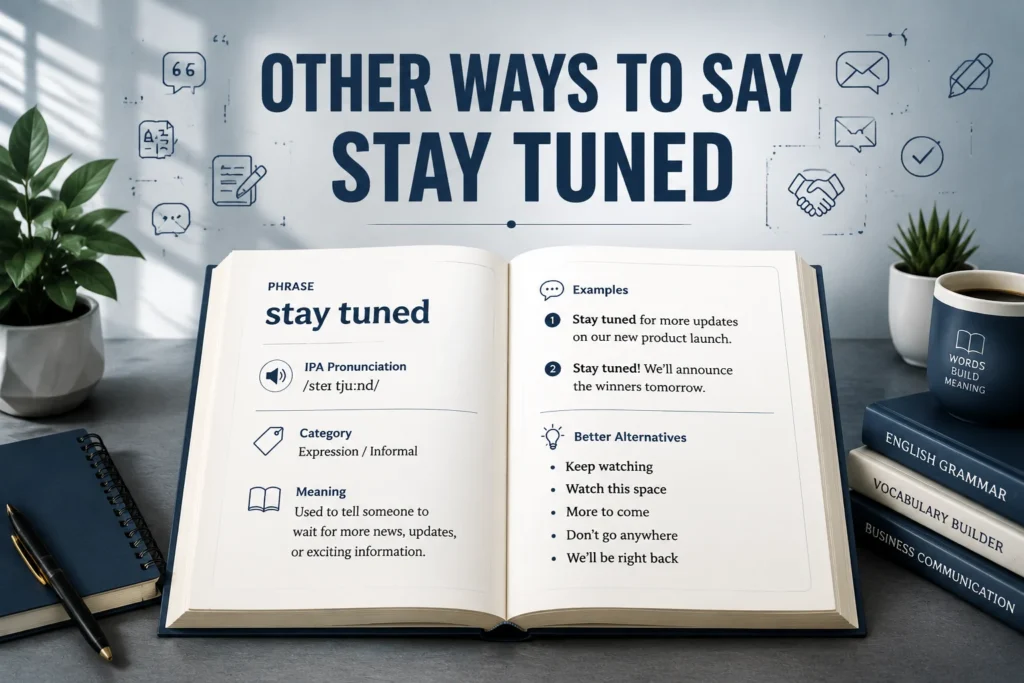
The phrase “stay tuned” is commonly used to tell someone that more information, updates, or announcements are coming soon. You’ll often hear it in business emails, social media posts, presentations, customer service messages, and workplace communication. While it’s friendly and widely understood, repeating it too often can make your writing feel predictable. That’s why many people look for other ways to say “stay tuned,” a professional way to say “stay tuned,” or a formal alternative to “stay tuned.” Choosing the right phrase helps your message sound more polished, professional, and engaging.
Meaning of “Stay Tuned”
Literal Meaning:
Originally, “stay tuned” referred to keeping a radio or television tuned to the same station for upcoming content. Today, it simply means wait for more information or future updates.
Tone:
- Friendly
- Positive
- Encouraging
- Slightly informal
Purpose:
It keeps the audience interested and lets them know that additional news or details will be shared later.
Emotional Context:
The phrase creates curiosity and anticipation. It encourages readers, customers, or colleagues to look forward to the next update.
Examples:
- Stay tuned for next week’s product launch.
- Stay tuned—we’ll share more details soon.
- Stay tuned for exciting announcements.
Professional Usage
Emails
Use it when you’ll send another update.
Example:
Stay tuned for the final project schedule later this week.
Workplace
It’s useful when informing teams about upcoming decisions or announcements.
Example:
Stay tuned for the revised project timeline.
Clients
It reassures clients that more information is coming.
Example:
Stay tuned for your personalized proposal.
Networking
Use it when discussing future opportunities.
Example:
Stay tuned for details about our upcoming networking event.
Customer Service
It lets customers know updates are on the way.
Example:
Stay tuned for shipping and tracking information.
Professional Alternatives
1. We’ll Keep You Updated
Tone: Professional
Best Use: Business emails
Example:
We’ll keep you updated as soon as we receive confirmation.
2. More Information Will Follow
Tone: Formal
Best Use: Official announcements
Example:
More information will follow after the meeting.
3. We’ll Share More Details Soon
Tone: Professional and friendly
Best Use: Client communication
Example:
We’ll share more details soon regarding your order.
4. Expect Further Updates
Tone: Formal
Best Use: Workplace communication
Example:
Expect further updates by Friday afternoon.
5. Watch for Updates
Tone: Professional
Best Use: Internal announcements
Example:
Watch for updates in tomorrow’s newsletter.
6. Keep an Eye Out
Tone: Friendly
Best Use: Marketing and social media
Example:
Keep an eye out for our newest collection.
7. We’ll Be in Touch
Tone: Professional
Best Use: Emails and client follow-ups
Example:
We’ll be in touch once your application has been reviewed.
8. Check Back Soon
Tone: Friendly
Best Use: Websites and blogs
Example:
Check back soon for new resources.
9. More Updates Are Coming
Tone: Positive
Best Use: Announcements
Example:
More updates are coming next week.
10. Stay Informed
Tone: Professional
Best Use: Corporate communication
Example:
Stay informed by subscribing to our newsletter.
11. We’ll Let You Know
Tone: Friendly and professional
Best Use: Everyday workplace communication
Example:
We’ll let you know as soon as a decision is made.
12. Further Details Will Be Shared
Tone: Formal
Best Use: Business reports and official emails
Example:
Further details will be shared after management approval.
13. Updates Will Be Available Soon
Tone: Professional
Best Use: Customer service
Example:
Updates will be available soon through your account dashboard.
14. We’ll Provide an Update Shortly
Tone: Formal
Best Use: Business communication
Example:
We’ll provide an update shortly regarding the project status.
15. Please Watch This Space
Tone: Professional and friendly
Best Use: Newsletters, websites, and announcements
Example:
Please watch this space for future announcements.
| Alternative | Tone | Best Use |
| We’ll Keep You Updated | Professional | Business emails |
| More Information Will Follow | Formal | Official notices |
| We’ll Share More Details Soon | Professional | Client communication |
| Expect Further Updates | Formal | Workplace |
| Watch for Updates | Professional | Internal announcements |
| Keep an Eye Out | Friendly | Marketing |
| We’ll Be in Touch | Professional | Follow-up emails |
| Check Back Soon | Friendly | Websites |
| More Updates Are Coming | Neutral | Announcements |
| Stay Informed | Professional | Corporate communication |
| We’ll Let You Know | Friendly | Daily workplace communication |
| Further Details Will Be Shared | Formal | Official emails |
| Updates Will Be Available Soon | Professional | Customer service |
| We’ll Provide an Update Shortly | Formal | Business emails |
| Please Watch This Space | Professional | Newsletters and announcements |
16. Additional Information Will Be Provided
Meaning: Indicates that more details are coming later.
Tone: Formal
Best Use: Reports, official emails
Example:
Additional information will be provided after the review.
17. More to Come
Meaning: More updates or content will follow.
Tone: Friendly
Best Use: Social media, blogs
Example:
We’ve only just begun—more to come!
18. Await Further Updates
Meaning: Wait for the next announcement.
Tone: Formal
Best Use: Workplace communication
Example:
Please await further updates from the HR department.
19. We’ll Follow Up Soon
Meaning: Promises another message.
Tone: Professional
Best Use: Client emails
Example:
We’ll follow up soon with the complete proposal.
20. You’ll Hear From Us Soon
Meaning: Reassures the reader that you’ll contact them.
Tone: Friendly
Best Use: Customer support
Example:
You’ll hear from us soon regarding your request.
21. More Details Are on the Way
Meaning: Additional information is coming.
Tone: Friendly
Best Use: Marketing
Example:
More details are on the way, so don’t miss out.
22. We Will Notify You
Meaning: Promise to send an update.
Tone: Professional
Best Use: Business emails
Example:
We will notify you once your application is approved.
23. We’ll Keep You Posted
Meaning: Continue providing updates.
Tone: Friendly professional
Best Use: Workplace and clients
Example:
We’ll keep you posted on the project’s progress.
24. Updates Will Follow
Meaning: More information will come later.
Tone: Formal
Best Use: Official announcements
Example:
Updates will follow after today’s meeting.
25. Stay Connected
Meaning: Continue following for updates.
Tone: Friendly
Best Use: Social media
Example:
Stay connected for our latest announcements.
26. Be on the Lookout
Meaning: Watch for something coming soon.
Tone: Friendly
Best Use: Promotions
Example:
Be on the lookout for our special offers.
27. We’ll Update You Shortly
Meaning: An update will arrive soon.
Tone: Professional
Best Use: Client communication
Example:
We’ll update you shortly after speaking with our team.
28. Keep Watching
Meaning: Continue paying attention.
Tone: Casual
Best Use: Videos and presentations
Example:
Keep watching for the final reveal.
29. Stay with Us
Meaning: Continue following.
Tone: Friendly
Best Use: Presentations and webinars
Example:
Stay with us as we explain the next steps.
30. More Announcements Are Coming
Meaning: Additional news will be shared.
Tone: Professional
Best Use: Company announcements
Example:
More announcements are coming later this month.
Quick Comparison Table
| Alternative | Tone | Best Use |
| We’ll Follow Up Soon | Professional | Client emails |
| You’ll Hear From Us Soon | Friendly | Customer service |
| We’ll Keep You Posted | Friendly Professional | Workplace updates |
| We Will Notify You | Professional | Official emails |
| Await Further Updates | Formal | Internal communication |
| Updates Will Follow | Formal | Reports |
| More to Come | Friendly | Social media |
| Stay Connected | Friendly | Marketing |
| We’ll Update You Shortly | Professional | Business communication |
| More Announcements Are Coming | Professional | Company news |
Email Examples
Client
We’ll keep you updated as soon as the final proposal is ready.
Manager
We’ll provide an update shortly after completing the review.
Colleague
I’ll keep you posted on any changes to the schedule.
Customer
You’ll hear from us soon once your order has shipped.
Networking
Stay connected for future collaboration opportunities.
Meeting Follow-up
Further details will be shared after today’s discussion.
Common Mistakes
Using “stay tuned” is simple, but it’s easy to make mistakes that reduce the professionalism of your writing.
1. Overusing the Phrase
Repeating “stay tuned” multiple times in the same email or article can sound repetitive. Switch to alternatives like “we’ll keep you updated” or “more information will follow.”
2. Using an Informal Phrase in Formal Writing
While “stay tuned” is friendly, it may sound too casual in legal documents or official announcements. Choose “further details will be shared” or “we will notify you” instead.
3. Promising Updates Without Delivering
Only use phrases like “stay tuned” or “we’ll keep you updated” if you genuinely plan to send another update.
4. Choosing the Wrong Tone
Use a professional alternative for clients or executives, and save casual expressions like “keep an eye out” for marketing or social media.
Related Phrases
| Phrase | Meaning | Example |
| We’ll keep you updated | We’ll continue sharing information | We’ll keep you updated throughout the project. |
| We’ll keep you posted | Regular updates will be provided | We’ll keep you posted on our progress. |
| We’ll let you know | We’ll contact you later | We’ll let you know once it’s confirmed. |
| More information will follow | More details are coming | More information will follow next week. |
| Check back soon | Return later for updates | Check back soon for new content. |
| Stay informed | Continue receiving updates | Stay informed by subscribing. |
| Watch for updates | Look out for future news | Watch for updates on our website. |
| We’ll follow up | Another message is coming | We’ll follow up tomorrow. |
| Stay connected | Keep following us | Stay connected for future events. |
| Await further updates | Wait for the next announcement | Please await further updates. |
| More to come | Additional content is coming | More to come next week. |
| We will notify you | We’ll inform you | We will notify you by email. |
| Further details will be shared | More information is coming | Further details will be shared soon. |
| Keep an eye out | Watch carefully | Keep an eye out for our launch. |
| Updates will follow | More updates are coming | Updates will follow after the meeting. |
Phrase Comparison
| Phrase | Tone | Formality | Best Use |
| Stay tuned | Friendly | Medium | General communication |
| We’ll keep you updated | Professional | High | Business emails |
| We’ll keep you posted | Friendly Professional | Medium | Workplace |
| More information will follow | Formal | High | Official announcements |
| We will notify you | Professional | High | Customer service |
| Check back soon | Casual | Low | Websites and blogs |
| Stay connected | Friendly | Low | Social media |
| Await further updates | Formal | High | Internal notices |
| We’ll follow up soon | Professional | High | Client communication |
| Keep an eye out | Casual | Low | Marketing campaigns |
Cultural Usage
US English
In American English, “stay tuned,” “we’ll keep you posted,” and “check back soon” are common in both business and casual communication.
UK English
British English often prefers slightly more formal expressions such as “further details will follow,” “we’ll keep you updated,” and “more information will follow.”
Corporate Communication
Companies typically use:
- We’ll keep you updated
- Further details will be shared
- We will notify you
- More information will follow
Customer Service
Customer support teams often choose:
- We’ll let you know
- We’ll update you shortly
- We will notify you
- You’ll hear from us soon
Networking
For networking and relationship-building, these alternatives work well:
- Stay connected
- We’ll be in touch
- Keep an eye out
- More to come
FAQs
What is another way to say “stay tuned”?
Some of the best alternatives include we’ll keep you updated, we’ll keep you posted, more information will follow, and we’ll let you know.
What is a professional way to say “stay tuned”?
Professional options include we’ll keep you updated, we will notify you, further details will be shared, and expect further updates.
Is “stay tuned” appropriate in business emails?
Yes. It’s acceptable in friendly business communication, but more formal alternatives may be better for clients or executives.
What is the best formal alternative to “stay tuned”?
More information will follow and further details will be shared are excellent formal choices.
Can I use “we’ll keep you posted” instead of “stay tuned”?
Yes. It’s a natural, professional expression commonly used in workplace communication.
Is “stay tuned” too casual?
It depends on the audience. It’s friendly and suitable for marketing, newsletters, and many workplace situations, but formal documents often require a more professional alternative.
Which alternative works best for customer service?
We will notify you, you’ll hear from us soon, and we’ll update you shortly are clear and reassuring.
What’s the difference between “stay tuned” and “check back soon”?
Stay tuned asks people to expect updates, while check back soon encourages them to return later for new information.
What should I use in a client email instead of “stay tuned”?
Use we’ll keep you updated, we’ll follow up soon, or further details will be shared.
Is “stay tuned” suitable for social media?
Yes. It’s one of the most popular ways to build excitement before announcing news, events, or product launches.
Conclusion
While “stay tuned” is a familiar and effective phrase, using different alternatives can make your communication sound more professional, engaging, and appropriate for your audience. Expressions like we’ll keep you updated, more information will follow, we’ll keep you posted, and we will notify you work well in emails, workplace communication, customer service, and client interactions. By choosing the right phrase for the situation, you’ll improve clarity, maintain a professional tone, and keep readers interested in your future updates.