Looking for other ways to say “I don’t know” in a business email, workplace conversation, or professional meeting? While the phrase is honest and direct, it may sometimes sound too blunt or unhelpful in professional settings. Using a more thoughtful alternative shows professionalism, confidence, and a willingness to help.
Whether you’re speaking with a client, manager, colleague, or networking contact, choosing the right expression can improve your communication. In this guide, you’ll discover professional and polite alternatives to “I don’t know”, along with practical examples for emails, meetings, and workplace conversations.
What Does “I Don’t Know” Mean?
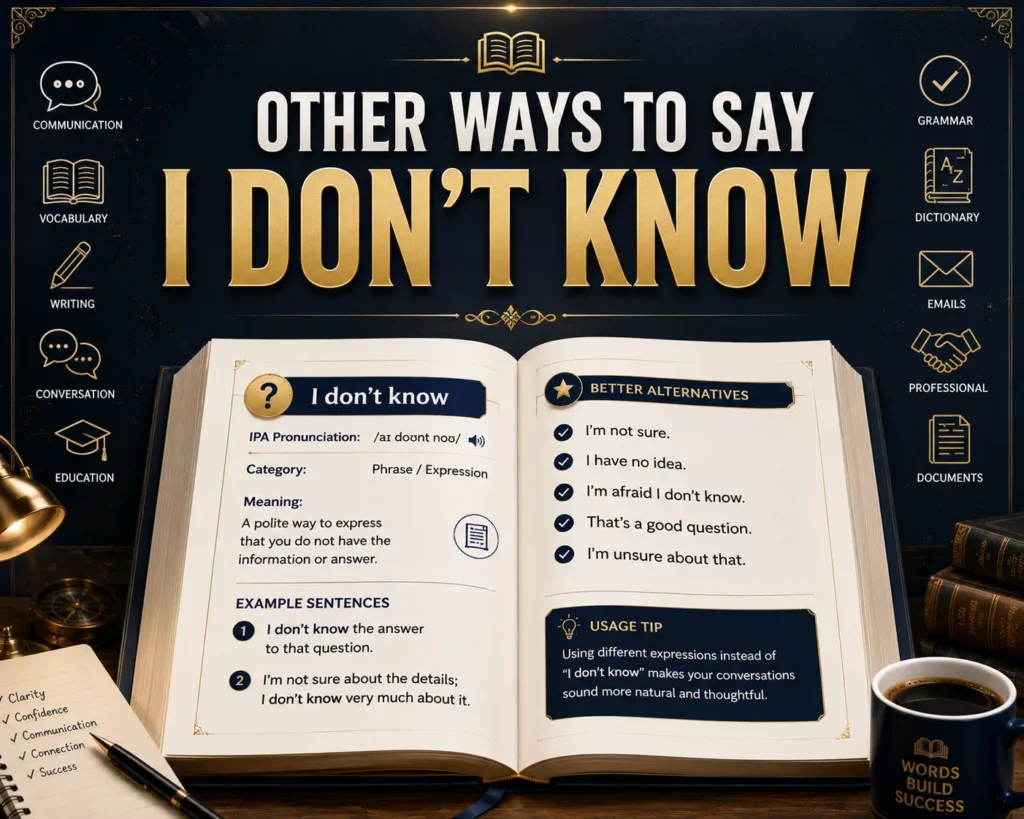
“I don’t know” means you do not have the information or answer at the moment. It is a simple and honest response, but in professional communication, it is often better to combine it with a willingness to find the answer.
Tone
The phrase can sound:
- Honest
- Direct
- Neutral
- Informal
- Sometimes blunt
Purpose
People use “I don’t know” to:
- Admit they don’t have the answer
- Avoid giving incorrect information
- Be honest and transparent
- Request more time to check
Examples
- I don’t know the exact deadline.
- I don’t know the answer yet.
- I don’t know, but I’ll find out and let you know.
When Should You Use “I Don’t Know”?
In Emails
Instead of simply saying “I don’t know,” offer to check the information.
Example:
I’m not certain at the moment, but I’ll confirm and get back to you.
In the Workplace
Use polite alternatives when speaking with managers or coworkers.
Example:
I’m not sure, but I’ll look into it.
With Clients
Avoid sounding uncertain without offering help.
Example:
Let me verify that information and get back to you shortly.
During Networking
Stay professional and curious.
Example:
That’s a great question. I’ll need to look into it.
Customer Service
Show willingness to help.
Example:
I’m happy to check that for you.
Professional Alternatives to “I Don’t Know”
1. I’m Not Sure
Tone: Professional
Best Use: Meetings and emails
Example:
I’m not sure, but I’ll confirm it for you.
2. Let Me Check
Tone: Professional
Best Use: Customer service
Example:
Let me check the details and get back to you.
3. I’ll Find Out
Tone: Positive
Best Use: Workplace communication
Example:
I’ll find out and update you this afternoon.
4. I’ll Confirm That
Tone: Professional
Best Use: Business emails
Example:
I’ll confirm that with the team before responding.
5. I Need to Verify That
Tone: Formal
Best Use: Client communication
Example:
I need to verify that information before giving you an answer.
6. I’ll Look Into It
Tone: Professional
Best Use: Workplace and customer service
Example:
I’ll look into it and let you know.
7. I Don’t Have That Information Right Now
Tone: Professional
Best Use: Business meetings
Example:
I don’t have that information right now, but I’ll send it shortly.
8. Let Me Get Back to You
Tone: Professional
Best Use: Emails
Example:
Let me get back to you after I speak with the team.
9. I’ll Check with the Team
Tone: Professional
Best Use: Team projects
Example:
I’ll check with the team and update you.
10. I’ll Double-Check
Tone: Professional
Best Use: Workplace communication
Example:
I’ll double-check before confirming.
11. I Need More Information
Tone: Professional
Best Use: Clarification
Example:
I need more information before I can answer.
12. That’s a Great Question
Tone: Friendly Professional
Best Use: Meetings and presentations
Example:
That’s a great question. Let me find the correct answer.
Formal Alternatives to “I Don’t Know”
13. I Cannot Confirm That at This Time
Tone: Formal
Best Use: Executive communication
Example:
I cannot confirm that at this time, but I’ll provide an update soon.
14. I Need to Review the Details
Tone: Formal
Best Use: Business reports
Example:
I need to review the details before responding.
15. I Will Verify the Information
Tone: Formal
Best Use: Client emails
Example:
I will verify the information and respond promptly.
16. I Need to Confirm the Facts
Tone: Professional
Best Use: Workplace discussions
Example:
I need to confirm the facts before making a decision.
17. I Don’t Have Enough Information Yet
Tone: Professional
Best Use: Meetings
Example:
I don’t have enough information yet to answer accurately.
18. I’ll Investigate Further
Tone: Formal
Best Use: Problem-solving
Example:
I’ll investigate further and share my findings.
19. I’ll Provide an Update Soon
Tone: Professional
Best Use: Project communication
Example:
I’ll provide an update as soon as I have more information.
20. Allow Me to Confirm
Tone: Formal
Best Use: Official emails
Example:
Allow me to confirm the details before I respond.
Friendly Alternatives to “I Don’t Know”
These alternatives are natural for conversations with coworkers, friends, and casual workplace communication.
21. I’m Not Certain
Tone: Friendly Professional
Best Use: Meetings
Example:
I’m not certain, but I’ll check for you.
22. I Haven’t Checked Yet
Tone: Casual Professional
Best Use: Workplace
Example:
I haven’t checked yet, but I will today.
23. I’ll Ask Around
Tone: Friendly
Best Use: Team discussions
Example:
I’ll ask around and let you know.
24. Let Me Find Out
Tone: Friendly Professional
Best Use: Daily conversations
Example:
Let me find out, and I’ll get back to you.
25. I’ll Get the Answer
Tone: Positive
Best Use: Customer support
Example:
I’ll get the answer for you shortly.
26. I’ll Check on That
Tone: Friendly
Best Use: Workplace communication
Example:
I’ll check on that this afternoon.
27. I Need to Look Into It
Tone: Friendly Professional
Best Use: Team meetings
Example:
I need to look into it before I answer.
Email Alternatives to “I Don’t Know”
These phrases sound more polished in business emails.
28. I’ll Get Back to You Shortly
Tone: Professional
Best Use: Client emails
Example:
I’ll get back to you shortly after confirming the details.
29. I’ll Follow Up
Tone: Professional
Best Use: Follow-up emails
Example:
I’ll follow up once I have more information.
30. I’ll Verify and Respond
Tone: Professional
Best Use: Business communication
Example:
I’ll verify the information and respond as soon as possible.
31. I’ll Confirm with the Relevant Team
Tone: Professional
Best Use: Workplace emails
Example:
I’ll confirm with the relevant team before replying.
32. Let Me Review This
Tone: Professional
Best Use: Project discussions
Example:
Let me review this and get back to you.
33. I’ll Check the Records
Tone: Professional
Best Use: Finance and administration
Example:
I’ll check the records and update you.
34. I’ll Share an Update Soon
Tone: Professional
Best Use: Client communication
Example:
I’ll share an update as soon as possible.
Workplace Alternatives to “I Don’t Know”
These expressions are commonly used in offices, meetings, and professional conversations.
35. I Need to Confirm
Tone: Professional
Best Use: Meetings
Example:
I need to confirm before giving you a final answer.
36. I’ll Research It
Tone: Professional
Best Use: Technical roles
Example:
I’ll research it and update the team.
37. I’ll Ask the Right Person
Tone: Professional
Best Use: Cross-team collaboration
Example:
I’ll ask the right person and let you know.
38. I’ll Gather More Information
Tone: Professional
Best Use: Business decisions
Example:
I’ll gather more information before making a recommendation.
39. I’ll Check the Details
Tone: Professional
Best Use: Reports and documentation
Example:
I’ll check the details and confirm them.
40. I’ll Update You Soon
Tone: Professional
Best Use: Project management
Example:
I’ll update you as soon as I receive confirmation.
Quick Comparison Table
| Alternative | Tone | Best Use |
| I’m Not Sure | Professional | Meetings |
| Let Me Check | Professional | Customer service |
| I’ll Look Into It | Professional | Workplace |
| I’ll Find Out | Positive | General business |
| I Need to Verify That | Formal | Client communication |
| Let Me Get Back to You | Professional | Emails |
| I’ll Confirm That | Professional | Business communication |
| That’s a Great Question | Friendly Professional | Presentations |
| I Need More Information | Professional | Clarification |
| I’ll Double-Check | Professional | Workplace |
Email Examples
Client
Thank you for your question. I’ll verify the information and get back to you shortly.
Manager
I’m not certain at the moment. I’ll confirm the details and update you today.
Colleague
Let me check with the team, and I’ll let you know.
Customer
Thank you for your patience. I’ll look into this and respond as soon as possible.
Networking
That’s a great question. I’ll find out and follow up with you.
Meeting Follow-up
Thank you for today’s meeting. I’ll review the information discussed and share an update tomorrow.
Common Mistakes
1. Saying Only “I Don’t Know”
Simply saying “I don’t know” can sound abrupt. Instead, add a solution like “I’ll check and get back to you.”
2. Guessing the Answer
Avoid giving uncertain information. It’s better to verify the facts first.
3. Sounding Uninterested
Phrases like “No idea” or “Beats me” are too casual for professional settings.
4. Forgetting to Follow Up
If you promise to check something, make sure you provide an update promptly.
Related Phrases
| Phrase | Meaning | Example |
| I’m Not Sure | Unsure of the answer | I’m not sure, but I’ll check. |
| Let Me Check | Verify information | Let me check and get back to you. |
| I’ll Find Out | Promise to investigate | I’ll find out this afternoon. |
| I’ll Look Into It | Research the issue | I’ll look into it right away. |
| I’ll Verify That | Confirm accuracy | I’ll verify that with the team. |
| I Need More Information | Need additional details | I need more information first. |
| I’ll Double-Check | Review again | I’ll double-check before replying. |
| I’ll Confirm | Verify facts | I’ll confirm and let you know. |
| I’ll Follow Up | Provide an update later | I’ll follow up tomorrow. |
| I’ll Research It | Investigate further | I’ll research it and respond. |
“I Don’t Know” vs. Other Alternatives
Although “I don’t know” is honest and clear, it may sound too direct in professional settings. Using a polite alternative shows that you’re willing to help and find the correct information.
| Phrase | Tone | Formality | Best Use |
| I Don’t Know | Neutral | Low | Casual conversations |
| I’m Not Sure | Professional | Medium | Meetings and emails |
| Let Me Check | Professional | Medium | Customer service |
| I’ll Look Into It | Professional | Medium | Workplace communication |
| I’ll Find Out | Friendly Professional | Medium | General business |
| I Need to Verify That | Formal | High | Client communication |
| I’ll Get Back to You | Professional | Medium | Business emails |
| I’ll Confirm That | Professional | Medium | Workplace |
| I Need More Information | Professional | Medium | Clarification |
| I’ll Double-Check | Professional | Medium | Reports and documentation |
Which Alternative Should You Choose?
- For clients: Let me verify that, I’ll confirm and get back to you.
- For managers: I’m not sure, I’ll look into it.
- For colleagues: Let me check, I’ll ask the team.
- For customer service: I’ll be happy to check that for you.
- For networking: That’s a great question. I’ll find out.
Cultural Usage
US English
In American workplaces, professionals often avoid saying “I don’t know” by itself. Instead, they use phrases like “I’m not sure,” “Let me check,” or “I’ll get back to you.”
UK English
In British English, polite expressions such as “I’m not certain,” “I’ll look into it,” and “I’ll confirm that” are commonly used in business communication.
Corporate Communication
Many organizations encourage solution-focused language. Instead of stopping at “I don’t know,” employees are expected to offer a next step, such as checking the information or following up.
Customer Service
Customer service representatives usually respond with phrases like:
- Let me check that for you.
- I’ll look into this immediately.
- I’ll confirm the details and update you.
These responses build trust and show a commitment to helping the customer.
Networking
When speaking with new professional contacts, use positive alternatives such as:
- That’s a great question.
- I’ll find out.
- Let me look into that.
These responses keep the conversation professional and engaging.
FAQs
What is a professional way to say “I don’t know”?
Professional alternatives include I’m not sure, Let me check, I’ll look into it, I’ll confirm that, and I need to verify the information.
Is it okay to say “I don’t know” at work?
Yes, but it’s better to pair it with a solution, such as “I’ll find out and get back to you.”
What is the best email alternative to “I don’t know”?
Use phrases like:
- I’ll get back to you.
- Let me verify that.
- I’ll confirm the details.
- I’ll follow up shortly.
How can I politely say “I don’t know” to a client?
You could say:
“I need to verify that information before giving you an answer.
What is a formal alternative to “I don’t know”?
Formal options include:
- I cannot confirm that at this time.
- I need to review the details.
- Allow me to verify the information.
What should I avoid saying instead of “I don’t know”?
Avoid informal expressions like:
- No idea
- Beats me
- Who knows?
- Your guess is as good as mine
These can sound unprofessional in business settings.
Is “I’m not sure” better than “I don’t know”?
Yes. I’m not sure sounds softer and more professional, especially when followed by an offer to check the information.
How do I respond if I don’t know the answer in a meeting?
A good response is:
“I’m not certain at the moment. I’ll confirm the details and follow up after the meeting.”
What phrase is best for customer service?
“Let me check that for you” is one of the best customer service alternatives because it reassures the customer that you’re taking action.
What is the best synonym for “I don’t know”?
Depending on the situation, the best alternatives are I’m not sure, Let me check, I’ll look into it, I’ll verify that, and I’ll get back to you.
Final Summary
Knowing other ways to say “I don’t know” can make your communication more professional, confident, and helpful. Instead of ending the conversation with uncertainty, use solution-focused alternatives like I’m not sure, Let me check, I’ll look into it, or I’ll get back to you. These phrases show honesty while reassuring the other person that you’ll find the correct information. Whether you’re writing a business email, speaking with a client, or participating in a workplace meeting, choosing the right words helps build trust and leaves a positive impression.
Conclusion
Saying “I don’t know” is honest, but using a more professional alternative can improve the tone of your communication. Expressions such as I’m not sure, Let me check, I’ll verify that, and I’ll get back to you demonstrate responsibility, professionalism, and a willingness to help. By selecting the right phrase for the situation, you can communicate with confidence, strengthen workplace relationships, and provide a better experience for clients, colleagues, and business partners.