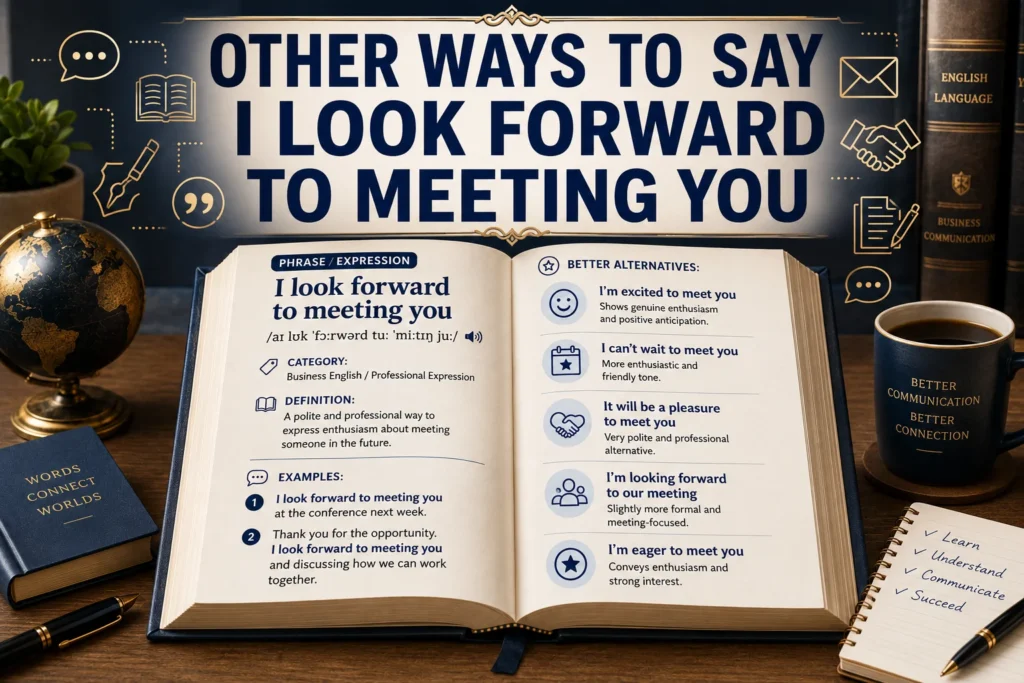
If you’re searching for other ways to say I look forward to meeting you, you’re in the right place. This phrase is one of the most common closing lines in business emails, job interview invitations, networking messages, and professional communication. While it sounds polite and positive, using it repeatedly can make your emails feel predictable. Choosing a fresh alternative helps you sound more confident, professional, and genuine.
Whether you’re writing to a client, manager, colleague, recruiter, customer, or business partner, selecting the right words can strengthen your message and create a lasting impression. A well-chosen phrase also shows professionalism, improves email etiquette, and builds stronger workplace relationships.
In this guide, you’ll discover professional, formal, friendly, email-friendly, and workplace alternatives to I look forward to meeting you, along with meanings, best use cases, and practical examples. By the end, you’ll know exactly which phrase to use in every business situation.
What Does “I Look Forward to Meeting You” Mean?
The phrase I look forward to meeting you expresses excitement and anticipation about meeting someone in the future. It tells the other person that you value the upcoming meeting and are eager to connect.
In professional communication, this phrase is often used at the end of emails, interview invitations, networking messages, appointment confirmations, and client communications. It creates a positive impression by showing enthusiasm without sounding too casual.
Simple Examples
- I look forward to meeting you at tomorrow’s interview.
- We look forward to meeting you during next week’s project discussion.
- I look forward to meeting you and learning more about your business.
Although the phrase is perfectly acceptable, using different alternatives helps make your writing more engaging and prevents repetition.
Why Do People Search for Alternatives?
Many professionals prefer using different expressions instead of repeating I look forward to meeting you in every email.
1. To Sound More Professional
Business communication becomes stronger when you use varied and polished language. Alternatives like I’m eager to meet you or I’m excited to connect with you often sound more natural.
2. To Avoid Repetition
Using the same closing sentence in every email can make your communication feel repetitive. Different alternatives keep your writing fresh.
3. To Match the Situation
A client meeting, job interview, networking event, or casual team meeting may require different tones. Professional alternatives allow you to choose the most appropriate wording.
4. To Improve Business Emails
Professional email phrases leave a better impression and demonstrate strong communication skills.
5. To Build Positive Relationships
Showing genuine enthusiasm helps build trust before the meeting even begins.
When Should You Use “I Look Forward to Meeting You”?
This phrase works well in many professional situations.
Business Emails
Use it when confirming meetings or appointments.
Example
Thank you for your time. I look forward to meeting you next Tuesday.
Workplace Communication
Managers and employees use it before project discussions or team meetings.
Example
I look forward to meeting you during tomorrow’s planning session.
Client Communication
It creates a warm and professional closing.
Example
Thank you for choosing our services. I look forward to meeting you and discussing your goals.
Networking
Perfect when connecting with new professionals.
Example
I look forward to meeting you at the networking event.
Customer Service
Useful when confirming appointments or consultations.
Example
We look forward to meeting you during your scheduled consultation.
Professional Ways to Say “I Look Forward to Meeting You”
1. I’m Excited to Meet You
Meaning: Shows enthusiasm.
Tone: Professional & Friendly
Best Use: Networking and interviews.
Example
I’m excited to meet you and discuss the opportunity.
2. I’m Looking Forward to Connecting
Meaning: Expresses interest in building a relationship.
Tone: Professional
Best Use: LinkedIn messages and networking.
Example
I’m looking forward to connecting with you next week.
3. I Can’t Wait to Meet You
Meaning: Shows strong enthusiasm.
Tone: Friendly Professional
Best Use: Informal business relationships.
Example
I can’t wait to meet you and hear your ideas.
4. I’m Eager to Meet You
Meaning: Shows genuine interest.
Tone: Professional
Best Use: Client communication.
Example
I’m eager to meet you and learn more about your project.
5. I Appreciate the Opportunity to Meet You
Meaning: Shows gratitude.
Tone: Formal
Best Use: Job interviews.
Example
I appreciate the opportunity to meet you and discuss the position.
6. I Look Forward to Speaking with You
Meaning: Best for virtual meetings.
Tone: Professional
Example
I look forward to speaking with you during tomorrow’s video call.
7. I’m Looking Forward to Our Conversation
Meaning: Focuses on discussion rather than the meeting.
Tone: Professional
Example
I’m looking forward to our conversation about the project.
8. I Hope to Meet You Soon
Meaning: Friendly anticipation.
Tone: Friendly
Example
I hope to meet you soon and discuss future opportunities.
9. It’ll Be a Pleasure to Meet You
Meaning: Very polite expression.
Tone: Formal
Example
It’ll be a pleasure to meet you next week.
10. I’m Delighted We’ll Be Meeting
Meaning: Warm professional greeting.
Tone: Formal
Example
I’m delighted we’ll be meeting in person.
11. I Look Forward to Seeing You
Meaning: Suitable for in-person meetings.
Tone: Professional
Example
I look forward to seeing you on Friday.
12. I’m Looking Forward to Our Meeting
Meaning: Direct and professional.
Tone: Professional
Example
I’m looking forward to our meeting next Monday.
13. I’m Happy We’ll Be Meeting
Meaning: Positive and warm.
Tone: Friendly Professional
Example
I’m happy we’ll be meeting to discuss your goals.
14. I’m Excited About Our Meeting
Meaning: Shows enthusiasm.
Tone: Professional
Example
I’m excited about our meeting next week.
15. I Appreciate Your Time
Meaning: Respectful closing.
Tone: Professional
Example
Thank you again. I appreciate your time and look forward to our discussion.
16. I’m Looking Forward to Learning More
Meaning: Shows curiosity.
Tone: Professional
Example
I’m looking forward to learning more about your organization.
17. Thank You—I Look Forward to Meeting You
Meaning: Polite email closing.
Tone: Professional
Example
Thank you for your invitation. I look forward to meeting you.
18. I’m Looking Forward to Working with You
Meaning: Focuses on future collaboration.
Tone: Professional
Example
I’m looking forward to working with you on this project.
19. I’m Pleased We’ll Be Meeting
Meaning: Formal appreciation.
Tone: Formal
Example
I’m pleased we’ll be meeting to discuss the proposal.
20. I Value the Opportunity to Meet You
Meaning: Respectful and appreciative.
Tone: Professional
Example
I value the opportunity to meet you and discuss our partnership.
Professional Alternatives, Email Examples, FAQs & Summary
Continue improving your professional communication by using these additional alternatives to I look forward to meeting you. These phrases are suitable for business emails, client communication, networking, workplace discussions, interviews, and customer service.
Ways to Say “I Look Forward to Meeting You”
21. I’m Looking Forward to Getting to Know You
Meaning: Shows interest in building a relationship.
Tone: Friendly Professional
Best Use: Networking and onboarding.
Example
I’m looking forward to getting to know you and your team.
22. I Look Forward to Our Collaboration
Meaning: Expresses excitement about working together.
Tone: Professional
Best Use: Business partnerships.
Example
I look forward to our collaboration on this exciting project.
23. I’m Excited to Learn More About Your Business
Meaning: Shows genuine curiosity.
Tone: Professional
Best Use: Client meetings.
Example
I’m excited to learn more about your business during our meeting.
24. I Appreciate the Chance to Connect
Meaning: Shows gratitude for the opportunity.
Tone: Professional
Best Use: Networking.
Example
I appreciate the chance to connect with you next week.
25. It’ll Be Great to Meet You
Meaning: Warm and positive.
Tone: Friendly Professional
Best Use: Colleagues and networking.
Example
It’ll be great to meet you in person.
26. I’m Looking Forward to Our Discussion
Meaning: Focuses on the conversation.
Tone: Professional
Example
I’m looking forward to our discussion about the upcoming project.
27. I’m Grateful for the Opportunity to Meet
Meaning: Shows appreciation.
Tone: Formal
Example
I’m grateful for the opportunity to meet with your team.
28. I’m Looking Forward to Exchanging Ideas
Meaning: Highlights collaboration.
Tone: Professional
Example
I’m looking forward to exchanging ideas during our meeting.
29. I Hope We Can Meet Soon
Meaning: Friendly anticipation.
Tone: Friendly
Example
I hope we can meet soon and discuss your plans.
30. I’m Looking Forward to a Productive Meeting
Meaning: Sets a positive expectation.
Tone: Professional
Example
I’m looking forward to a productive meeting on Thursday.
31. I’m Eager to Connect with You
Meaning: Expresses enthusiasm.
Tone: Professional
Example
I’m eager to connect with you and learn from your experience.
32. I Welcome the Opportunity to Meet
Meaning: Formal acceptance.
Tone: Formal
Example
I welcome the opportunity to meet and discuss the proposal.
33. I’m Looking Forward to Meeting the Team
Meaning: Suitable for new employees.
Tone: Professional
Example
I’m looking forward to meeting the team next week.
34. Thank You—I Can’t Wait to Connect
Meaning: Warm closing.
Tone: Friendly Professional
Example
Thank you for arranging the meeting. I can’t wait to connect.
35. It’ll Be Wonderful to Meet You
Meaning: Positive and welcoming.
Tone: Friendly
Example
It’ll be wonderful to meet you at the conference.
36. I’m Looking Forward to Building Our Relationship
Meaning: Focuses on long-term collaboration.
Tone: Professional
Example
I’m looking forward to building our professional relationship.
37. I Anticipate a Great Conversation
Meaning: Shows positive expectations.
Tone: Formal
Example
I anticipate a great conversation during our meeting.
38. I Appreciate Your Invitation
Meaning: Shows gratitude before meeting.
Tone: Professional
Example
I appreciate your invitation and look forward to our discussion.
39. I Hope Our Meeting Will Be Productive
Meaning: Positive expectation.
Tone: Professional
Example
I hope our meeting will be productive and beneficial for both teams.
40. Looking Forward to Meeting You Soon
Meaning: A shorter but professional version.
Tone: Professional
Example
Looking forward to meeting you soon.
Quick Comparison Table
| Alternative | Tone | Best Use |
| I’m Excited to Meet You | Friendly Professional | Interviews |
| I’m Eager to Meet You | Professional | Clients |
| It’ll Be a Pleasure to Meet You | Formal | Business meetings |
| I’m Looking Forward to Connecting | Professional | Networking |
| I Appreciate the Opportunity to Meet You | Formal | Job interviews |
| I’m Looking Forward to Our Meeting | Professional | Workplace |
| I Welcome the Opportunity to Meet | Formal | Corporate communication |
| It’ll Be Great to Meet You | Friendly | Colleagues |
| I Look Forward to Our Collaboration | Professional | Business partnerships |
| Looking Forward to Meeting You Soon | Professional | General emails |
Professional Email Examples
Client
Thank you for your time. I’m looking forward to discussing your project and exploring how we can work together.
Manager
I appreciate the opportunity. I’m looking forward to our meeting tomorrow.
Colleague
I’m excited to meet you and collaborate on the new project.
Customer
Thank you for scheduling your appointment. We look forward to meeting you and assisting you.
Networking
It’ll be a pleasure to meet you at next week’s networking event.
Meeting Follow-up
Thank you for confirming the meeting. I’m looking forward to speaking with you and discussing the next steps.
Common Mistakes
1. Repeating the Same Phrase
Using I look forward to meeting you in every email makes your writing repetitive. Rotate between different alternatives.
2. Using Casual Language in Formal Emails
Avoid phrases like Can’t wait to meet you when writing to executives or clients.
3. Choosing an Overly Formal Expression
Very formal phrases may sound unnatural when emailing colleagues.
4. Forgetting Personalization
Mention the meeting, project, or event whenever possible instead of using a generic closing.
Related Phrases
- I look forward to speaking with you
- I’m excited to connect
- It’ll be a pleasure to meet you
- I’m eager to meet you
- Looking forward to our discussion
- I appreciate your time
- I welcome the opportunity
- I’m excited about our meeting
- I hope to see you soon
- Looking forward to collaborating
- I value this opportunity
- Happy to connect
- Looking forward to learning more
- Excited to work together
- Thank you, and see you soon
Phrase Comparison
| Phrase | Tone | Best Use |
| I Look Forward to Meeting You | Professional | General business emails |
| It’ll Be a Pleasure to Meet You | Formal | Clients |
| I’m Excited to Meet You | Friendly Professional | Networking |
| I’m Looking Forward to Connecting | Professional | |
| I’m Eager to Meet You | Professional | Interviews |
| Looking Forward to Our Discussion | Professional | Meetings |
Cultural Usage
US English
American professionals commonly use I’m looking forward to meeting you, I’m excited to meet you, and Looking forward to connecting.
UK English
British English generally prefers more formal expressions such as It’ll be a pleasure to meet you and I look forward to our meeting.
Corporate Communication
Professional companies often choose formal yet friendly language to create a positive impression.
Customer Service
Businesses frequently use We look forward to meeting you when confirming appointments.
Networking
Networking emails often include I’m looking forward to connecting because it sounds warm and modern.
FAQs
What is a professional way to say “I look forward to meeting you”?
I’m looking forward to connecting and It’ll be a pleasure to meet you are excellent choices.
Is “I look forward to meeting you” professional?
Yes. It’s one of the most common professional email closings.
What’s a formal alternative?
I welcome the opportunity to meet is a formal option.
Which phrase is best for clients?
It’ll be a pleasure to meet you or I’m eager to meet you.
What should I use in networking emails?
I’m looking forward to connecting works perfectly.
Can I use this phrase in job interviews?
Yes. It’s highly appropriate.
Is “Can’t wait to meet you” professional?
Only in informal or friendly workplace relationships.
What’s best for workplace communication?
I’m looking forward to our meeting is clear and professional.
How can I avoid repetition?
Alternate between professional expressions based on the situation.
Why should I use alternatives?
They improve business communication, email etiquette, and help your writing sound more natural and engaging.
Final Summary
Using other ways to say I look forward to meeting you makes your business emails more engaging, professional, and memorable. While the original phrase is polite and widely accepted, using alternatives such as I’m looking forward to connecting, It’ll be a pleasure to meet you, I’m eager to meet you, or I look forward to our collaboration allows you to match the tone of different situations. Whether you’re writing to clients, managers, colleagues, or networking contacts, choosing the right phrase demonstrates professionalism, improves workplace communication, and leaves a positive first impression.