
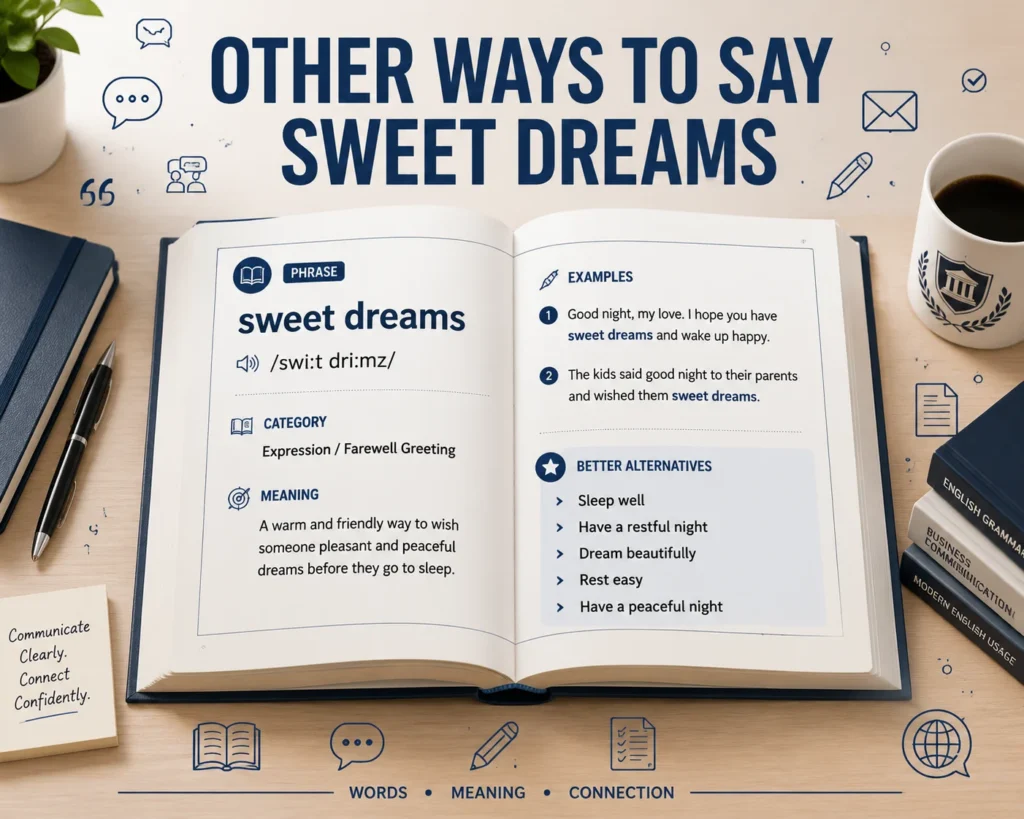
“Sweet dreams” is a warm and caring phrase people use before someone goes to sleep. It expresses good wishes, comfort, kindness, and the hope that the person enjoys a peaceful night. However, many people search for other ways to say sweet dreams because the phrase may feel too personal, too casual, or unsuitable in certain situations.
The right alternative depends on your relationship, communication style, and situation. A message to a close friend, partner, or family member can be playful and emotional, while a message to a colleague, client, or professional contact requires a more polite and respectful tone.
In modern communication, choosing the right words matters. Whether you are writing a business email, sending a workplace message, responding to a customer, or ending a conversation with someone important, the phrase you use creates an impression.
This guide explains the meaning of “sweet dreams,” provides professional alternatives, and shares practical examples for emails, workplace communication, clients, networking, and everyday conversations.
What Does “Sweet Dreams” Mean?
Literal Meaning of Sweet Dreams
The phrase “sweet dreams” literally means wishing someone pleasant, happy, or peaceful dreams while they sleep.
The word “sweet” represents something enjoyable, comforting, or pleasant. The word “dreams” refers to the thoughts and images people experience during sleep.
Together, “sweet dreams” means:
“I hope you have a peaceful night and experience pleasant dreams while sleeping.”
Example:
- “Good night, Sarah. Sweet dreams!”
- “I hope you have sweet dreams tonight.”
Tone of “Sweet Dreams”
“Sweet dreams” usually carries a:
- Warm tone
- Caring feeling
- Friendly attitude
- Personal connection
It often sounds affectionate rather than professional.
For example:
Personal:
“Good night, love. Sweet dreams.”
This sounds romantic and emotional.
Friendly:
“Good night! Sweet dreams and see you tomorrow.”
This sounds casual and kind.
Professional:
“Sweet dreams, Mr. Smith.”
This may sound unusual because the phrase is normally used in personal relationships.
Purpose of Saying Sweet Dreams
People use “sweet dreams” to:
- Show care
- End a conversation positively
- Express kindness
- Wish someone relaxation
- Create emotional connection
The phrase works well when you already have a friendly relationship with someone.
However, in professional communication, you may need a different phrase that sounds respectful without being overly personal.
Emotional Context of “Sweet Dreams”
The phrase creates feelings of:
- Comfort
- Safety
- Warmth
- Appreciation
- Connection
That is why couples, friends, and family members often use it.
For example:
“Sleep well. I hope tomorrow brings you happiness.”
This keeps the caring meaning while sounding slightly more mature.
Professional Usage of Alternatives to “Sweet Dreams”
Although “sweet dreams” is not commonly used in business settings, similar expressions can work when you want to end a conversation politely.
The best choice depends on the situation.
Using Alternatives in Emails
In professional emails, avoid overly personal phrases unless you have a close relationship with the recipient.
Instead of:
“Sweet dreams!”
Use:
- “Wishing you a restful evening.”
- “Have a pleasant evening.”
- “I hope you have a relaxing night.”
Example:
Less suitable:
Hi James,
Thanks for your help today. Sweet dreams!
Better:
Hi James,
Thanks for your help today. I hope you have a relaxing evening.
Using Alternatives in Workplace Communication
Workplace communication requires balance. You want to sound friendly but professional.
Suitable options include:
- “Have a good night.”
- “Rest well.”
- “Enjoy your evening.”
- “Take care.”
Example:
“Great work today. Have a good evening, and I’ll see you tomorrow.”
Using Alternatives With Clients
Client communication requires professionalism and respect.
Avoid phrases that feel too intimate.
Instead of:
“Sweet dreams, John.”
Use:
“Thank you for your time today. I hope you have a pleasant evening.”
This keeps the relationship professional while showing appreciation.
Using Alternatives in Networking
Networking conversations often end with positive wishes.
Good options include:
- “It was great connecting with you.”
- “Have a wonderful evening.”
- “Wishing you a productive week ahead.”
Example:
“It was a pleasure speaking with you today. Have a wonderful evening.”
Using Alternatives in Customer Service
Customer service messages should sound polite and helpful.
Examples:
- “Have a great evening.”
- “Thank you for contacting us.”
- “We appreciate your business.”
Example:
“Thank you for reaching out. We appreciate your time and hope you have a wonderful evening.”
Professional Way to Say “Sweet Dreams”
If you need a professional way to say sweet dreams, choose phrases that focus on relaxation, rest, and positive wishes rather than emotions.
Examples:
- “Wishing you a peaceful night.”
- “I hope you have a restful evening.”
- “Have a relaxing night ahead.”
- “Rest well and take care.”
These phrases work better in professional communication because they sound polite without becoming too personal.
Formal Alternative to “Sweet Dreams”
A formal alternative should maintain respect and professionalism.
Examples:
- “Wishing you a restful night.”
- “I hope you enjoy a peaceful evening.”
- “May you have a relaxing evening.”
- “Wishing you a pleasant night ahead.”
These phrases are suitable for:
- Business emails
- Professional messages
- Senior colleagues
- Clients
Alternatives to Say Sweet Dreams (Core List)
Professional Alternatives
1. Wishing You a Restful Night
Meaning: Hoping someone enjoys good rest.
Tone: Professional and caring.
Best use case:
- Workplace messages
- Professional contacts
- Clients
Example:
Thank you for your support today. Wishing you a restful night.
2. Have a Peaceful Night
Meaning: A wish for calm and relaxation.
Tone: Polite and thoughtful.
Best use case:
- Professional conversations
- Friendly workplace communication
Example:
I appreciate your help. Have a peaceful night.
3. Rest Well
Meaning: Encouraging someone to relax and recover.
Tone: Simple and friendly.
Best use case:
- Colleagues
- Friends
- Team members
Example:
You worked hard today. Rest well and enjoy your evening.
4. Sleep Well
Meaning: A direct wish for good sleep.
Tone: Warm and simple.
Best use case:
- Friends
- Family
- Casual communication
Example:
Good night! Sleep well.
5. Have a Relaxing Evening
Meaning: Wishing someone calm time after work.
Tone: Professional.
Best use case:
- Emails
- Workplace communication
Example:
Thank you for your assistance. Have a relaxing evening.
Complete Alternatives to Say “Sweet Dreams”
Below are professional, formal, friendly, email, and workplace alternatives with meaning, tone, best use cases, and examples.
Professional Alternatives
1. Wishing You a Restful Night
Meaning: Hoping someone gets good rest after their day.
Tone: Professional, thoughtful, respectful.
Best use case:
- Business communication
- Colleagues
- Clients
Example:
Thank you for your time today. Wishing you a restful night.
2. Have a Peaceful Evening
Meaning: A wish for a calm and relaxing evening.
Tone: Polite and professional.
Best use case:
- Workplace conversations
- Client messages
Example:
I appreciate your support. Have a peaceful evening.
3. Enjoy a Relaxing Night
Meaning: Hoping someone has time to unwind.
Tone: Friendly and professional.
Best use case:
- Team communication
- Casual business relationships
Example:
Great job completing the project. Enjoy a relaxing night.
4. Rest Well and Take Care
Meaning: Showing concern for someone’s well-being.
Tone: Warm and respectful.
Best use case:
- Colleagues
- Professional friends
Example:
Thank you for your help today. Rest well and take care.
5. Have a Good Night
Meaning: A simple wish for a pleasant night.
Tone: Neutral and widely accepted.
Best use case:
- Workplace
- Everyday conversations
Example:
I’ll send the updated report tomorrow. Have a good night.
6. Wishing You a Calm Night Ahead
Meaning: Hoping someone experiences peace and relaxation.
Tone: Caring and professional.
Best use case:
- Supportive messages
- Professional relationships
Example:
I hope everything goes smoothly. Wishing you a calm night ahead.
7. May You Have a Peaceful Rest
Meaning: A respectful wish for relaxation.
Tone: Formal and thoughtful.
Best use case:
- Formal communication
- Respectful messages
Example:
Thank you for your guidance. May you have a peaceful rest.
8. Hope You Get Some Good Rest
Meaning: Expressing care about someone’s recovery.
Tone: Friendly and natural.
Best use case:
- Coworkers
- Team members
Example:
It was a busy day. Hope you get some good rest tonight.
9. Enjoy Your Evening
Meaning: A polite closing wish.
Tone: Professional and common.
Best use case:
- Emails
- Customer communication
Example:
Thank you for reaching out. Enjoy your evening.
10. Have a Wonderful Evening
Meaning: Wishing someone a pleasant time.
Tone: Positive and friendly.
Best use case:
- Networking
- Business relationships
Example:
It was great speaking with you. Have a wonderful evening.
11. Wishing You a Comfortable Night
Meaning: Hoping someone feels relaxed.
Tone: Gentle and respectful.
Best use case:
- Caring professional messages
Example:
I hope your schedule becomes easier soon. Wishing you a comfortable night.
12. Take Some Time to Relax
Meaning: Encouraging someone to rest.
Tone: Supportive.
Best use case:
- Team communication
Example:
You handled a lot today. Take some time to relax.
13. Have a Restful Evening
Meaning: Wishing someone peaceful downtime.
Tone: Professional.
Best use case:
- Business emails
Example:
Thank you for your quick response. Have a restful evening.
14. Wishing You a Pleasant Night
Meaning: A polite wish for a good night.
Tone: Formal and courteous.
Best use case:
- Clients
- Formal contacts
Example:
Thank you for your cooperation. Wishing you a pleasant night.
15. Enjoy a Well-Deserved Rest
Meaning: Recognizing someone’s effort.
Tone: Appreciative and encouraging.
Best use case:
- Employees
- Team members
Example:
You completed the project successfully. Enjoy a well-deserved rest.
Formal Alternatives
16. May You Have a Restful Night
Meaning: A respectful night wish.
Tone: Formal.
Best use case:
- Senior professionals
- Formal messages
Example:
Thank you for your valuable advice. May you have a restful night.
17. Wishing You a Peaceful Rest
Meaning: Hoping someone relaxes completely.
Tone: Formal and considerate.
Best use case:
- Professional appreciation messages
Example:
Your contribution was greatly appreciated. Wishing you a peaceful rest.
18. I Hope You Have a Pleasant Evening
Meaning: A polite closing phrase.
Tone: Formal.
Best use case:
- Business emails
Example:
Thank you for reviewing the proposal. I hope you have a pleasant evening.
19. Have a Restful Night Ahead
Meaning: Looking forward to someone having good rest.
Tone: Formal but warm.
Best use case:
- Workplace communication
Example:
It was a productive discussion. Have a restful night ahead.
20. Wishing You Comfort and Rest
Meaning: Expressing kindness and support.
Tone: Formal and compassionate.
Best use case:
- Supportive professional communication
Example:
Thank you for your patience. Wishing you comfort and rest.
21. I Hope You Enjoy a Quiet Evening
Meaning: Hoping someone has peaceful personal time.
Tone: Formal-friendly.
Best use case:
- Business contacts
Example:
It was a pleasure working with you. I hope you enjoy a quiet evening.
22. Have a Tranquil Night
Meaning: A wish for complete calm.
Tone: Elegant and formal.
Best use case:
- Formal writing
Example:
Wishing you a tranquil night and a successful tomorrow.
23. May Your Evening Be Peaceful
Meaning: Hoping someone experiences calm.
Tone: Formal.
Best use case:
- Respectful communication
Example:
Thank you for your continued support. May your evening be peaceful.
24. Wishing You a Relaxing Night
Meaning: Hoping someone enjoys downtime.
Tone: Professional.
Best use case:
- Emails
- Work messages
Example:
Thank you for your cooperation. Wishing you a relaxing night.
25. Have a Pleasant Night’s Rest
Meaning: A formal way to wish good sleep.
Tone: Formal.
Best use case:
- Professional relationships
Example:
I appreciate your efforts today. Have a pleasant night’s rest.
Friendly Alternatives
26. Sleep Tight
Meaning: A playful way to wish good sleep.
Tone: Cute and friendly.
Best use case:
- Friends
- Family
Example:
Good night! Sleep tight.
27. Dream Well
Meaning: Similar to sweet dreams.
Tone: Warm.
Best use case:
- Close relationships
Example:
Good night. Dream well and wake up happy.
28. Rest Easy
Meaning: Encouraging someone to relax without worries.
Tone: Comforting.
Best use case:
- Friends
- Supportive conversations
Example:
Everything is taken care of. Rest easy tonight.
29. Good Night and Sleep Well
Meaning: A complete night wish.
Tone: Friendly.
Best use case:
- Everyday conversations
Example:
Good night and sleep well. See you tomorrow.
30. Hope You Have Beautiful Dreams
Meaning: A more emotional version of sweet dreams.
Tone: Caring.
Best use case:
- Loved ones
Example:
I hope you have beautiful dreams tonight.
31. Sleep Peacefully
Meaning: Hoping someone sleeps calmly.
Tone: Gentle.
Best use case:
- Friends and family
Example:
Sleep peacefully and wake up refreshed.
32. Have Lovely Dreams
Meaning: A warm dream wish.
Tone: Affectionate.
Best use case:
- Close relationships
Example:
Good night! Have lovely dreams.
33. Dream Big and Rest Well
Meaning: Combining encouragement with rest.
Tone: Positive.
Best use case:
- Motivational messages
Example:
Keep working toward your goals. Dream big and rest well.
34. Recharge and Relax
Meaning: Encouraging someone to recover energy.
Tone: Modern and casual.
Best use case:
- Friends
- Coworkers
Example:
You deserve a break. Recharge and relax tonight.
35. Wake Up Refreshed
Meaning: Wishing someone a good night’s recovery.
Tone: Friendly.
Best use case:
- Everyday messages
Example:
Have a good night and wake up refreshed.
Email Alternatives
36. Wishing You a Wonderful Evening
Meaning: A polite email closing.
Tone: Professional and positive.
Example:
Thank you for your assistance. Wishing you a wonderful evening.
37. Have a Great Evening
Meaning: A common professional closing.
Tone: Friendly-professional.
Example:
I look forward to your feedback. Have a great evening.
38. Thank You, and Enjoy Your Evening
Meaning: Combines appreciation with a closing wish.
Tone: Courteous.
Example:
Thank you for your quick response, and enjoy your evening.
39. Wishing You a Productive Tomorrow
Meaning: Looking forward to future success.
Tone: Business-focused.
Example:
Thank you for today’s discussion. Wishing you a productive tomorrow.
40. Have a Restful Evening Ahead
Meaning: Hoping someone relaxes.
Tone: Professional.
Example:
I appreciate your support. Have a restful evening ahead.
41. Thank You for Your Time Today
Meaning: Appreciating someone’s effort.
Tone: Professional.
Example:
Thank you for your time today. I look forward to continuing our discussion.
42. Enjoy the Rest of Your Day
Meaning: A polite closing phrase.
Tone: Neutral.
Example:
Thank you for contacting us. Enjoy the rest of your day.
Workplace Alternatives
43. Great Work Today, Rest Well
Meaning: Appreciates effort and encourages rest.
Tone: Supportive.
Example:
Great work today, everyone. Rest well and see you tomorrow.
44. Have a Well-Deserved Break
Meaning: Recognizes hard work.
Tone: Encouraging.
Example:
You completed the deadline successfully. Have a well-deserved break.
45. See You Tomorrow, Have a Good Night
Meaning: A natural workplace goodbye.
Tone: Friendly.
Example:
Everything is complete. See you tomorrow, have a good night.
46. Take Care and Get Some Rest
Meaning: Shows concern.
Tone: Friendly-professional.
Example:
It was a busy shift. Take care and get some rest.
47. Have a Relaxing Evening After a Busy Day
Meaning: Recognizes someone’s effort.
Tone: Appreciative.
Example:
You handled many tasks today. Have a relaxing evening after a busy day.
Quick Comparison Table: Alternatives to “Sweet Dreams”
| Alternative | Tone | Best Use |
| Sweet dreams | Warm, personal | Friends, family, close relationships |
| Wishing you a restful night | Professional, caring | Workplace, clients |
| Have a peaceful evening | Polite, calm | Business communication |
| Rest well | Friendly, simple | Colleagues, friends |
| Have a good night | Neutral | Everyday conversations |
| Enjoy your evening | Professional-friendly | Emails, customers |
| Wishing you a peaceful rest | Formal | Professional messages |
| Sleep well | Warm, casual | Friends and family |
| Have a relaxing evening | Professional | Workplace communication |
| May you have a restful night | Formal | Senior contacts |
| Take care and rest well | Supportive | Colleagues |
| Have a wonderful evening | Positive | Networking |
| Enjoy a well-deserved rest | Appreciative | Teams and employees |
| Rest easy tonight | Comforting | Personal conversations |
| Wake up refreshed | Friendly | Casual messages |
Email Examples Using Alternatives to “Sweet Dreams”
1. Email Example for a Client
Situation:
You want to end a professional conversation politely after completing a discussion.
Example:
Dear Michael,
Thank you for taking the time to discuss the project today. I appreciate your valuable feedback and look forward to moving ahead with the next steps.
Wishing you a restful evening.
Best regards,
James
Why it works:
“Wishing you a restful evening” sounds professional while still showing appreciation.
2. Email Example for a Manager
Situation:
Ending a conversation with your manager after completing a task.
Example:
Hi Sarah,
I have completed the requested updates and shared the final version for your review. Thank you for your guidance and support.
Have a peaceful evening.
Best,
Alex
Why it works:
It maintains respect while adding a friendly closing.
3. Email Example for a Colleague
Situation:
Sending a friendly workplace message.
Example:
Hi Daniel,
Thanks for helping me complete the report today. Your support made the process much easier.
Rest well and enjoy your evening.
See you tomorrow!
Why it works:
It sounds natural between coworkers without being too formal.
4. Email Example for a Customer
Situation:
Ending a customer service conversation.
Example:
Hello Emma,
Thank you for contacting our support team. We appreciate your patience and are happy to assist you.
Have a wonderful evening, and please feel free to reach out if you need further assistance.
Kind regards,
Customer Support Team
Why it works:
Customer communication should remain polite and respectful.
5. Networking Message Example
Situation:
Ending a professional networking conversation.
Example:
It was a pleasure connecting with you today. I enjoyed learning more about your work and appreciate your insights.
Wishing you a wonderful evening and continued success.
Why it works:
It builds a positive professional relationship.
6. Meeting Follow-Up Email Example
Situation:
After a successful business meeting.
Example:
Dear Team,
Thank you for your time and valuable contributions during today’s meeting. The discussion was productive, and I appreciate everyone’s input.
Have a relaxing evening. I look forward to our next steps.
Best regards,
Emily
Common Mistakes When Using Alternatives to “Sweet Dreams”
1. Using Too Much Emotion in Professional Messages
“Sweet dreams” carries emotional warmth. In professional communication, it may feel too personal.
Incorrect:
Good night, sweet dreams, Mr. Johnson.
Better:
Have a pleasant evening, Mr. Johnson.
2. Choosing the Wrong Level of Formality
Different relationships require different tones.
Too casual:
Sleep tight!
This may not suit a client email.
Better:
Wishing you a restful evening.
3. Overusing the Same Phrase
Repeating the same closing phrase in every email can make communication feel automatic.
Instead of always writing:
Have a great evening.
Try:
- Enjoy your evening.
- Wishing you a restful night.
- Take care and rest well.
4. Sounding Too Formal With Close Friends
Formal alternatives may sound distant in personal conversations.
Example:
May you have a peaceful rest.
This sounds unusual when texting your best friend.
Better:
Sleep well!
5. Ignoring Cultural Differences
Some phrases may sound natural in one culture but unusual in another.
For example:
“Sweet dreams” is common in American personal conversations but less common in formal workplace communication.
Related Phrases to “Sweet Dreams”
1. Good Night
Meaning: A simple goodbye before sleeping.
Example:
Good night, see you tomorrow.
2. Sleep Well
Meaning: A wish for comfortable sleep.
Example:
Take care and sleep well.
3. Rest Easy
Meaning: Relax without worry.
Example:
Everything is handled. Rest easy tonight.
4. Sleep Tight
Meaning: A playful way to wish good sleep.
Example:
Good night! Sleep tight.
5. Have a Good Night’s Sleep
Meaning: Hope someone sleeps comfortably.
Example:
I hope you have a good night’s sleep.
6. Dream Big
Meaning: Encouraging someone to continue pursuing goals.
Example:
Keep working hard and dream big.
7. Rest Up
Meaning: Recover energy.
Example:
Rest up before tomorrow’s meeting.
8. Take Care
Meaning: Showing concern.
Example:
Thanks for today. Take care.
9. Enjoy Your Evening
Meaning: A polite closing phrase.
Example:
Thank you for your help. Enjoy your evening.
10. Recharge Your Energy
Meaning: Take time to recover.
Example:
You had a busy day. Recharge your energy tonight.
11. Have a Relaxing Night
Meaning: Wish someone calm time.
Example:
Have a relaxing night after a long day.
12. Wake Up Refreshed
Meaning: Hope someone feels energized tomorrow.
Example:
Sleep well and wake up refreshed.
13. See You Tomorrow
Meaning: Friendly workplace goodbye.
Example:
Everything is done. See you tomorrow.
14. Enjoy Some Rest
Meaning: Encourage relaxation.
Example:
You worked hard today. Enjoy some rest.
15. Wishing You Peace and Comfort
Meaning: A caring and respectful wish.
Example:
Wishing you peace and comfort tonight.
Phrase Comparison: “Sweet Dreams” vs Alternatives
| Phrase | Tone | Formality | Best Use |
| Sweet dreams | Emotional, caring | Casual | Loved ones |
| Sleep well | Warm | Casual | Friends and family |
| Rest well | Friendly | Medium | Colleagues |
| Have a good night | Neutral | Medium | General use |
| Enjoy your evening | Professional | Medium-high | Emails |
| Wishing you a restful night | Polite | High | Clients |
| May you have a peaceful rest | Formal | High | Professional settings |
| Have a relaxing evening | Professional-friendly | Medium-high | Workplace |
Cultural Usage of “Sweet Dreams”
US English
In American English, “sweet dreams” is common among:
- Couples
- Families
- Close friends
It sounds affectionate.
Example:
Good night, sweet dreams!
However, it is uncommon in business emails.
UK English
British speakers also understand “sweet dreams,” but workplace communication often prefers:
- Have a good evening
- Rest well
- Take care
British professional communication usually values polite understatement.
Corporate Communication
Companies generally avoid emotional phrases like “sweet dreams.”
Better business email phrases include:
- Have a pleasant evening.
- Thank you for your time.
- Wishing you a restful evening.
Customer Service
Customer communication should focus on politeness.
Recommended phrases:
- Have a wonderful evening.
- Thank you for contacting us.
- We appreciate your business.
Networking
Professional networking requires warmth without over-familiarity.
Good choices:
- It was great connecting with you.
- Have a wonderful evening.
- Wishing you continued success.
FAQs
What are other ways to say sweet dreams?
Popular alternatives include:
- Sleep well
- Rest well
- Have a peaceful night
- Wishing you a restful evening
- Have a good night
The best choice depends on your relationship and communication style.
What is a professional way to say sweet dreams?
Professional alternatives include:
- Wishing you a restful night.
- Have a peaceful evening.
- Enjoy your evening.
- Rest well and take care.
What is a formal alternative to sweet dreams?
Formal options include:
- May you have a peaceful rest.
- Wishing you a pleasant evening.
- I hope you enjoy a restful night.
Can I use sweet dreams in a business email?
Usually, no. “Sweet dreams” sounds personal and may feel inappropriate in formal workplace communication.
Use:
Have a pleasant evening.
instead.
What can I say instead of sweet dreams to a coworker?
You can say:
- Rest well.
- Have a good night.
- Enjoy your evening.
- Take care.
Is sweet dreams romantic?
It can be romantic, especially between partners. However, friends and family also use it casually.
What is the best email closing instead of sweet dreams?
Good business email phrases include:
- Wishing you a restful evening.
- Enjoy the rest of your day.
- Have a wonderful evening.
How do you say sweet dreams professionally?
You can say:
“I hope you have a relaxing evening and a restful night.”
This keeps the meaning but sounds more professional.
What is another word for sweet dreams?
Synonyms include:
- Pleasant dreams
- Beautiful dreams
- Peaceful rest
- Good night
- Sleep well
What is a polite way to say good night?
Polite options:
- Have a peaceful evening.
- Wishing you a good night.
- Take care and rest well.
Can I say sweet dreams to my boss?
It is better to avoid it. Use a professional closing like:
Have a pleasant evening.
What is the difference between sweet dreams and sleep well?
“Sweet dreams” focuses on pleasant dreams, while “sleep well” focuses on comfortable rest.
What are good workplace communication alternatives?
Examples:
- Rest well.
- Enjoy your evening.
- Have a good night.
- Take care.
What are the best business email phrases for ending a message?
Examples:
- Thank you for your time.
- I appreciate your support.
- Wishing you a wonderful evening.
Is sweet dreams formal or informal?
“Sweet dreams” is mostly informal. It works best in personal conversations, not professional communication.
Final Summary
Choosing the right alternative to “sweet dreams” depends on the situation. For professional communication, the best options are “wishing you a restful evening,” “have a pleasant evening,” and “enjoy your evening.” For workplace conversations, phrases like “rest well” and “take care” create a friendly tone. For close relationships, “sleep well,” “sweet dreams,” and “dream beautifully” feel warm and personal. Understanding tone, context, and email etiquette helps you communicate naturally and professionally.