
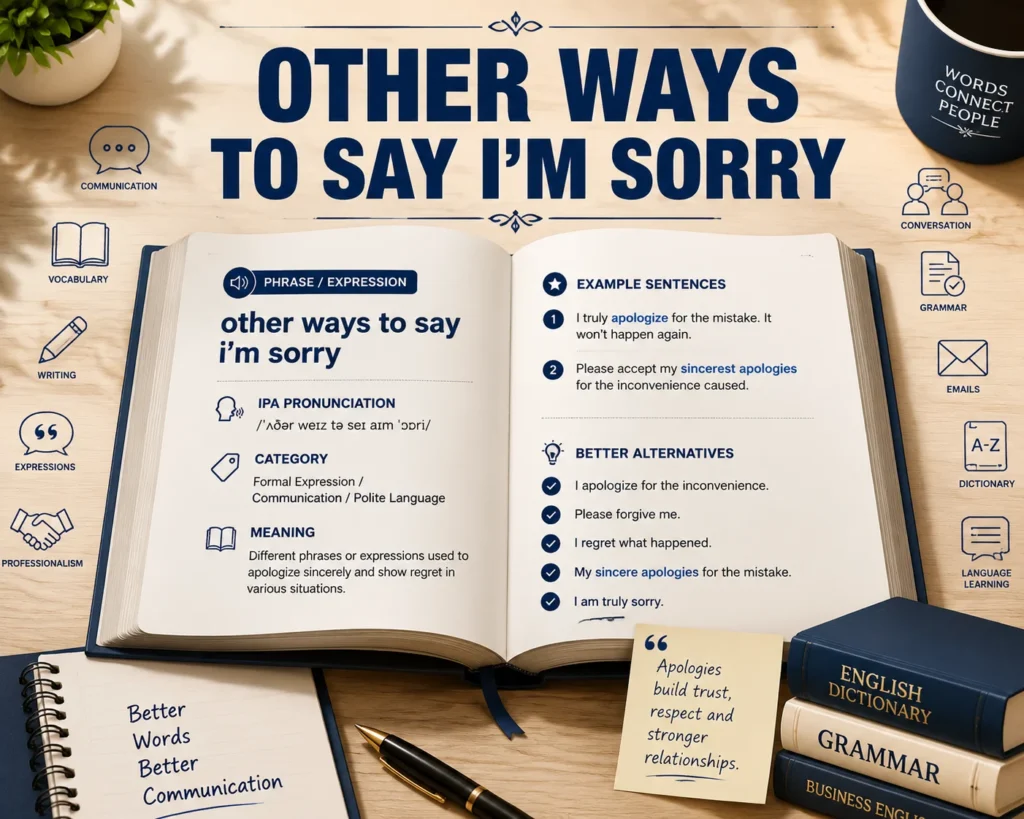
Everyone makes mistakes, whether at work, in an email, during a meeting, or in everyday conversations. Knowing other ways to say I’m sorry helps you apologize more naturally and professionally while matching the situation and your relationship with the other person.
While “I’m sorry” is one of the most common English phrases, using it repeatedly can sound repetitive or, in some cases, too casual or too emotional. In business communication, workplace conversations, and customer service, choosing the right apology shows professionalism, accountability, and respect.
This guide covers the best professional way to say “I’m sorry,” formal alternatives, friendly expressions, and business email phrases. You’ll also learn when each alternative works best, complete with real-life examples that improve your professional communication and email etiquette.
Whether you’re writing to a client, manager, colleague, customer, or networking contact, these alternatives will help you communicate with confidence.
What Does “I’m Sorry” Mean?
“I’m sorry” is an expression used to apologize, show regret, or acknowledge that something has gone wrong. It tells another person that you recognize a mistake, inconvenience, disappointment, or emotional hurt.
Literal Meaning
The phrase means:
“I regret what happened and wish it had not occurred.”
It can express responsibility, sympathy, or politeness depending on the situation.
Tone
“I’m sorry” is generally:
- Polite
- Respectful
- Empathetic
- Honest
- Professional (when used appropriately)
Its tone changes based on context. For example:
- “I’m sorry for the delay.” → Professional
- “I’m so sorry.” → Emotional
- “Sorry about that!” → Casual
- “Please accept my sincere apologies.” → Very formal
Why People Look for Other Ways to Say “I’m Sorry”
Using the same apology repeatedly can sound repetitive or weak. Different situations call for different wording.
People search for alternatives because they want to:
- Sound more professional in emails.
- Apologize politely without sounding overly emotional.
- Match the level of formality.
- Build trust with clients and coworkers.
- Improve workplace communication.
- Follow proper business email etiquette.
- Express genuine accountability.
Choosing the right words often makes an apology feel more sincere and appropriate.
Emotional Purpose of an Apology
A good apology does more than admit a mistake. It helps rebuild trust and shows respect for the other person’s experience.
An effective apology usually communicates:
- Responsibility
- Respect
- Understanding
- Professionalism
- Willingness to improve
For example:
❌ I’m sorry.
✔ I apologize for the delay and appreciate your patience while we resolved the issue.
The second example explains the situation and acknowledges the other person’s understanding, making it more meaningful.
Examples of “I’m Sorry” in Different Situations
Workplace
“I’m sorry I missed the deadline. I’ll submit the completed report this afternoon.”
“I’m sorry for the confusion regarding yesterday’s meeting schedule.”
Customer Service
“I’m sorry for the inconvenience you’ve experienced. We’re working to resolve this as quickly as possible.”
Networking
“I’m sorry I couldn’t attend your event. I hope we can connect soon.”
Personal Conversation
“I’m sorry for hurting your feelings. It wasn’t my intention.”
Professional Usage of “I’m Sorry”
Knowing when and how to apologize is an important part of professional communication.
1. In Business Emails
A professional apology should be:
- Clear
- Brief
- Respectful
- Solution-focused
Example:
I’m sorry for the delay in responding. Thank you for your patience.
Avoid writing long emotional explanations. Focus on resolving the issue.
2. In the Workplace
Mistakes happen at every job. A good workplace apology accepts responsibility while showing commitment to improvement.
Example:
I apologize for overlooking that detail. I’ll make sure it’s corrected immediately.
3. With Clients
Clients appreciate honesty and accountability.
Example:
We sincerely apologize for the inconvenience and appreciate your understanding while we resolve this matter.
This sounds more professional than simply saying:
Sorry.
4. During Networking
Professional relationships benefit from polite apologies.
Example:
I apologize for missing your message earlier. Thank you for reaching out.
5. In Customer Service
Customer service apologies should combine empathy with action.
Example:
I’m sorry for the inconvenience. We’ve already started working on a solution.
Customers want reassurance as much as an apology.
Professional Alternatives to “I’m Sorry”
These expressions are excellent choices for business emails, workplace communication, and professional conversations.
1. I Apologize
Meaning: A direct and professional apology.
Tone: Professional
Best Use: Emails, meetings, workplace
Example:
I apologize for the misunderstanding regarding your order.
2. Please Accept My Apologies
Meaning: A respectful formal apology.
Tone: Formal
Best Use: Clients and executives
Example:
Please accept my apologies for the scheduling error.
3. I Sincerely Apologize
Meaning: Shows genuine regret.
Tone: Professional and sincere
Best Use: Serious mistakes
Example:
I sincerely apologize for the delay in delivering the project.
4. My Apologies
Meaning: A concise professional apology.
Tone: Polite
Best Use: Emails and messages
Example:
My apologies for the confusion.
5. I Regret the Inconvenience
Meaning: Expresses regret without sounding emotional.
Tone: Professional
Best Use: Customer service
Example:
We regret the inconvenience caused by the system outage.
6. I Take Full Responsibility
Meaning: Accepts accountability.
Tone: Strong and trustworthy
Best Use: Workplace
Example:
I take full responsibility for the oversight.
7. I Appreciate Your Patience
Meaning: Thanks the other person while acknowledging the issue.
Tone: Positive
Best Use: Delays
Example:
I appreciate your patience while we completed the review.
8. Thank You for Your Understanding
Meaning: Focuses on appreciation.
Tone: Warm and professional
Best Use: Email communication
Example:
Thank you for your understanding regarding the revised schedule.
9. I Regret the Error
Meaning: Acknowledges a mistake directly.
Tone: Formal
Best Use: Business correspondence
Example:
I regret the error in the invoice.
10. I Understand Your Frustration
Meaning: Shows empathy.
Tone: Customer-focused
Best Use: Customer support
Example:
I understand your frustration and appreciate the opportunity to make this right.
11. I Accept Responsibility
Meaning: Demonstrates accountability.
Tone: Professional
Best Use: Workplace communication
Example:
I accept responsibility for the missed deadline.
12. I Didn’t Mean to Cause Any Inconvenience
Meaning: Acknowledges unintended impact.
Tone: Friendly professional
Best Use: Internal communication
Example:
I didn’t mean to cause any inconvenience during the project.
13. I Hope You’ll Accept My Apology
Meaning: A courteous request for forgiveness.
Tone: Professional
Best Use: Formal conversations
Example:
I hope you’ll accept my apology for the misunderstanding.
14. I Regret That This Happened
Meaning: Shows concern about the outcome.
Tone: Formal
Best Use: Business issues
Example:
I regret that this happened and appreciate your patience.
15. I Value Your Understanding
Meaning: Expresses gratitude while apologizing.
Tone: Professional
Best Use: Clients and coworkers
Example:
I value your understanding as we work to resolve this matter.
Formal Alternatives to “I’m Sorry”
These phrases are ideal for official emails, corporate communication, legal correspondence, customer service, and conversations with senior professionals.
1. Please Accept My Sincere Apologies
Meaning: A deeply respectful apology.
Tone: Very formal
Best Use: Executive emails and important business matters
Example:
Please accept my sincere apologies for the oversight in our previous communication.
2. I Offer My Deepest Apologies
Meaning: Expresses strong regret.
Tone: Highly formal
Best Use: Significant mistakes or sensitive situations
Example:
I offer my deepest apologies for the inconvenience this has caused.
3. I Express My Sincere Regret
Meaning: Communicates heartfelt regret in a professional manner.
Tone: Formal
Best Use: Official letters and business correspondence
Example:
I express my sincere regret for the delay in processing your request.
4. Kindly Accept My Apology
Meaning: A polite and respectful way to apologize.
Tone: Formal
Best Use: Written communication
Example:
Kindly accept my apology for the confusion regarding the meeting agenda.
5. I Extend My Apologies
Meaning: Offers an apology in a courteous and professional way.
Tone: Formal
Best Use: Corporate communication
Example:
I extend my apologies for the misunderstanding.
6. I Regret Any Inconvenience This May Have Caused
Meaning: A polite way to acknowledge inconvenience without placing blame.
Tone: Very formal
Best Use: Customer service, corporate emails, official notices
Example:
I regret any inconvenience this may have caused and appreciate your understanding.
7. Please Excuse the Oversight
Meaning: Acknowledges a mistake or omission.
Tone: Formal
Best Use: Workplace and business emails
Example:
Please excuse the oversight. The document has now been updated.
8. I Wish to Apologize
Meaning: A respectful and direct apology.
Tone: Formal
Best Use: Professional letters and presentations
Example:
I wish to apologize for the misunderstanding during yesterday’s meeting.
9. I Take Full Accountability
Meaning: Accepts complete responsibility.
Tone: Professional and formal
Best Use: Leadership and workplace communication
Example:
I take full accountability for the error and have implemented measures to prevent it from happening again.
10. I Regret My Mistake
Meaning: Admits responsibility while expressing regret.
Tone: Formal and sincere
Best Use: Business communication and workplace conversations
Example:
I regret my mistake and appreciate the opportunity to correct it.
Friendly Alternatives to “I’m Sorry”
These alternatives work well with friends, teammates, classmates, and people you know well. They sound warm, natural, and conversational.
1. My Bad
Meaning: A casual way to admit a mistake.
Tone: Informal
Best Use: Friends and close coworkers
Example:
My bad—I sent you the wrong file.
2. I Didn’t Mean To
Meaning: Explains that the mistake was unintentional.
Tone: Friendly
Best Use: Everyday conversations
Example:
I didn’t mean to interrupt you.
3. That’s On Me
Meaning: Accepts responsibility.
Tone: Casual and confident
Best Use: Team discussions
Example:
That’s on me. I’ll fix it right away.
4. I Feel Terrible About It
Meaning: Shows genuine regret.
Tone: Warm and sincere
Best Use: Personal conversations
Example:
I feel terrible about missing your birthday.
5. I Hope You Can Forgive Me
Meaning: Politely asks for forgiveness.
Tone: Emotional but respectful
Best Use: Personal relationships
Example:
I hope you can forgive me for what happened.
6. I Really Messed Up
Meaning: Admits making a significant mistake.
Tone: Casual
Best Use: Friends and teammates
Example:
I really messed up the schedule.
7. I Owe You an Apology
Meaning: Recognizes that an apology is deserved.
Tone: Friendly and sincere
Best Use: Personal and workplace relationships
Example:
I owe you an apology for forgetting our meeting.
8. Please Forgive Me
Meaning: A heartfelt apology.
Tone: Warm
Best Use: Personal situations
Example:
Please forgive me for hurting your feelings.
9. I Feel Awful
Meaning: Expresses strong regret.
Tone: Emotional
Best Use: Friends and family
Example:
I feel awful about what happened yesterday.
10. I Truly Didn’t Mean Any Harm
Meaning: Clarifies good intentions.
Tone: Gentle
Best Use: Sensitive conversations
Example:
I truly didn’t mean any harm with my comment.
Email Alternatives to “I’m Sorry”
These phrases improve your business email etiquette while sounding professional and polished.
1. Thank You for Your Patience
Meaning: Focuses on appreciation rather than the mistake.
Tone: Professional
Best Use: Delayed responses
Example:
Thank you for your patience while we reviewed your request.
2. Thank You for Your Understanding
Meaning: Appreciates the recipient’s cooperation.
Tone: Professional
Best Use: Schedule changes
Example:
Thank you for your understanding regarding the revised deadline.
3. We Appreciate Your Understanding
Meaning: Company-friendly apology.
Tone: Corporate
Best Use: Customer emails
Example:
We appreciate your understanding as we resolve this issue.
4. I Appreciate Your Flexibility
Meaning: Thanks someone for adapting to changes.
Tone: Professional
Best Use: Rescheduled meetings
Example:
I appreciate your flexibility regarding today’s meeting.
5. Thank You for Bringing This to My Attention
Meaning: Acknowledges the recipient’s feedback.
Tone: Professional
Best Use: Correcting mistakes
Example:
Thank you for bringing this to my attention. I’ve corrected the issue.
6. We Appreciate Your Feedback
Meaning: Shows respect for customer input.
Tone: Professional
Best Use: Customer service
Example:
We appreciate your feedback and are reviewing your concerns.
7. I Appreciate the Opportunity to Correct This
Meaning: Shows accountability and willingness to improve.
Tone: Professional
Best Use: Client communication
Example:
I appreciate the opportunity to correct this mistake.
8. Thank You for Pointing This Out
Meaning: Acknowledges an error professionally.
Tone: Friendly professional
Best Use: Internal emails
Example:
Thank you for pointing this out. I’ve updated the report.
9. I Understand Your Concern
Meaning: Shows empathy.
Tone: Professional
Best Use: Customer complaints
Example:
I understand your concern and we’re working on a solution.
10. We’ll Resolve This Promptly
Meaning: Focuses on the solution.
Tone: Professional
Best Use: Service recovery
Example:
We’ll resolve this promptly and keep you informed throughout the process.
Workplace Alternatives to “I’m Sorry”
These expressions are especially useful in meetings, projects, team collaboration, and leadership communication.
1. I Appreciate Your Feedback
Meaning: Shows openness to improvement.
Tone: Professional
Best Use: Performance discussions
Example:
I appreciate your feedback and will make the necessary changes.
2. Thank You for Your Patience
Meaning: A positive alternative during delays.
Tone: Professional
Best Use: Missed deadlines
Example:
Thank you for your patience while I completed the report.
3. I’ll Make Sure It Doesn’t Happen Again
Meaning: Shows commitment to improvement.
Tone: Professional
Best Use: After making a mistake
Example:
I’ll make sure it doesn’t happen again.
4. I Appreciate You Letting Me Know
Meaning: Welcomes constructive feedback.
Tone: Friendly professional
Best Use: Team communication
Example:
I appreciate you letting me know about the issue.
5. I’ll Correct It Immediately
Meaning: Focuses on taking action.
Tone: Professional
Best Use: Fixing errors
Example:
I’ll correct it immediately and send the updated version.
6. Thank You for Catching That
Meaning: Appreciates someone’s attention to detail.
Tone: Friendly professional
Best Use: Editing and reviews
Example:
Thank you for catching that typo.
7. I Understand the Impact
Meaning: Shows awareness of the consequences.
Tone: Professional
Best Use: Leadership communication
Example:
I understand the impact this delay has caused.
8. I’ll Take Care of It
Meaning: Reassures others that the issue will be resolved.
Tone: Confident
Best Use: Team projects
Example:
I’ll take care of it before the end of the day.
9. Thank You for Your Understanding
Meaning: Appreciates cooperation.
Tone: Professional
Best Use: Schedule changes
Example:
Thank you for your understanding during this transition.
10. I Appreciate Your Cooperation
Meaning: Expresses gratitude while resolving an issue.
Tone: Professional
Best Use: Cross-functional teamwork
Example:
I appreciate your cooperation as we complete this project.
Quick Comparison Table
| Alternative | Tone | Best Use |
| I Apologize | Professional | Business emails |
| Please Accept My Apologies | Formal | Clients and executives |
| My Apologies | Professional | Short email replies |
| I Sincerely Apologize | Professional | Serious mistakes |
| I Regret the Inconvenience | Formal | Customer service |
| Thank You for Your Patience | Professional | Delays |
| Thank You for Your Understanding | Professional | Schedule changes |
| I Appreciate Your Flexibility | Professional | Meeting changes |
| I Accept Responsibility | Professional | Workplace |
| I Take Full Accountability | Formal | Leadership |
| I Regret the Error | Formal | Official correspondence |
| Please Excuse the Oversight | Formal | Reports and documents |
| I’ll Correct It Immediately | Professional | Fixing mistakes |
| That’s On Me | Casual | Team discussions |
| My Bad | Friendly | Friends and close coworkers |
| I Feel Terrible About It | Friendly | Personal situations |
| I Owe You an Apology | Friendly | Relationships |
| Please Forgive Me | Warm | Personal conversations |
| I Understand Your Concern | Professional | Customer support |
| We’ll Resolve This Promptly | Professional | Customer service |
Email Examples Using Alternatives to “I’m Sorry”
A thoughtful apology can strengthen professional relationships when it is clear, respectful, and solution-focused. Below are practical email examples for common workplace situations.
1. Client Email
Subject: Update on Your Project
Dear Sarah,
I sincerely apologize for the delay in delivering your project. We encountered an unexpected issue, but it has now been resolved.
Thank you for your patience. The completed files will be delivered by 3:00 PM today.
Kind regards,
James
Why it works: It accepts responsibility, explains the situation briefly, and provides a solution.
2. Manager Email
Subject: Project Deadline
Dear Mr. Wilson,
I take full responsibility for missing yesterday’s deadline. I underestimated the time required to complete the final review.
I’ve adjusted my schedule and will submit the finished report by tomorrow morning.
Thank you for your understanding.
Best regards,
Emma
Why it works: It avoids excuses and focuses on accountability.
3. Colleague Email
Hi Alex,
My apologies for sending the incorrect spreadsheet earlier.
I’ve attached the updated version with the correct figures.
Thank you for catching the mistake.
Best,
Ryan
Why it works: It’s concise, polite, and appreciative.
4. Customer Service Email
Dear Customer,
We regret the inconvenience caused by the delay in your order.
Our team is actively working to resolve the issue, and your package is expected to arrive within two business days.
Thank you for your patience and continued trust.
Sincerely,
Customer Support Team
Why it works: It combines empathy with reassurance.
5. Networking Email
Hello Michael,
I apologize for not responding sooner. Your message was important to me, and I appreciate your patience.
I’d be happy to schedule a call next week if you’re available.
Best regards,
David
Why it works: It is polite, professional, and keeps the conversation moving forward.
6. Meeting Follow-Up Email
Hello Team,
Thank you for your patience regarding today’s delayed meeting.
I appreciate everyone’s flexibility. The updated meeting notes are attached, and the revised action items are listed below.
Please let me know if you have any questions.
Best,
Sophia
Why it works: It focuses on appreciation and the next steps instead of repeating “I’m sorry.”
Common Mistakes When Saying “I’m Sorry”
Even a sincere apology can lose its impact if it is poorly written or delivered. Avoid these common mistakes to maintain professionalism.
1. Overusing “I’m Sorry”
Saying “I’m sorry” repeatedly can make you sound unsure or lacking confidence.
Less Effective:
I’m sorry for the delay. I’m sorry for the confusion. I’m sorry for the inconvenience.
Better:
I apologize for the delay. Thank you for your patience and understanding.
2. Giving Too Many Excuses
Long explanations often weaken an apology.
Less Effective:
I’m sorry, but traffic was bad, my internet stopped working, and I had another meeting.
Better:
I apologize for arriving late. I’ll plan extra time for future meetings.
3. Choosing the Wrong Tone
Your wording should match the situation.
For example:
- “My bad!” is fine with friends but not with a client.
- “Please accept my sincere apologies.” may sound too formal in a casual team chat.
Always consider your audience.
4. Not Taking Responsibility
Avoid shifting blame.
Less Effective:
I’m sorry if you misunderstood.
Better:
I apologize for not explaining the process clearly.
5. Forgetting to Offer a Solution
A strong apology includes a plan to fix the problem.
Example:
I apologize for the error. I’ve corrected the document and attached the updated version.
6. Writing Emotional or Lengthy Emails
Professional apologies should be calm and concise.
State:
- What happened
- Your apology
- The solution
- Appreciation
This keeps your message clear and effective.
Related Phrases to “I’m Sorry”
These expressions help you communicate regret, appreciation, or accountability in different situations.
| Phrase | Meaning | Example |
| I apologize | Direct professional apology | I apologize for the delay. |
| My apologies | Short formal apology | My apologies for the confusion. |
| I regret the inconvenience | Shows professional regret | I regret the inconvenience caused. |
| Please forgive me | Requests forgiveness | Please forgive me for forgetting. |
| Excuse me | Polite apology for interruptions | Excuse me for interrupting. |
| Pardon me | Formal way to apologize | Pardon me, I didn’t hear you. |
| I appreciate your patience | Thanks someone during delays | I appreciate your patience while we resolved the issue. |
| Thank you for your understanding | Expresses appreciation | Thank you for your understanding. |
| I regret the error | Admits a mistake | I regret the error in the report. |
| I take responsibility | Accepts accountability | I take responsibility for the oversight. |
| I understand your frustration | Shows empathy | I understand your frustration. |
| I didn’t mean to | Explains unintentional actions | I didn’t mean to upset you. |
| That’s on me | Casual responsibility | That’s on me. I’ll fix it. |
| I owe you an apology | Admits someone deserves an apology | I owe you an apology for the delay. |
| I appreciate your flexibility | Thanks someone for adapting | I appreciate your flexibility during the schedule change. |
| I value your patience | Shows gratitude | I value your patience throughout the process. |
Phrase Comparison
Understanding the differences between common apology phrases helps you choose the right one for each situation.
| Phrase | Formality | Tone | Best Use |
| I’m Sorry | Neutral | Warm | Everyday conversations |
| I Apologize | Professional | Respectful | Business emails |
| My Apologies | Professional | Brief | Quick email replies |
| I Sincerely Apologize | Formal | Genuine | Serious mistakes |
| Please Accept My Apologies | Very Formal | Respectful | Clients and executives |
| I Regret the Inconvenience | Formal | Customer-focused | Customer service |
| Thank You for Your Patience | Professional | Positive | Delays |
| Thank You for Your Understanding | Professional | Appreciative | Workplace communication |
| That’s On Me | Casual | Honest | Team conversations |
| My Bad | Informal | Friendly | Friends and close coworkers |
Cultural Usage of “I’m Sorry”
The way people apologize varies across cultures and professional environments.
US English
American English often favors friendly, conversational apologies.
Examples:
- I’m sorry about that.
- I appreciate your patience.
- Thanks for understanding.
Professional communication usually combines an apology with a solution.
UK English
British English often uses more understated language.
Common examples include:
- My apologies.
- Please accept my apologies.
- I do apologize.
These phrases are especially common in formal emails and customer service.
Corporate Communication
In business settings, effective apologies are:
- Brief
- Professional
- Solution-focused
- Respectful
Instead of saying only:
I’m sorry.
Many companies write:
We sincerely apologize for the inconvenience and appreciate your patience while we resolve the issue.
This approach reassures the reader and demonstrates accountability.
Customer Service
Customer service representatives should combine empathy with action.
A good response includes:
- Acknowledging the problem
- Apologizing sincerely
- Explaining the next step
- Offering a solution
Example:
We regret the inconvenience and are actively working to resolve the issue as quickly as possible.
Networking
Professional networking relies on courtesy and respect.
If you miss a message or meeting, keep your apology concise and positive.
Example:
I apologize for the delayed response. Thank you for reaching out, and I’d be delighted to reconnect.
This keeps the relationship moving forward while maintaining professionalism.
FAQs
What are other ways to say “I’m sorry” professionally?
Some of the best professional alternatives include:
- I apologize.
- My apologies.
- Please accept my apologies.
- I sincerely apologize.
- I regret the inconvenience.
- I appreciate your patience.
- Thank you for your understanding.
- I take full responsibility.
These phrases sound polished and are commonly used in business emails and workplace communication.
What is a formal alternative to “I’m sorry”?
Formal alternatives include:
- Please accept my sincere apologies.
- I wish to apologize.
- I extend my apologies.
- I regret the error.
- Kindly accept my apology.
These expressions are suitable for official letters, executive communication, and client correspondence.
What is the best professional way to say “I’m sorry” in an email?
A simple and effective option is:
I apologize for the delay. Thank you for your patience.
This acknowledges the issue, remains professional, and ends on a positive note.
Is “I apologize” more professional than “I’m sorry”?
Yes. “I apologize” generally sounds more formal and professional, making it a preferred choice in business emails, customer service, and workplace communication. “I’m sorry” is more conversational and works well in everyday situations.
Should I always say “I’m sorry” in business emails?
Not always. In some situations, it’s better to focus on appreciation.
For example, instead of:
I’m sorry for the delay.
You can write:
Thank you for your patience.
This approach sounds confident, professional, and customer-focused.
What is the best apology for a client?
A client apology should include three elements:
- A sincere apology
- Responsibility
- A clear solution
Example:
We sincerely apologize for the inconvenience. Our team has resolved the issue, and we appreciate your patience.
How do I apologize for a mistake at work?
Keep your apology brief and solution-oriented.
Example:
I apologize for the oversight. I’ve corrected the issue and taken steps to prevent it from happening again.
What’s the difference between “I’m sorry” and “My apologies”?
I’m sorry is warm, personal, and conversational.
My apologies is shorter, more formal, and commonly used in professional emails.
What should I avoid when apologizing?
Avoid:
- Making excuses
- Blaming others
- Repeating “I’m sorry” several times
- Writing overly emotional messages
- Forgetting to offer a solution
A clear, respectful apology is usually the most effective.
Is “Sorry about that” professional?
Not usually.
It works well in casual conversations but may sound too informal in business settings. For professional communication, use:
- I apologize.
- My apologies.
- I regret the inconvenience.
Can I replace “I’m sorry” with “Thank you for your patience”?
Yes, especially when apologizing for delays or waiting times. This wording emphasizes appreciation while still acknowledging the inconvenience.
Example:
Thank you for your patience while we completed your request.
Which apology works best in customer service?
A strong customer service apology combines empathy and action.
Example:
We sincerely apologize for the inconvenience and are working to resolve the issue as quickly as possible.
What are good alternatives for workplace communication?
Some excellent workplace alternatives are:
- I apologize.
- I appreciate your feedback.
- I’ll correct it immediately.
- Thank you for your understanding.
- I take responsibility.
These expressions help maintain professionalism and accountability.
How can I sound sincere without over-apologizing?
Be honest, take responsibility, and explain how you’ll fix the issue. A brief apology paired with a clear solution often sounds more genuine than repeating “I’m sorry.”
What is the best synonym for “I’m sorry”?
The best synonym depends on the situation:
- Professional: I apologize.
- Formal: Please accept my sincere apologies.
- Customer service: We regret the inconvenience.
- Casual: My bad.
- Friendly: I didn’t mean to.