Featured Snippet
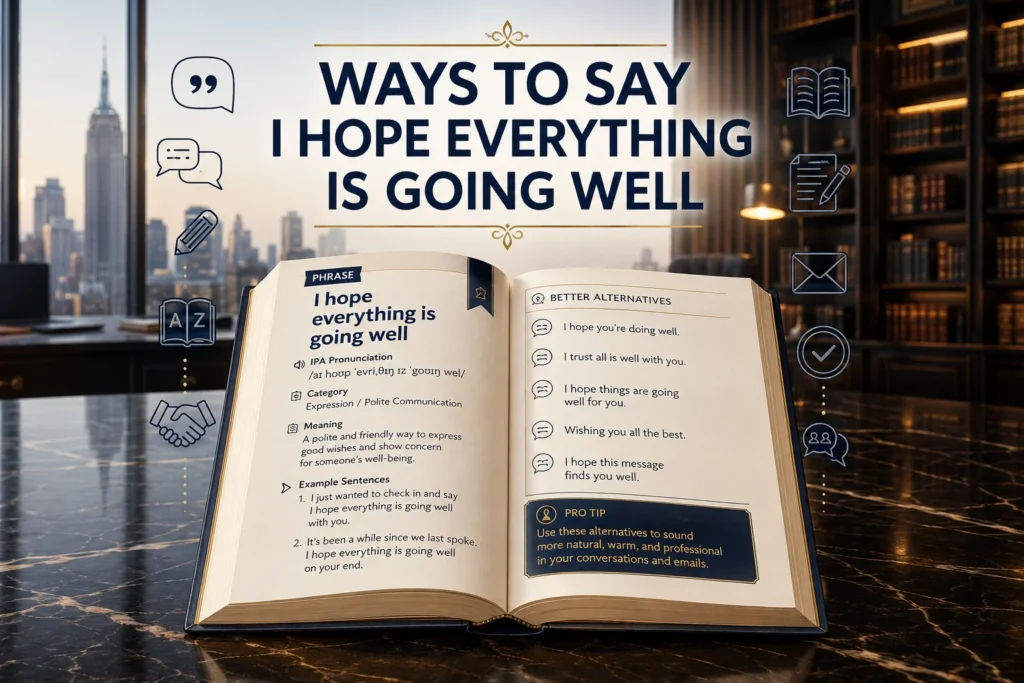
Looking for a professional way to say “I hope everything is going well”? Depending on the situation, you can use alternatives such as I hope you’re doing well, I trust you’re doing well, I hope all is well, I hope your week is going smoothly, or I hope this email finds you well. These expressions sound natural, polite, and professional in business emails, workplace communication, networking, and customer service.
“I hope everything is going well” is one of the most common opening lines in emails and professional messages. It expresses goodwill, shows courtesy, and creates a friendly tone before discussing business. However, because it is used so often, it can sometimes sound repetitive or generic.
Many professionals search for a professional way to say “I hope everything is going well”, a formal alternative to “I hope everything is going well”, or a better synonym for “I hope everything is going well” to make their emails feel more personal and engaging.
Whether you’re writing to a client, manager, colleague, customer, or networking contact, using the right opening phrase can improve your professional communication, strengthen email etiquette, and leave a positive first impression.
In this guide, you’ll learn when to use this phrase, when to replace it, and the best alternatives for different business situations.
What Does “I Hope Everything Is Going Well” Mean?
The phrase is a polite greeting that expresses concern for another person’s well-being before starting the main conversation.
It does not require a detailed response. Instead, it helps create a warm and respectful tone.
Literal Meaning
You are expressing the hope that the other person’s life, work, health, or current situation is going smoothly.
Example:
I hope everything is going well with your new project.
Tone
The phrase is:
- Friendly
- Professional
- Respectful
- Positive
- Warm
It works well in both formal and semi-formal communication.
Purpose
People use this phrase to:
- Begin emails politely.
- Build rapport with clients.
- Show empathy.
- Create a friendly first impression.
- Transition naturally into the main topic.
Emotional Context
Unlike a simple “Hello,” this phrase shows genuine interest in the recipient’s well-being.
Compare these examples:
❌ Please send the report by Friday.
✅ I hope everything is going well. Could you please send the report by Friday?
The second version sounds much warmer and more professional.
When Should You Use This Phrase?
1. Business Emails
This phrase is an excellent email opener when writing to:
- Clients
- Vendors
- Managers
- Colleagues
- Business partners
Example:
I hope everything is going well. I’m following up regarding our meeting next week.
2. Workplace Communication
Use it when you haven’t spoken with someone recently or when starting a polite conversation.
Example:
I hope everything is going well with your team this month.
3. Client Communication
Clients appreciate friendly but professional communication.
Example:
I hope everything is going well on your end. I wanted to provide an update on your project.
4. Networking
Networking messages should feel personal without becoming overly familiar.
Example:
I hope everything is going well since we met at the conference.
5. Customer Service
Customer support representatives often use this phrase to begin emails politely.
Example:
I hope everything is going well. Thank you for contacting our support team.
Professional Alternatives to “I Hope Everything Is Going Well”
1. I Hope You’re Doing Well
Meaning: A friendly and professional greeting.
Tone: Professional
Best Use Case: General business emails
Example:
I hope you’re doing well. I wanted to share a quick update regarding your request.
2. I Hope All Is Well
Meaning: A shorter version of the original phrase.
Tone: Professional
Best Use Case: Formal emails
Example:
I hope all is well. Thank you for your continued support.
3. I Trust You’re Doing Well
Meaning: A confident and polished greeting.
Tone: Formal
Best Use Case: Executive communication
Example:
I trust you’re doing well. I’m writing to discuss next quarter’s goals.
4. I Hope Your Week Is Going Well
Meaning: Refers specifically to the current week.
Tone: Friendly professional
Best Use Case: Midweek emails
Example:
I hope your week is going well. I wanted to follow up on our previous discussion.
5. I Hope Your Day Is Going Well
Meaning: A warm daily greeting.
Tone: Friendly
Best Use Case: Daily workplace communication
Example:
I hope your day is going well. Could you review the attached document?
6. I Hope Things Are Going Smoothly
Meaning: Wishes success with ongoing work.
Tone: Professional
Best Use Case: Project updates
Example:
I hope things are going smoothly with the implementation process.
7. I Hope You’re Having a Great Week
Meaning: Positive and encouraging.
Tone: Friendly professional
Best Use Case: Team communication
Example:
I hope you’re having a great week. I wanted to check in regarding the proposal.
8. I Hope Life Has Been Treating You Well
Meaning: More personal while remaining polite.
Tone: Warm
Best Use Case: Networking contacts
Example:
I hope life has been treating you well since our last conversation.
9. I Hope You’re Enjoying a Productive Week
Meaning: Focuses on work.
Tone: Professional
Best Use Case: Workplace emails
Example:
I hope you’re enjoying a productive week. I wanted to provide an update.
10. I Hope Everything Is Going Smoothly
Meaning: Similar to the original phrase.
Tone: Professional
Best Use Case: Client communication
Example:
I hope everything is going smoothly on your end.
11. I Hope Business Is Going Well
Meaning: Specifically refers to business success.
Tone: Professional
Best Use Case: Client emails
Example:
I hope business is going well. I wanted to discuss your upcoming order.
12. I Hope You Had a Wonderful Weekend
Meaning: Refers to the weekend.
Tone: Friendly
Best Use Case: Monday emails
Example:
I hope you had a wonderful weekend. Here’s this week’s project update.
13. I Hope You’re Having a Good Day
Meaning: Simple and natural.
Tone: Friendly
Best Use Case: Everyday emails
Example:
I hope you’re having a good day. Thank you for your quick response.
14. I Hope You’re Keeping Well
Meaning: Common in British English.
Tone: Polite
Best Use Case: International communication
Example:
I hope you’re keeping well. I’m reaching out regarding our upcoming meeting.
15. I Hope You’re Settling In Well
Meaning: For someone starting a new job or role.
Tone: Supportive
Best Use Case: New employees or clients
Example:
I hope you’re settling in well. Please let me know if you need any assistance.
Quick Comparison Table
| Alternative | Tone | Best Use |
| I hope you’re doing well | Professional | General business emails |
| I hope all is well | Formal | Professional correspondence |
| I trust you’re doing well | Very formal | Executives and clients |
| I hope your week is going well | Friendly professional | Midweek follow-ups |
| I hope your day is going well | Friendly | Daily communication |
| I hope things are going smoothly | Professional | Project updates |
| I hope you’re having a great week | Friendly | Team communication |
| I hope life has been treating you well | Warm | Networking |
| I hope you’re enjoying a productive week | Professional | Workplace |
| I hope everything is going smoothly | Professional | Client communication |
| I hope business is going well | Professional | Business partners |
| I hope you had a wonderful weekend | Friendly | Monday emails |
| I hope you’re having a good day | Friendly | Everyday emails |
| I hope you’re keeping well | Polite | UK English |
| I hope you’re settling in well | Supportive | New |
Professional & Polite Alternatives to “I Hope Everything Is Going Well”
In this section, you’ll find additional alternatives organized by category. Each phrase includes its meaning, tone, best use case, and example to help you choose the right greeting for emails, workplace communication, client interactions, networking, and customer service.
Professional Alternatives
16. I Hope All Is Going Well on Your End
Meaning: Expresses hope that everything is going well for the recipient. Tone: Professional Best Use Case: Client emails Example:
I hope all is going well on your end. I wanted to share a project update.
17. I Hope This Message Finds You Well
Meaning: A classic professional email greeting. Tone: Formal Best Use Case: Business emails Example:
I hope this message finds you well. Thank you for your continued support.
18. I Trust Everything Is Going Well
Meaning: A polished alternative that sounds confident. Tone: Formal Best Use Case: Executive communication Example:
I trust everything is going well. I’m writing to discuss next month’s schedule.
19. I Hope You Are Having a Successful Week
Meaning: Wishes success during the current week. Tone: Professional Best Use Case: Workplace communication Example:
I hope you are having a successful week. Here’s the latest update.
20. I Hope You’re Doing Great
Meaning: A friendly and upbeat greeting. Tone: Friendly professional Best Use Case: Colleague emails Example:
I hope you’re doing great. I wanted to check in about the project.
21. Wishing You a Great Week
Meaning: Offers a positive wish instead of asking. Tone: Warm Best Use Case: Email introductions Example:
Wishing you a great week. I wanted to follow up on our conversation.
22. I Hope Your Projects Are Going Smoothly
Meaning: Focuses on work progress. Tone: Professional Best Use Case: Client communication Example:
I hope your projects are going smoothly. Here’s the requested information.
23. I Hope You’ve Been Well
Meaning: Suitable after some time without contact. Tone: Warm Best Use Case: Networking Example:
I hope you’ve been well since we last spoke.
24. It’s Great to Connect Again
Meaning: A natural reconnection phrase. Tone: Friendly Best Use Case: Networking Example:
It’s great to connect again. I hope things have been going well.
25. I Hope Everything Continues to Go Well
Meaning: Wishes continued success. Tone: Professional Best Use Case: Ongoing client relationships Example:
I hope everything continues to go well with your expansion plans.
26. I Hope Your Team Is Doing Well
Meaning: Includes the recipient’s team. Tone: Professional Best Use Case: Business partnerships Example:
I hope your team is doing well. We’d like to schedule a meeting.
27. I Hope You’ve Had a Good Start to the Week
Meaning: Ideal for Monday or Tuesday emails. Tone: Friendly Best Use Case: Weekly updates Example:
I hope you’ve had a good start to the week.
28. I Hope Your Month Is Off to a Great Start
Meaning: Refers to the beginning of a month. Tone: Positive Best Use Case: Monthly newsletters Example:
I hope your month is off to a great start.
29. I Hope You’re Enjoying Good Health
Meaning: Shows care for someone’s well-being. Tone: Warm Best Use Case: Long-term clients Example:
I hope you’re enjoying good health and continued success.
30. I Hope All Has Been Well Since We Last Connected
Meaning: Reconnects after a long break. Tone: Professional Best Use Case: Networking emails Example:
I hope all has been well since we last connected.
Formal Alternatives
| Alternative | Meaning | Tone | Best Use Case | Example |
| I trust all is well | Polite greeting | Very formal | Executives | I trust all is well. |
| I trust this email finds you well | Email greeting | Formal | Business emails | I trust this email finds you well. |
| I hope this correspondence finds you well | Formal greeting | Very formal | Official letters | I hope this correspondence finds you well. |
| I trust your work is progressing smoothly | Work-focused | Formal | Clients | I trust your work is progressing smoothly. |
| I hope all remains well | Ongoing goodwill | Formal | Professional contacts | I hope all remains well. |
| I hope you are keeping well | Health-focused | Polite | International emails | I hope you are keeping well. |
| I trust you are in good spirits | Friendly formal | Formal | Networking | I trust you are in good spirits. |
| I hope your endeavors are going well | Professional | Formal | Business partners | I hope your endeavors are going well. |
| I hope your business continues to thrive | Business success | Formal | Clients | I hope your business continues to thrive. |
| I hope all is progressing well | Project-focused | Formal | Workplace | I hope all is progressing well. |
Friendly Alternatives
- Hope you’re doing awesome!
- Hope you’ve been having a great week!
- Hope life is treating you well.
- Hope things are going well.
- Hope all is good with you.
- Hope you’re having a fantastic day.
- Hope everything’s been great.
- Hope you’re keeping busy in a good way.
- Hope you’ve had a wonderful week.
- Hope you’re feeling great today.
Example:
Hope things are going well. Just wanted to say hello!
Email Alternatives
- I hope this email finds you well.
- I hope you’re having a productive day.
- I hope your week has been productive.
- I hope you’re doing well today.
- I trust you’re doing well.
- I hope everything is going smoothly on your end.
- I hope all is well with you and your team.
- I hope your day is off to a great start.
- Wishing you a productive week.
- I hope you’ve had a pleasant week.
Workplace Alternatives
- I hope your projects are progressing well.
- I hope everything is on track.
- I trust your team is doing well.
- I hope your workload has been manageable.
- I hope this week has been productive.
- I hope everything is running smoothly.
- I hope you’re making good progress.
- I hope the project is going well.
- I hope everything is coming together.
- I hope your schedule has been going smoothly.
Quick Comparison Table
| Alternative | Tone | Best Use |
| I hope this email finds you well | Formal | Business emails |
| I trust you’re doing well | Very formal | Executives |
| I hope you’ve been well | Warm | Networking |
| Wishing you a great week | Friendly | Email openings |
| I hope your projects are going smoothly | Professional | Clients |
| I hope your team is doing well | Professional | Business partners |
| I hope you’re having a productive day | Professional | Workplace |
| I hope everything is running smoothly | Professional | Team communication |
| Hope things are going well | Casual | Friendly messages |
| I hope all is progressing well | Formal | Project updates |
In professional communication, vary your greetings based on your relationship with the recipient and the context. Rotating between these alternatives keeps your emails fresh, natural, and engaging while maintaining excellent email etiquette.
Email Examples
Here are practical examples showing how to use alternatives to “I hope everything is going well” in different professional situations.
1. Email to a Client
Subject: Project Update
Hi Sarah,
I hope you’re doing well. I’m reaching out to share the latest progress on your project. We’ve completed the first phase and remain on schedule.
Please let me know if you have any questions.
Best regards,
James
2. Email to Your Manager
Hi David,
I hope your week is going well. I wanted to provide a quick update on the marketing campaign. We’ve completed all assigned tasks and are ready for the next stage.
Thank you for your guidance.
Best,
Emily
3. Email to a Colleague
Hi Alex,
Hope you’re having a great day! Could you please review the attached presentation before tomorrow’s meeting?
Thanks!
4. Email to a Customer
Dear Mr. Wilson,
I hope this email finds you well. Thank you for contacting our support team. We’ve reviewed your request and are happy to help.
Kind regards,
Customer Support
5. Networking Email
Hello Jennifer,
I hope you’ve been well since we met at the conference. I really enjoyed our conversation about digital marketing and wanted to stay in touch.
Best wishes,
Michael
6. Meeting Follow-up Email
Hi Team,
I hope everyone is doing well. Thank you for attending today’s meeting. Attached are the meeting notes and action items.
Have a wonderful week!
Common Mistakes
1. Overusing the Same Greeting
Starting every email with:
I hope everything is going well.
can become repetitive.
Instead, rotate your greetings:
- I hope you’re doing well.
- I trust you’re doing well.
- Wishing you a productive week.
- I hope your day is going well.
2. Using an Overly Casual Tone
Avoid writing to clients:
❌ Hope everything’s awesome!
Better:
✅ I hope you’re doing well.
3. Being Too Formal
Instead of:
I trust this correspondence finds you in excellent health and spirits.
Use:
I hope you’re doing well.
It sounds more natural.
4. Forgetting the Context
If you’re discussing a complaint or serious issue, avoid cheerful greetings that may sound insensitive.
Instead, write:
Thank you for reaching out. I appreciate your patience while we resolve this matter.
5. Writing Long Introductions
Keep greetings short.
Avoid:
I sincerely hope everything in your personal and professional life has been going exceptionally well recently.
Instead:
I hope you’re doing well.
Related Phrases
| Phrase | Meaning | Example |
| I hope you’re doing well | General greeting | I hope you’re doing well. |
| I hope all is well | Short professional greeting | I hope all is well. |
| I trust you’re doing well | Formal greeting | I trust you’re doing well. |
| I hope your day is going well | Daily greeting | I hope your day is going well. |
| I hope your week is going well | Weekly greeting | I hope your week is going well. |
| Wishing you a productive week | Positive wish | Wishing you a productive week. |
| Hope things are going well | Casual greeting | Hope things are going well. |
| I hope business is going well | Business-specific | I hope business is going well. |
| I hope everything is going smoothly | Project greeting | I hope everything is going smoothly. |
| I hope you’ve been well | Reconnecting | I hope you’ve been well. |
| It’s great to connect again | Networking | It’s great to connect again. |
| Wishing you continued success | Encouragement | Wishing you continued success. |
| I hope you’re having a productive day | Workplace | I hope you’re having a productive day. |
| I hope life is treating you well | Warm greeting | I hope life is treating you well. |
| I hope your projects are progressing well | Work-focused | I hope your projects are progressing well. |
Phrase Comparison
| Phrase | Tone | Formality | Best Use |
| I hope everything is going well | Warm | Medium | General emails |
| I hope you’re doing well | Professional | Medium | Business emails |
| I hope all is well | Professional | Medium | Clients |
| I trust you’re doing well | Formal | High | Executives |
| I hope this email finds you well | Formal | High | First-time emails |
| Wishing you a productive week | Friendly | Medium | Team communication |
| Hope things are going well | Casual | Low | Friends and close colleagues |
Cultural Usage
US English
American professionals often use:
- I hope you’re doing well.
- Hope you’re having a great week.
- I hope this email finds you well.
These greetings sound friendly and conversational.
UK English
British English commonly includes:
- I hope you’re keeping well.
- I trust you’re well.
- I hope all is well.
These phrases are slightly more formal.
Corporate Communication
Large organizations prefer concise greetings.
Examples:
- I hope you’re doing well.
- I trust you’re doing well.
- I hope all is well.
Avoid overly personal greetings unless you know the recipient well.
Customer Service
Customer support teams should use warm and professional greetings.
Example:
I hope you’re doing well. Thank you for contacting our support team.
Networking
Networking messages should be personal but brief.
Example:
I hope you’ve been well since our last conversation.
FAQs
Is “I hope everything is going well” professional?
Yes. It is one of the most common professional email greetings.
What is the best professional alternative?
“I hope you’re doing well” is the most widely used alternative.
Is “I hope this email finds you well” outdated?
Not necessarily. It’s still acceptable, though many professionals now prefer more natural greetings.
Can I use this phrase with clients?
Absolutely. It creates a warm and respectful opening.
Which greeting sounds most formal?
“I trust you’re doing well.”
Which greeting is best for colleagues?
“I hope your week is going well.”
Should I use it in every email?
No. Vary your greetings to keep your writing fresh.
Is “Hope you’re doing well” too casual?
It’s suitable for most workplace emails unless you’re writing a very formal letter.
What’s a good greeting after meeting someone?
“I hope you’ve been well since we last met.”
Which greeting works best for networking?
“It’s great to connect again” or “I hope you’ve been well.”
How can I make my email opening sound more personal?
Mention something specific, such as a recent meeting, project, or event.
What greeting should I use after a holiday?
“I hope you had a wonderful holiday.”
Can I skip the greeting?
Yes, especially in ongoing email threads where a greeting may be unnecessary.
What greeting is best for customer service?
“I hope you’re doing well” is warm, professional, and customer-friendly.
Why should I vary my email greetings?
Using different greetings makes your communication feel more genuine and engaging.
Final Summary
The phrase “I hope everything is going well” is a timeless and professional way to begin emails, build rapport, and create a positive tone. However, using a variety of alternatives helps your communication feel more natural and personalized. Whether you’re writing to clients, managers, colleagues, customers, or networking contacts, choose a greeting that matches the relationship and level of formality. Phrases like “I hope you’re doing well,” “I trust you’re doing well,” and “Wishing you a productive week” are excellent options that strengthen professional communication and demonstrate good email etiquette.
Conclusion
Choosing the right alternative to “I hope everything is going well” can make your emails sound more thoughtful, engaging, and professional. While the original phrase remains appropriate in most situations, varying your greetings helps you avoid repetition and better match the tone of your message. Whether you’re communicating with clients, colleagues, managers, customers, or professional contacts, using expressions like “I hope you’re doing well,” “I trust you’re doing well,” or “Wishing you a productive week” creates a warm first impression. Strong email openings improve workplace communication, strengthen relationships, and reflect professionalism in every business interaction.