
Introduction
“Have a safe trip” is kind, but it gets boring fast. If you say it to everyone — friends, coworkers, family — it starts to sound automatic. The good news? There are dozens of warm, funny, and professional ways to say the same thing.
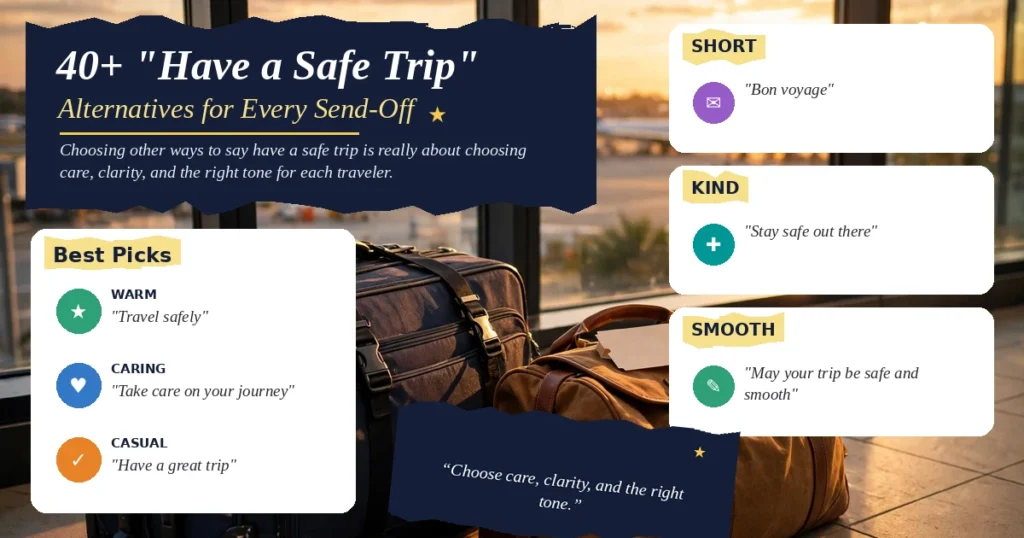
In this guide, you’ll find 40 alternatives for “have a safe trip” — from short texts to formal emails — plus examples, a quick comparison table, and tips for choosing the right one.
Meaning
“Have a safe trip” means: I hope your journey goes smoothly, without problems, delays, or danger. It’s a wish for safety, comfort, and a happy arrival.
People use it before someone travels by car, plane, train, or bus — whether it’s a holiday, a work trip, or a short visit.
Professional usage
In professional settings, keep it polite and simple. Good options include:
- “Wishing you a smooth journey.”
- “Safe travels, and I look forward to hearing about your trip.”
- “Have a pleasant trip.”
Avoid overly casual jokes with clients or managers unless you know them well. For a boss, a short, respectful line works best.
Alternatives
Warm and caring wishes
- Safe travels! — Short, warm, and perfect for almost anyone.
- Take care on the road. — Caring and personal.
- Wishing you a smooth journey. — Calm and kind.
- Travel safe and enjoy every moment. — Warm and encouraging.
- Have a wonderful trip! — Positive and cheerful.
- May your journey be safe and joyful. — A little formal, very warm.
- Thinking of you — travel safely! — Shows you care.
- Hope you arrive safe and sound. — Classic and heartfelt.
Short and casual wishes
- Safe trip! — Simple and friendly.
- Bon voyage! — Stylish, especially for trips abroad.
- Enjoy the ride! — Casual and fun.
- Have fun out there! — Light and relaxed.
- Off you go — have a great time! — Playful and upbeat.
- See you soon! — Good when you’ll meet again.
- Have a blast! — Great for holidays.
- Go have an adventure! — Perfect for friends.
Professional and polite wishes
- Wishing you a pleasant journey. — Polite and professional.
- Safe travels, and best of luck with your trip. — Great for work emails.
- Have a safe and successful trip. — Ideal for business travel.
- I hope your travels go smoothly. — Formal but warm.
- Enjoy your trip — looking forward to your return. — Professional and kind.
- Travel well! — Short and elegant.
- Best wishes for a smooth trip. — Perfect for clients.
- Have a comfortable journey. — Polite and simple.
Funny and lighthearted wishes
- Don’t forget to bring me a souvenir! — Classic joke for friends.
- Try not to have too much fun without me! — Playful and funny.
- May your Wi-Fi be strong and your flights on time. — Modern and relatable.
- Safe travels — and no lost luggage! — Light and humorous.
- Enjoy the trip — I’ll hold down the fort here. — Friendly and funny.
- Don’t get lost… unless it’s somewhere amazing! — Perfect for adventurers.
- Have fun, take pictures, and don’t miss your flight! — Warm and witty.
- Bon voyage — and bring back good stories! — Fun and positive.
Thoughtful wishes for long or important trips
- Wishing you safe travels and beautiful memories. — Heartfelt for long trips.
- May this trip bring you joy and new experiences. — Thoughtful and deep.
- Take care, enjoy every step, and come back with stories. — Personal and warm.
- Hope this journey is everything you hoped for. — Encouraging and kind.
- Travel safely — we’ll be thinking of you. — Perfect for family.
- May your path be smooth and your heart light. — Poetic and caring.
- Have a meaningful trip — enjoy every moment. — Ideal for special journeys.
- Sending you love and safe travels all the way. — Emotional and loving.
Quick comparison
| Situation | Best choice | Why it works |
|---|---|---|
| Friend going on holiday | Have a blast! | Fun and relaxed |
| Coworker on a business trip | Have a safe and successful trip. | Professional and respectful |
| Family member traveling far | Travel safe and enjoy every moment. | Warm and caring |
| Short text message | Safe travels! | Short and clear |
| Formal email | Wishing you a pleasant journey. | Polite and formal |
Email examples
To a coworker:
“Safe travels, Sarah! Hope your trip goes smoothly, and I look forward to hearing all about it when you’re back.”
To a client:
“Wishing you a pleasant journey and a successful trip. Please let us know if you need anything while you’re away.”
To a friend:
“Have a blast! Take tons of pictures and don’t forget to bring me a souvenir!”
To family:
“Travel safe, Mom and Dad. We’ll be thinking of you — call when you arrive!”
Common mistakes
- Being too formal with friends: “Wishing you a pleasant journey” can sound stiff in a casual text. Use “Have fun!” instead.
- Being too casual at work: “Have a blast!” may sound unprofessional in a formal email. Choose “Safe travels” instead.
- Repeating the same phrase every time: Vary your wording so it feels sincere, not automatic.
- Adding pressure: Avoid lines like “Don’t mess up the trip!” — keep it positive.
Related phrases
- Safe travels — A common alternative, slightly more formal than “safe trip.”
- Bon voyage — French for “have a good trip,” often used for travel abroad.
- Enjoy your trip — Focuses on fun, not just safety.
- Take care — General well-wishing, works in many situations.
Phrase comparison
| Phrase | Tone | Best for |
|---|---|---|
| Have a safe trip | Neutral, caring | Anyone |
| Safe travels | Warm, slightly formal | Friends and coworkers |
| Bon voyage | Stylish, cheerful | Trips abroad |
| Enjoy your trip | Positive, relaxed | Holidays |
| Wishing you a pleasant journey | Formal, polite | Work emails |
Cultural usage
In English-speaking countries, “safe travels” and “have a safe trip” are both common. Americans often say “travel safe” in casual speech, while British speakers may prefer “have a safe journey.”
“Bon voyage” is widely understood, even by people who don’t speak French, and adds a touch of elegance — especially for international trips.
In some cultures, people add a blessing or prayer for safety, such as “God bless your journey” — a warm touch when it fits the relationship.
Frequently asked questions
What is the best alternative to “have a safe trip” for a friend?
“Safe travels!” or “Have a blast!” Both are warm, short, and natural for friends.
How do I wish someone a safe trip in a professional email?
Use “Wishing you a pleasant journey” or “Have a safe and successful trip.” Both sound polite and professional.
Is “safe travels” grammatically correct?
Yes. “Safe travels” is a common idiom meaning “I wish you safe traveling.” It’s widely accepted in both spoken and written English.
What are some short ways to wish someone a safe trip?
Try “Safe travels!”, “Travel safe!”, “Bon voyage!”, or simply “Safe trip!”
How do I wish someone a safe trip when they are traveling for a sad reason?
Keep it gentle: “Take care on your journey — I’m thinking of you.” Avoid jokes in this situation.
Can I say “bon voyage” for a short trip?
Yes, though it’s most common for longer or international trips. For a short trip, “Have fun!” may sound more natural.
What are some funny ways to say “have a safe trip”?
“Don’t forget to bring me a souvenir!” and “May your Wi-Fi be strong and your flights on time” are both funny and friendly.
How do I say “have a safe trip” in a text message?
Keep it short: “Safe travels! Enjoy!” or “Have a great trip — text me when you land!”
What should I write in a card for someone going abroad?
“Wishing you safe travels and beautiful memories. Enjoy every moment of this adventure!”
Is “have a safe trip” too formal or too casual?
It’s neutral — it works in almost any situation, from friends to coworkers. For extra warmth, add a personal touch.
How do I reply when someone wishes me a safe trip?
Say “Thank you! I will” or “Thanks so much — I’ll keep you posted!”
What is a good safe trip wish for a road trip?
“Enjoy the ride!” or “Take care on the road — have an amazing trip!”
How can I say “have a safe trip” in a unique way?
Personalize it: “Hope the road treats you kindly and the views are unforgettable!”
When should I say “have a safe trip”?
Say it just before someone leaves — in person, by text, or in an email. Avoid saying it too early, or it may feel less sincere.
How can I make a safe trip wish more personal?
Add a detail: mention the destination, the reason for travel, or a shared memory. For example: “Have an amazing time in Paris — I know how long you’ve waited for this!”
Conclusion
“Have a safe trip” is a kind wish — but with so many alternatives, you don’t have to repeat it every time. Whether you want something warm, professional, funny, or heartfelt, the right words can make your goodbye feel more personal.
So, say it with warmth, choose words that fit the moment, and send them off with a smile. After all, the best send-off is one that makes someone feel cared for — and yes, if you want to wish them a truly journey, this guide has given you plenty of ways to do it.