Introduction
When someone you care about is going through a hard time, you want your words to feel warm and real. That is why many people search for other ways to ask how are you holding up instead of repeating the same question again and again. The phrase itself shows care, but it can start to sound flat when you use it every day, especially during a long illness, a stressful move, a job loss, or a period of grief. A fresh version can help the other person feel seen, not just checked on.
This guide gives you caring alternatives you can use with friends, family members, coworkers, and neighbors. You will find professional options for work messages, gentle options for close friends, and short email-ready lines that still sound human. You will also learn what the phrase means, when it works best, and which common mistakes can make a kind question feel cold. By the end, you will know how to choose the right words for the person in front of you, and how to follow up in a way that truly helps.
Meaning
The phrase “how are you holding up” asks how a person is coping with a difficult situation. It does not ask about a normal day. People use it after bad news, during stress, after a loss, or while someone waits for important results. The words “holding up” suggest strength under pressure, like a person who keeps going even when life feels heavy.
In simple terms, the question means, “I know things are hard right now, and I want to know how you are managing.” That meaning makes it warmer than a casual “how are you.” A casual greeting often expects a short answer like “fine.” This phrase invites a more honest answer. It tells the listener that you already know life is not easy, so they do not need to pretend.
You can use it in person, on the phone, in a text, or in an email. Tone matters a great deal. A soft voice, a pause after the question, and real attention to the answer all make the words feel sincere. If you rush past the answer or change the subject fast, even the kindest phrase can feel empty.
Professional usage
At work, you need care plus clear boundaries. You should not ask personal questions that put a coworker on the spot, and you should not offer advice they did not ask for. A short, warm check-in works best. It shows support without crossing into private territory.
Use a professional alternative when a coworker returns after time off, faces a heavy workload, or deals with a tough project. Keep the message short and open. Give the person a clear way to answer in a simple way, or to say they prefer to focus on work. For example, you can say you hope the week feels manageable, and you can offer one clear form of help, such as extra time on a task.
Avoid long emotional language in a first work message. Avoid asking for details about health, family problems, or money. Let the other person decide how much to share. If they share more, listen with respect and keep their words private. If they keep the answer short, accept it with grace and move on. Good professional care respects both kindness and privacy.
When you write to a manager or a client, keep the tone calm and polite. A line such as “I hope you are managing well this week” sounds supportive without sounding too personal. If you want to learn more about warm opening lines for work messages, you can read about ways to say I am reaching out to you and choose an opening that fits your relationship.
Alternatives
The alternatives below fall into five tone groups. Each entry gives you a phrase, a short note on tone and best use, and a short example. Choose the group that matches your relationship first, then pick the phrase that sounds most like you. A phrase only works when it sounds natural in your own voice.
Professional
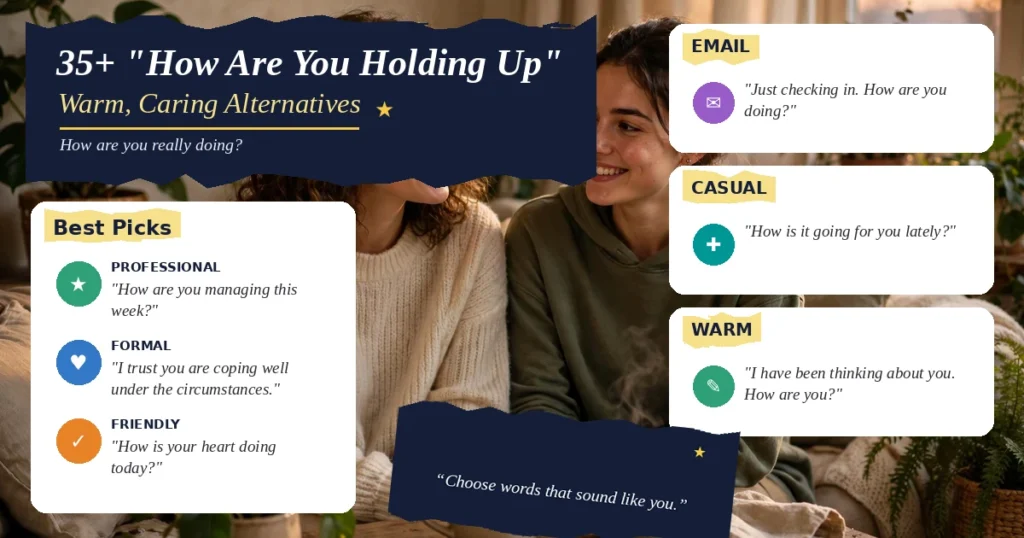
How are you managing this week? This tone is calm and work-safe. Use it with coworkers and managers. Example: “How are you managing this week with the new schedule?”
I hope the week feels manageable for you. This tone is gentle and low-pressure. Use it when you do not want to ask a direct question. Example: “I hope the week feels manageable for you after the changes.”
How is everything going on your side? This tone is polite and open. Use it with clients and colleagues. Example: “How is everything going on your side since the move?”
Are you getting the support you need at work? This tone is practical and caring. Use it when you can offer real help. Example: “Are you getting the support you need at work this week?”
I wanted to check in after the busy week. This tone is thoughtful and brief. Use it as a message opener. Example: “I wanted to check in after the busy week and see how you feel.”
How are things settling for you now? This tone is calm and patient. Use it a few days after a change. Example: “How are things settling for you now that the project has started?”
I hope you have space to breathe this week. This tone is kind and human. Use it with a trusted coworker. Example: “I hope you have space to breathe this week between meetings.”
Let me know if the workload feels heavy. This tone is supportive and action-based. Use it when you can adjust tasks. Example: “Let me know if the workload feels heavy, and we can shift a deadline.”
Formal
I trust you are coping well under the circumstances. This tone is formal and respectful. Use it in a letter to an older relative or a senior contact. Example: “I trust you are coping well under the circumstances, and I send my best wishes.”
I hope you are keeping well during this difficult time. This tone is formal and warm. Use it in a sympathy note or a formal email. Example: “I hope you are keeping well during this difficult time.”
May I ask how you are faring at present? This tone is very polite and old-fashioned. Use it in formal writing. Example: “May I ask how you are faring at present after the move?”
I send my thoughts as you face these challenges. This tone is formal and caring. Use it when you do not expect a reply. Example: “I send my thoughts as you face these challenges this month.”
I hope this message finds you in good spirits. This tone is formal and gentle. Use it at the start of a formal email. Example: “I hope this message finds you in good spirits despite the busy season.”
How are you bearing up these days? This tone is formal and classic. Use it with someone who likes traditional language. Example: “How are you bearing up these days since the news?”
I remain mindful of all you are handling right now. This tone is formal and sincere. Use it in a condolence or support note. Example: “I remain mindful of all you are handling right now.”
I wish you strength as you work through this period. This tone is formal and encouraging. Use it when you want to offer strength, not questions. Example: “I wish you strength as you work through this period.”
Friendly
How is your heart doing today? This tone is soft and close. Use it only with a dear friend or family member. Example: “How is your heart doing today after the long week?”
How are you really doing? This tone is honest and caring. Use it when you have time to listen. Example: “No rush, just tell me, how are you really doing?”
How are you feeling in yourself today? This tone is gentle and personal. Use it with a close friend. Example: “How are you feeling in yourself today, truly?”
Are you doing okay, my friend? This tone is warm and simple. Use it in a text to a friend. Example: “Are you doing okay, my friend? I have been thinking of you.”
How has your week treated you? This tone is friendly and light. Use it when the situation is stressful but not tragic. Example: “How has your week treated you so far?”
How are you holding on? This tone is close and direct. Use it with someone who trusts you. Example: “I know it has been hard. How are you holding on?”
What does today feel like for you? This tone is open and gentle. Use it when you want a real answer. Example: “What does today feel like for you, good or heavy?”
I have been thinking about you. How are you? This tone is loving and natural. Use it as a caring opener. Example: “I have been thinking about you. How are you today?”
Email-ready
Just checking in. How are you doing? This tone is short and warm. Use it at the start of a support email. Example: “Just checking in. How are you doing after last week?”
I wanted to see how you are getting on. This tone is polite and caring. Use it in a follow-up email. Example: “I wanted to see how you are getting on since we last spoke.”
How have you been since we last talked? This tone is natural and friendly. Use it to reopen contact. Example: “How have you been since we last talked? I hope things feel calmer.”
I hope you are doing all right. This tone is simple and kind. Use it in a short email. Example: “I hope you are doing all right, and I am here if you need me.”
Thinking of you. How are things with you? This tone is warm and brief. Use it when you want to keep the email short. Example: “Thinking of you. How are things with you this week?”
How are you coping with everything at the moment? This tone is direct and caring. Use it when the reader already knows the context. Example: “How are you coping with everything at the moment?”
I hope the days feel a little lighter now. This tone is hopeful and gentle. Use it a few weeks after hard news. Example: “I hope the days feel a little lighter now than they did before.”
No need to reply in detail. How are you? This tone removes pressure. Use it when the reader may feel tired. Example: “No need to reply in detail. How are you today?”
Casual/Workplace
How is it going for you lately? This tone is casual and easy. Use it with a friendly coworker. Example: “How is it going for you lately with the new routine?”
You doing all right? This tone is short and casual. Use it in a quick chat message. Example: “Hey, you doing all right after yesterday?”
How are you hanging in there? This tone is casual and supportive. Use it with a work friend. Example: “Long week, huh? How are you hanging in there?”
How is life treating you right now? This tone is casual and warm. Use it with a peer you know well. Example: “How is life treating you right now?”
Still standing? This tone is playful and light. Use it only with a close work friend who likes humor. Example: “After that deadline, still standing?”
How is your week shaping up? This tone is casual and work-friendly. Use it on Monday or Tuesday. Example: “How is your week shaping up so far?”
Are you surviving the week? This tone is light and joking. Use it only when humor feels welcome. Example: “Are you surviving the week, or do you need coffee first?”
How are you getting through the day? This tone is casual and caring. Use it during a hard workday. Example: “How are you getting through the day? I can take the next call if it helps.”
Quick comparison
| Situation | Best tone | Example phrase |
|---|---|---|
| A coworker after time off | Professional | How are you managing this week? |
| A formal sympathy note | Formal | I hope you are keeping well during this difficult time. |
| A close friend after bad news | Friendly | How are you really doing? |
| A short support email | Email-ready | Just checking in. How are you doing? |
| A friendly coworker chat | Casual/Workplace | How are you hanging in there? |
Use this table as a fast guide, not a strict rule. The person matters more than the category. A close coworker may welcome a friendly phrase, while a new manager may prefer a professional one. When you feel unsure, choose the gentler and simpler option. A simple question with real attention beats a fancy phrase with no listening.
Also think about timing. Right after bad news, a short message works best. A few days later, a longer check-in may feel better. Weeks later, a light message can show that you still remember. Care does not end after one message. A second or third check-in often means even more than the first one.
Email examples
Example 1: To a coworker after a hard week
Subject: Just checking in
Hi Sara,
I wanted to check in after the busy week. How are you managing this week with the new schedule? Please take your time with the report, and let me know if I can help with one task.
Best,
Alex
This email works because it asks one clear question, offers one clear form of help, and gives the reader permission to take more time. It does not ask for personal details.
Example 2: To a friend after a family illness
Subject: Thinking of you
Hi Maria,
I have been thinking about you. How are you really doing today? You do not need to reply in detail. I can bring food on Thursday, or I can just sit with you for a while. Tell me what helps most.
With care,
Jon
This email works because it shows love, removes pressure, and offers two simple choices. When a person feels tired, choices help more than open questions.
Example 3: To a client after a difficult month
Subject: A quick note
Dear Mr. Lee,
I hope you are keeping well during this difficult time. How is everything going on your side since the changes? We can move our meeting if a later date feels easier.
Kind regards,
Priya
This email works because it stays polite, keeps the focus on practical help, and gives the client control over the next step. If you want a warm way to close a work note, you can learn how to say thank you for taking care of this in a later message, but keep the check-in itself short.
Example 4: To a neighbor after a move
Subject: Hello from next door
Hi Tom,
How are things settling for you now that you have moved in? If you need a hand with boxes this weekend, just knock on my door. I hope the new street already feels a little like home.
Best,
Nina
This email works because it feels local, friendly, and practical. It offers help that fits the situation, not vague support.
Example 5: A short follow-up email
Subject: Still thinking of you
Hi Ana,
How have you been since we last talked? I hope the days feel a little lighter now. I am free for a call on Friday if you want to talk, or we can just exchange messages.
Take care,
Sam
This follow-up works because it shows that care continues over time. Many people receive lots of messages right after hard news, then very few later. A later message can feel like a gift.
Common mistakes
Asking and then disappearing. A caring question needs a real pause. If you ask how someone is doing and then change the subject at once, the person may feel unheard. Ask the question, then listen to the full answer before you speak again.
Offering advice too fast. Advice can feel like pressure when a person only wants comfort. Start with listening. You can offer an idea later, and only if the person seems open to it. A line such as “Would an idea help, or do you just want me to listen?” gives the person control.
Using humor at the wrong time. A joke can lift a hard day, but it can also hurt during grief or shock. Save playful phrases for light stress and close friends. If you feel unsure, skip the joke and choose a gentle phrase instead.
Asking in front of a group. A personal check-in feels safer in private. In a group chat or a meeting, a person may give a short polite answer even when they feel bad. Send a private message when the topic feels personal.
Repeating the same phrase every day. Repetition can make care sound automatic. Vary your words, and vary your actions too. A short message one day, a meal the next day, and a call later in the week all show care in different ways.
Saying “I understand” when you do not. A false claim of understanding can break trust. It often helps more to say, “I may not fully understand, but I am here, and I want to listen.” If you want words for this moment, read about ways to say I understand your frustration and pick a line that stays honest.
Making the conversation about yourself. A short personal note can build connection, but a long story about your own problems can shift the focus away from the other person. Keep your story short, then return to their feelings and needs.
Related phrases
These phrases share a caring tone, but each one fits a slightly different moment. Use them to vary your language without changing your kind intent.
How are you doing? This phrase is the most general check-in. It works for good days and hard days alike.
How have you been? This phrase looks back over a longer period. Use it after you have not spoken for a while.
How are you feeling? This phrase focuses on emotions and the body. Use it when health or mood matters most.
Are you okay? This phrase is short and direct. Use it right after a shock or a worry.
How is life going? This phrase opens a wide conversation. Use it with friends you know well.
How are things with you? This phrase feels warm and old-fashioned. Use it in a letter or a friendly email.
How are you getting on? This phrase asks about progress over time. Use it after a move, a new job, or a recovery.
How is everything? This phrase is broad and easy. Use it when you want to keep the tone light.
How do you feel today? This phrase focuses on the present day only. Use it when yesterday felt very different from today.
Is everything all right? This phrase shows gentle worry. Use it when you sense that something may be wrong.
When you choose among these phrases, think about time. “How have you been” covers weeks or months. “How do you feel today” covers only today. That small difference can change how the other person answers, so match the time frame to your real question.
Phrase comparison
“How are you holding up” and “how are you doing” may look similar, but they carry different weight. “How are you doing” fits almost any day, from a happy morning to a normal workday. “How are you holding up” fits a hard period, because it already names the pressure the person faces. Use the stronger phrase only when you know the person faces a real challenge. On a normal day, the stronger phrase may confuse the listener or make a small problem sound large.
“How are you coping” sits close to “how are you holding up.” Both ask about managing a hard time. “Coping” sounds a little more direct and clinical, while “holding up” sounds a little more visual and warm. In a formal note, “coping well” often sounds smoother. In a friendly text, “holding up” often sounds more natural.
“Are you okay” is shorter and more urgent. Use it right after a frightening event or when you see clear distress. It asks for a quick safety check, not a long story. “How are you holding up” invites a longer answer and a slower conversation. If you need a fast answer, choose the shorter phrase. If you have time to listen, choose the longer one.
Tone also changes with the speaker. A manager who asks “how are you holding up” may sound caring, but the employee may still feel pressure to sound strong. A friend who asks the same words may receive a more honest answer. That difference does not mean managers should stay silent. It means they should add a clear safety line, such as “You can keep it short, and there is no pressure to share more.” Safety lines turn a kind question into a safe question.
Cultural usage
In the United States and the United Kingdom, people often use “how are you holding up” after illness, loss, or a public crisis. Friends use it in texts, and coworkers use it in emails after a tough event. The phrase feels normal in these settings, and most listeners understand its caring intent at once.
In some cultures, people prefer indirect care. A direct question about feelings may feel too personal, especially from a coworker or a new acquaintance. In those settings, care often shows through actions, such as food, practical help, or a calm presence, rather than through emotional questions. A gentle line such as “I hope you are doing all right” may feel safer than a deep personal question.
Age also shapes the response. Older adults may prefer formal phrases and may give a polite answer even when they feel bad. Younger adults may prefer direct and honest language, and may share more in a text than in person. Neither style is wrong. The best approach is to match the other person’s style, and to accept a short answer without pushing for more.
Language learners should also note the grammar. “Holding up” is a phrasal verb, and it does not mean the same as “holding” alone. A learner who says “how are you holding” will confuse the listener. The full phrase matters. Practice the full phrase in a sentence, such as “How are you holding up this week,” until it feels natural.
If you live or work across cultures, watch for cues. If a person answers with a smile and a short phrase, accept it. If a person shares more, listen with care. Good cross-cultural care means you adapt your words to the listener, not the other way around. When you feel unsure, a practical offer often crosses cultures well. Food, time, and help need little translation.
Frequently asked questions
What does “how are you holding up” mean?
It means “how are you coping with a difficult situation.” People use it after bad news, during stress, or while someone faces a long challenge. It shows that you already know life feels hard, so the listener does not need to pretend that all is fine.
When should I use “how are you holding up”?
Use it when you know the person faces a real challenge, such as illness, grief, a job loss, or a stressful move. Avoid it as a casual greeting on a normal day, because it may sound too heavy. On a normal day, “how are you doing” fits better.
Is “how are you holding up” formal or informal?
It sits in the middle. It works in friendly texts, caring emails, and many work messages, but it can sound too personal for a first message to a stranger. For a very formal letter, choose a phrase such as “I hope you are keeping well during this difficult time.”
Can I use this phrase with my boss?
Yes, but keep it brief and respectful. A line such as “I hope you are managing well this week” shows care without crossing a boundary. Avoid asking for personal details, and accept a short answer with grace.
What should I say if someone asks me how I am holding up?
Give an honest answer at the level you choose. You can say, “It has been a hard week, but I am getting through it, thanks for asking.” You can also keep it short with “I am doing all right, thank you.” Both answers are polite, and neither one owes a full story.
What is a good reply when I feel bad?
You can say, “Honestly, today feels heavy, but your message helps.” This reply stays honest without sharing every detail. It also lets the other person know that their care matters, which often encourages more support.
How often should I check in on someone?
Check in more than once, but space your messages out. A message right after the hard news, another one a few days later, and one more a few weeks later often feels right. If the person asks for space, respect that wish and wait for them to reach out.
Should I check in by text, call, or email?
Choose the channel the person already uses with you. A text feels light and easy to answer. A call feels closer but needs more energy. An email feels best for work contacts and formal notes. When you feel unsure, a short text often works well.
What if the person does not reply?
Do not take silence personally. A tired or grieving person may lack the energy to reply, even when they value your message. Wait a few days, then send one more short and gentle note. Avoid sending many messages in a row, because that can add pressure.
Is it rude to ask “how are you holding up” at work?
No, it is not rude when you ask with care and respect privacy. Keep the question short, ask in private, and offer practical help if you can. Avoid asking in a meeting or a group chat, and never press for personal details.
What can I say instead of “how are you holding up” in an email?
Try “Just checking in. How are you doing?” or “I wanted to see how you are getting on.” Both lines sound warm and professional. Keep the email short, offer one clear form of help, and give the reader permission to keep the reply brief.
How do I ask a friend who is grieving?
Use a gentle and simple phrase, such as “How is your heart doing today?” or “I have been thinking about you. How are you?” Then listen without rushing. Avoid advice, avoid comparisons, and avoid saying that time will fix everything. Presence matters more than perfect words.
Can I use humor when I ask how someone is holding up?
Use humor only with a close friend, and only when the situation feels light enough for it. A line such as “Still standing?” can lift a hard workweek. During grief or shock, humor can hurt, so choose a gentle phrase instead.
What should I avoid saying after I ask?
Avoid saying “I know exactly how you feel” unless you truly share the same experience. Avoid quick advice such as “Just stay positive.” These lines can shut down an honest answer. Listen first, reflect what you heard, and ask what kind of help feels useful.
How can I show care without asking a question?
You can offer practical help, such as food, a ride, or extra time on a task. You can also send a short note that needs no reply, such as “Thinking of you today.” Actions often speak louder than questions, especially when a person feels too tired to talk.
Conclusion
A caring question works best when it pairs warm words with real listening. The alternatives in this guide give you choices for work, formal notes, close friends, emails, and casual chats, but the person in front of you matters more than any single phrase. Choose words that sound like you, ask in private when the topic feels personal, and give the other person room to answer in their own way. If you want to offer more than words, name one clear form of help, such as a meal, a call, or extra time, because clear help feels easier to accept than vague support.
Keep checking in over time, because care that lasts means more than care that arrives once. A short message a few weeks later can remind someone that they still matter, even after the first wave of attention fades. If you need a simple way to stay in touch, you can close with a warm line about looking forward to your call when a call feels welcome, or you can simply say that you will check in again soon. When a friend says they feel busy or tired, a kind reply about other ways to say I know you are busy can keep the door open without adding pressure, and a note about other ways to say if I can be of any help can turn your offer into clear action. Above all, stay honest, stay gentle, and let your actions match your words, because that match builds trust that lasts far beyond one conversation. To understand the key word behind this phrase, see the meaning of cope in the Cambridge Dictionary.