
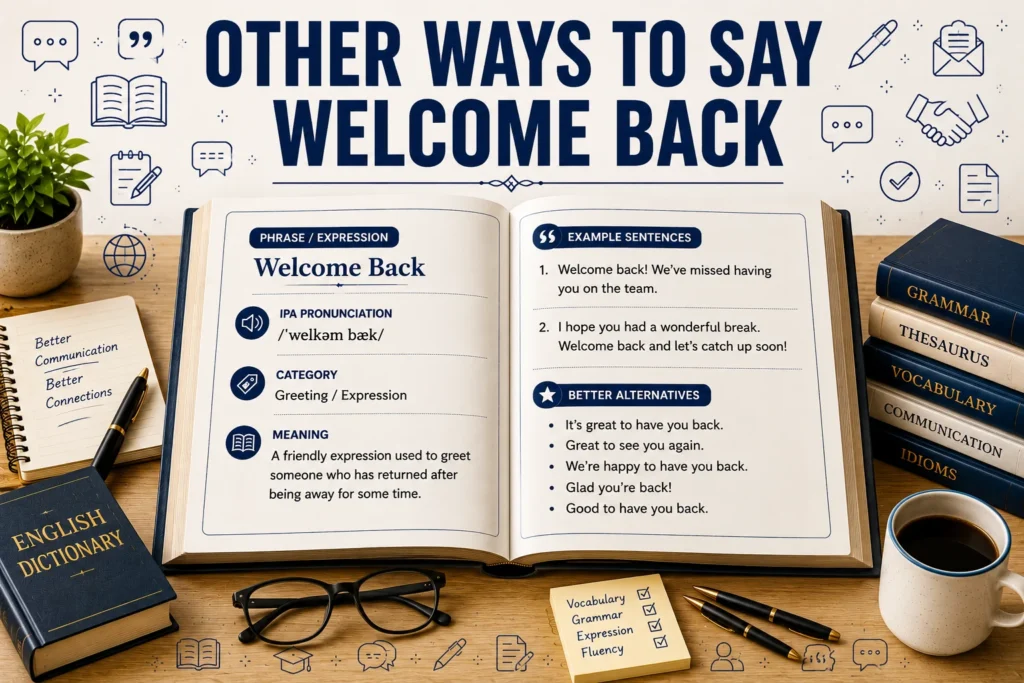
Saying “welcome back” is a simple way to greet someone who has returned after being away. You might use it when a coworker returns from vacation, a client comes back after some time, a student returns to school, or a friend comes back home.
However, repeating the same phrase can sometimes make your communication feel predictable. That is why people search for other ways to say welcome back that sound more professional, formal, warm, friendly, or creative.
The best alternative depends on the situation. In a workplace, you may want to say, “It’s great to have you back.” In an email to a colleague, “Welcome back! I hope you had a great break” sounds warm and natural. For a client, you might say, “We’re pleased to have you back.”
This guide covers useful alternatives for emails, workplaces, clients, networking, customer service, school, friends, and everyday conversations.
What Does “Welcome Back” Mean?
“Welcome back” is a greeting used when someone returns after being away.
The phrase communicates that you are happy, pleased, or comfortable with the person’s return.
Simple example:
“Welcome back! How was your vacation?”
Here, the speaker is greeting someone who has returned from vacation.
Another example is:
“Welcome back to the team, Sarah!”
This tells Sarah that the team is happy to have her return.
Literal Meaning
The phrase combines two simple ideas:
- Welcome means that someone is received gladly.
- Back indicates that the person has returned.
Together, “welcome back” means something like:
“We are happy that you have returned.”
The phrase does not always need to sound formal. Its tone can change depending on the words around it and the relationship between the speakers.
Tone of “Welcome Back”
“Welcome back” usually sounds:
- Warm
- Friendly
- Positive
- Polite
- Encouraging
- Reassuring
It can work in both casual and professional communication.
For example:
“Welcome back!”
sounds casual and friendly.
While:
“It’s wonderful to have you back with the team.”
sounds warmer and more professional
Why Use Other W ays to Say “Welcome Back”?
Although “welcome back” is perfectly natural, you may want an alternative for several reasons.
To sound more professional
Instead of:
“Welcome back!”
You can write:
“It’s great to have you back with the team.”
To sound warmer
Try:
“We’re so happy to have you back!”
To welcome someone after a long absence
Use:
“It’s wonderful to see you again.”
To welcome a coworker
Try:
“Great to have you back!”
To welcome a client
Use:
“We’re pleased to welcome you back.”
The right phrase gives your message the exact tone you want.
When Is It Appropriate to Say “Welcome Back”?
1. In Emails
“Welcome back” works well when a colleague, manager, client, or business contact returns from an absence.
Example:
“Welcome back, James. I hope you had a relaxing vacation.”
For a more professional email:
“It’s great to have you back. I hope you had a wonderful break.”
2. In the Workplace
The workplace is one of the most common places to use the phrase.
You can welcome employees returning from:
- Vacation
- Sick leave
- Parental leave
- Business travel
- Training
- Extended leave
- Holidays
Example:
“Welcome back! We missed having you around.”
3. With Clients
A business can use a warmer version when a customer or client returns.
Example:
“We’re delighted to have you back.”
This works especially well in customer-facing communication.
4. In Networking
If a professional contact returns to an event, conference, group, or online community, you can use:
“It’s great to see you again.”
This sounds natural and avoids repeating “welcome back.”
5. In Customer Service
Customer service representatives can use welcoming language to create a positive experience.
Example:
“Welcome back! How can we assist you today?”
A more polished version is:
“It’s wonderful to have you back. How may we help you today?”
Professional Ways to Say Welcome Back
1. It’s great to have you back.
Meaning: You are happy that the person has returned.
Tone: Professional and warm.
Best use: Workplace and business communication.
Example:
“It’s great to have you back on the team. We hope you had a wonderful break.”
2. We’re happy to have you back.
Meaning: The group is pleased about the person’s return.
Tone: Warm and professional.
Best use: Workplace and team communication.
Example:
“We’re happy to have you back. The team has been looking forward to seeing you.”
3. It’s wonderful to have you back.
Meaning: You are genuinely pleased about someone’s return.
Tone: Warm and polished.
Best use: Professional and personal situations.
Example:
“It’s wonderful to have you back with us.”
4. Great to see you again.
Meaning: You are pleased to see the person after an absence.
Tone: Friendly and professional.
Best use: Meetings, networking, and workplace conversations.
Example:
“Great to see you again. How was your trip?”
5. We’re glad to have you back.
Meaning: The group is pleased that the person returned.
Tone: Professional and welcoming.
Best use: Workplace and team settings.
Example:
“We’re glad to have you back on the project.”
6. It’s good to see you back.
Meaning: You are pleased to see someone return.
Tone: Neutral and friendly.
Best use: Workplace and everyday conversation.
Example:
“It’s good to see you back. I hope everything went well.”
7. We’re pleased to have you back.
Meaning: You formally express happiness about someone’s return.
Tone: Professional and polished.
Best use: Client and corporate communication.
Example:
“We’re pleased to have you back and look forward to working with you again.”
8. We’re delighted to see you again.
Meaning: You express strong happiness about seeing someone again.
Tone: Warm and professional.
Best use: Clients, customers, and business relationships.
Example:
“We’re delighted to see you again. Please let us know how we can assist.”
9. It’s great having you back with us.
Meaning: You are happy the person has returned to the group.
Tone: Friendly and professional.
Best use: Workplace and team settings.
Example:
“It’s great having you back with us. We have several exciting projects ahead.”
10. We’re glad you’re back.
Meaning: You directly express happiness about someone’s return.
Tone: Friendly and professional.
Best use: Coworkers and teams.
Example:
“We’re glad you’re back. The team has missed you.”
11. Good to have you back.
Meaning: A concise way to welcome someone.
Tone: Professional and friendly.
Best use: Workplace conversations.
Example:
“Good to have you back! Let’s catch up when you have a moment.”
12. It’s a pleasure to have you back.
Meaning: You express formal appreciation for the person’s return.
Tone: Formal and respectful.
Best use: Clients, executives, and formal settings.
Example:
“It’s a pleasure to have you back with us.”
13. We’re pleased to see you again.
Meaning: You are happy to meet the person again.
Tone: Professional.
Best use: Clients and business meetings.
Example:
“We’re pleased to see you again and look forward to our discussion.”
14. Welcome back to the team.
Meaning: You specifically welcome someone back into a group.
Tone: Warm and professional.
Best use: Employees and coworkers.
Example:
“Welcome back to the team! We’re excited to work with you again.”
15. It’s good to have you with us again.
Meaning: You are happy the person has returned.
Tone: Professional and warm.
Best use: Workplace and organizational settings.
Example:
“It’s good to have you with us again. We hope you had a restful break.”
Formal Ways to Say Welcome Back
16. We are pleased to welcome you back.
Meaning: A formal expression of happiness about someone’s return.
Tone: Formal.
Best use: Corporate announcements and official communication.
Example:
“We are pleased to welcome you back to the organization.”
17. It is a pleasure to welcome you back.
Meaning: You formally express that their return is appreciated.
Tone: Very polished and respectful.
Best use: Formal business communication.
Example:
“It is a pleasure to welcome you back to our organization.”
18. We are delighted to welcome you back.
Meaning: The organization is very pleased about the person’s return.
Tone: Formal and warm.
Best use: Corporate announcements and clients.
Example:
“We are delighted to welcome you back and look forward to working with you.”
19. We are pleased to have you with us again.
Meaning: You formally recognize someone’s return.
Tone: Formal and courteous.
Best use: Professional organizations.
Example:
“We are pleased to have you with us again following your leave.”
20. It is wonderful to welcome you back.
Meaning: A formal but warm welcome.
Tone: Polished and positive.
Best use: Professional events and announcements.
Example:
“It is wonderful to welcome you back to the team.”
21. We are pleased to see you return.
Meaning: You express satisfaction about someone’s return.
Tone: Formal.
Best use: Corporate communication.
Example:
“We are pleased to see you return and wish you continued success.”
22. We warmly welcome you back.
Meaning: You offer a sincere and positive welcome.
Tone: Formal and warm.
Best use: Announcements and professional messages.
Example:
“We warmly welcome you back to the organization.”
23. Please accept our warm welcome back.
Meaning: A formal way to extend a welcome.
Tone: Very formal.
Best use: Written announcements and official communication.
Example:
“Please accept our warm welcome back to the team.”
24. We are pleased to have you return.
Meaning: You formally express satisfaction with someone’s return.
Tone: Formal.
Best use: Workplace and institutional communication.
Example:
“We are pleased to have you return to your role.”
25. We extend our warmest welcome upon your return.
Meaning: You offer a highly formal welcome.
Tone: Very formal.
Best use: Official statements and ceremonial communication.
Example:
“We extend our warmest welcome upon your return to the organization.”
Friendly Ways to Say Welcome Back
26. So good to have you back!
Meaning: You are very happy to see the person return.
Tone: Warm and friendly.
Best use: Friends and coworkers.
Example:
“So good to have you back! We missed you.”
27. We missed you!
Meaning: You tell someone that their absence was noticed.
Tone: Warm and personal.
Best use: Friends, coworkers, and teams.
Example:
“Welcome back! We missed you around here.”
28. Great to have you back!
Meaning: You express happiness about the person’s return.
Tone: Friendly and positive.
Best use: Workplace and casual situations.
Example:
“Great to have you back! How was your vacation?”
29. Look who’s back!
Meaning: A playful way to point out someone’s return.
Tone: Casual and humorous.
Best use: Friends and close coworkers.
Example:
“Look who’s back! How have you been?”
30. You’re back!
Meaning: You happily acknowledge someone’s return.
Tone: Casual and enthusiastic.
Best use: Friends and informal conversations.
Example:
“You’re back! We were wondering when you’d return.”
31. So happy to see you again!
Meaning: You express genuine happiness at seeing someone.
Tone: Warm and enthusiastic.
Best use: Friends, family, and close coworkers.
Example:
“So happy to see you again! Tell me all about your trip.”
32. It’s great seeing you again!
Meaning: You are happy to meet the person after their absence.
Tone: Friendly.
Best use: Friends and casual professional situations.
Example:
“It’s great seeing you again! How was your time away?”
33. Nice to have you back!
Meaning: You are pleased about someone’s return.
Tone: Friendly and simple.
Best use: Coworkers and friends.
Example:
“Nice to have you back! We saved you a seat.”
34. Glad you’re back!
Meaning: A short expression of happiness.
Tone: Casual and warm.
Best use: Friends and coworkers.
Example:
“Glad you’re back! Let’s catch up soon.”
35. We’ve been waiting for you!
Meaning: A playful way to express that the person was missed.
Tone: Playful and friendly.
Best use: Close colleagues and friends.
Example:
“We’ve been waiting for you! Welcome back!”
Email-Friendly Ways to Say Welcome Back
36. Welcome back! I hope you had a wonderful break.
This is one of the safest options for professional emails.
Example:
“Welcome back! I hope you had a wonderful break and are feeling refreshed.”
37. It’s great to have you back. I hope you enjoyed your time away.
This combines a welcome with a friendly question.
Example:
“It’s great to have you back. I hope you enjoyed your vacation.”
38. I’m glad to see you’re back.
This sounds natural and professional.
Example:
“I’m glad to see you’re back. Please let me know when you’re available to catch up.”
39. Welcome back! We hope you had a relaxing time away.
This works well when writing on behalf of a team.
Example:
“Welcome back! We hope you had a relaxing time away and are ready for the week ahead.”
40. It’s wonderful to have you back with us.
This sounds warm and polished.
Example:
“It’s wonderful to have you back with us. We look forward to working with you again.”
41. We’re happy to have you back on board.
This emphasizes someone’s return to a team or organization.
Example:
“We’re happy to have you back on board and look forward to your contributions.”
42. We’re pleased to have you back with the team.
This is ideal for workplace emails.
Example:
“We’re pleased to have you back with the team. Please let us know if you need anything as you settle in.”
43. I hope you had a great time away. Welcome back!
This sounds friendly without becoming too casual.
Example:
“I hope you had a great time away. Welcome back! Let’s reconnect when you’re available.”
44. It’s great to see you back in action.
This is energetic and positive.
Example:
“It’s great to see you back in action. We have an exciting project ahead.”
45. We’re delighted to have you back.
This is a polished business email phrase.
Example:
“We’re delighted to have you back and look forward to continuing our work together.”
Workplace Ways to Say Welcome Back
46. Welcome back to the team!
Ideal when someone returns to their position or department.
“Welcome back to the team! We’re excited to have you with us again.”
47. Great to have you back on the team!
Friendly and professional.
“Great to have you back on the team! We have a few updates to catch you up on.”
48. We’re happy to have you back in the office.
Useful after vacation or extended leave.
“We’re happy to have you back in the office. Let’s catch up when you’re settled.”
49. It’s great having you back with the team.
Warm and encouraging.
“It’s great having you back with the team. We’ve missed your input.”
50. Welcome back! We’re glad you’re here.
Simple, positive, and versatile.
“Welcome back! We’re glad you’re here and ready to get started.”
Quick Comparison Table
| Alternative | Tone | Best Use |
| It’s great to have you back | Professional | Workplace |
| We’re happy to have you back | Warm | Team communication |
| It’s wonderful to have you back | Warm | Workplace and personal |
| Great to see you again | Friendly | Meetings |
| We’re pleased to have you back | Formal | Clients |
| Good to have you back | Professional | Coworkers |
| It’s a pleasure to have you back | Formal | Business |
| Welcome back to the team | Professional | Employees |
| We’re delighted to see you again | Warm/formal | Clients |
| So good to have you back | Friendly | Coworkers |
| We missed you | Personal | Friends/team |
| Look who’s back | Playful | Close friends |
| You’re back! | Casual | Friends |
| Glad you’re back | Friendly | Coworkers |
| We’re delighted to have you back | Formal/warm | Business |
| Welcome back! I hope you had a wonderful break | Professional/warm | |
| We’re happy to have you back on board | Professional | Workplace |
| We’re glad you’re here | Friendly | Workplace |
| We’re pleased to see you return | Formal | Corporate |
| We warmly welcome you back | Formal | Announcements |
Email Examples
Welcome Back Email to a Client
Subject: Welcome Back
Welcome back! I hope you had a wonderful break. It’s great to have you back, and we look forward to continuing our work together.
This sounds warm without becoming too casual.
Welcome Back Email to a Manager
Welcome back! I hope you had a relaxing vacation. We have a few updates to discuss whenever you have a chance.
This shows respect while keeping the tone natural.
Welcome Back Message to a Colleague
Great to have you back! We missed having you around. Let me know when you have time for a quick catch-up.
This is friendly and suitable for workplace communication.
Welcome Back Message to a Customer
Welcome back! We’re delighted to have you with us again. Please let us know how we can assist you today.
This creates a positive customer-service experience.
Welcome Back Networking Message
It’s great to see you again! I hope you’ve been doing well. I’d love to hear what you’ve been working on since we last connected.
This encourages further conversation.
Meeting Follow-Up
Welcome back! It was great reconnecting with you during today’s meeting. I’m looking forward to continuing our discussion and working together on the next steps.
This combines a warm greeting with professional communication.
Common Mistakes When Saying “Welcome Back”
1. Using the Same Phrase Every Time
Repeating “welcome back” in every email can make your communication feel repetitive.
Instead, rotate between:
- “It’s great to have you back.”
- “Great to see you again.”
- “We’re happy to have you back.”
- “We’re pleased to have you back.”
2. Using an Overly Casual Phrase With a Client
“Look who’s back!” might work with a close coworker but can sound inappropriate with a client.
For clients, use:
“It’s wonderful to have you back.”
3. Being Too Formal With Friends
A sentence such as:
“We extend our warmest welcome upon your return.”
would sound unnatural in a personal conversation.
Simply say:
“So good to have you back!”
4. Forgetting the Context
If someone returns from vacation, mentioning their break can make your message feel more personal.
Instead of:
“Welcome back.”
Try:
“Welcome back! I hope you had a relaxing vacation.”
5. Making the Message Too Long
A welcome message does not need several paragraphs.
A simple sentence can be enough:
“Great to have you back! Hope you had a wonderful break.”
Related Phrases
Here are useful expressions connected with welcoming someone back:
- Great to see you again — expresses pleasure at meeting again.
- Good to have you back — confirms that their return is appreciated.
- Glad you’re back — friendly and direct.
- We missed you — shows that their absence was noticed.
- Nice to see you again — polite and friendly.
- Happy to see you again — warm and positive.
- Welcome home — used when someone returns home.
- Welcome back to the team — used after returning to a team.
- Good to have you with us again — professional and warm.
- It’s great seeing you again — natural and conversational.
- We’re glad to see you again — professional and friendly.
- Happy to have you back — warm and positive.
- We’re pleased to have you back — formal and professional.
- It’s wonderful to see you again — warm and polished.
- Welcome back on board — useful for professional teams and organizations.
“Welcome Back” vs. Other Alternatives
The phrase you choose should match the relationship and setting.
“Welcome back”
Tone: Friendly and neutral
Best use: General situations
“It’s great to have you back”
Tone: Warm and professional
Best use: Workplace
“We’re pleased to have you back”
Tone: Formal
Best use: Clients and corporate communication
“Great to see you again”
Tone: Friendly
Best use: Meetings and networking
“We’re delighted to have you back”
Tone: Warm and formal
Best use: Clients and professional announcements
“So good to have you back”
Tone: Very friendly
Best use: Friends and close coworkers
“Good to have you back”
Tone: Neutral-professional
Best use: Workplace conversations
“Look who’s back!”
Tone: Playful
Best use: Friends and close colleagues
Cultural Usage
US English
“Welcome back” is very common in American English and works naturally in both professional and casual settings.
American workplace communication often favors friendly but direct expressions such as:
“Great to have you back!”
or:
“It’s good to see you again.”
For a client, a slightly more polished phrase may work better:
“We’re pleased to have you back.”
UK English
British English also uses “welcome back” frequently.
Expressions such as:
“Good to have you back.”
and:
“It’s lovely to see you again.”
can sound natural depending on the relationship.
“I’m glad to have you back” and “It’s great to see you again” also work well.
Corporate Communication
Corporate communication usually benefits from a professional and positive tone.
Good options include:
- “We’re pleased to have you back.”
- “It’s great to have you back with the team.”
- “We’re delighted to welcome you back.”
- “We are pleased to welcome you back to the organization.”
The more formal the audience, the more polished the wording should become.
Customer Service
Customer service messages should sound warm and helpful.
Instead of simply:
“Welcome back.”
consider:
“Welcome back! How can we assist you today?”
This combines the welcome with an offer of assistance
Networking
Networking messages should feel natural rather than overly formal.
A strong option is:
“It’s great to see you again. I hope you’ve been doing well.”
You can then continue with a question to keep the conversation moving.
How to Choose the Best Alternative
The easiest way to choose the right phrase is to consider who is returning and why.
Returning coworker
“Great to have you back!”
Returning manager
“It’s great to have you back. I hope you had a relaxing break.”
Returning client
“We’re pleased to have you back.”
Returning customer
“Welcome back! How can we help you today?”
Returning friend
“So good to have you back!”
Returning employee
“Welcome back to the team!”
Professional networking contact
“It’s great to see you again.”
Formal organization announcement
“We are delighted to welcome you back.”
Best Professional Alternatives at a Glance
If you need a quick answer, these are some of the strongest professional alternatives:
- It’s great to have you back.
- We’re happy to have you back.
- We’re pleased to have you back.
- It’s wonderful to have you back.
- Great to see you again.
- We’re glad to have you back.
- Good to have you back.
- It’s a pleasure to have you back.
- We’re delighted to see you again.
- Welcome back to the team.
Best Formal Alternatives at a Glance
For formal business communication, choose:
- We are pleased to welcome you back.
- It is a pleasure to welcome you back.
- We are delighted to welcome you back.
- We are pleased to have you with us again.
- We are pleased to see you return.
- We warmly welcome you back.
- It is wonderful to welcome you back.
- We are pleased to have you return.
- We extend our warmest welcome upon your return.
- It is a pleasure to have you back.
Best Casual Alternatives at a Glance
For friends and close coworkers:
- So good to have you back!
- Great to have you back!
- Glad you’re back!
- We missed you!
- You’re back!
- Look who’s back!
- Nice to have you back!
- So happy to see you again!
- It’s great seeing you again!
- We’ve been waiting for you!
FAQs
What is another way to say “welcome back”?
You can say “It’s great to have you back,” “Good to have you back,” “Great to see you again,” or “We’re happy to have you back.”
What is a professional way to say “welcome back”?
“It’s great to have you back” is one of the most natural professional alternatives.
What is a formal way to say “welcome back”?
“We are pleased to welcome you back” is a strong formal alternative.
How do you say “welcome back” to a coworker?
You can say:
“Great to have you back!”
or:
“Welcome back! We missed you.”
How do you say “welcome back” to a client?
Try:
“We’re pleased to have you back.”
or:
“It’s wonderful to have you back.”
What is a friendly way to say “welcome back”?
“So good to have you back!” is warm and friendly.
What is a professional email way to say “welcome back”?
Try:
“Welcome back! I hope you had a wonderful break.”
This works well in most professional emails.
What can I say instead of “welcome back to the team”?
You can say:
“It’s great to have you back on the team.”
or:
“We’re happy to have you back with the team.”
Is “welcome back” professional?
Yes. “Welcome back” is appropriate in professional communication, especially when someone returns from leave, vacation, travel, or another absence.
Is “good to have you back” professional?
Yes. It sounds natural and friendly in workplace communication.
Is “great to see you again” the same as “welcome back”?
They are similar, but not identical. “Welcome back” focuses on someone’s return, while “great to see you again” focuses more on seeing the person after an absence.
What is a warm way to welcome someone back?
You can say:
“It’s wonderful to have you back. We’ve missed you!”
What is a short way to say “welcome back”?
“Great to have you back!” or “Glad you’re back!” are excellent short alternatives.
What is a formal email greeting for someone returning from leave?
You could write:
“We are pleased to welcome you back following your leave.”
What is the best alternative to “welcome back”?
The best choice depends on the situation. “It’s great to have you back” is one of the most versatile options because it sounds professional, warm, and natural.
Final Summary
There are many effective other ways to say welcome back, and the best choice depends on your audience and setting. For professional communication, “It’s great to have you back,” “We’re happy to have you back,” and “We’re pleased to have you back” work well. For formal situations, use “We are pleased to welcome you back” or “It is a pleasure to welcome you back.” For friends and close coworkers, phrases such as “So good to have you back,” “Glad you’re back,” and “We missed you” feel more natural. In emails, adding a personal touch such as “I hope you had a wonderful break” can make the message warmer and more thoughtful.
Conclusion
“Welcome back” is a simple phrase, but the right alternative can make your message more personal and appropriate for the situation. Use “It’s great to have you back” when you want a professional and friendly tone, “We’re pleased to have you back” for clients or formal communication, and “So good to have you back” for friends and close coworkers. In business emails, combine the welcome with a thoughtful sentence, such as asking about the person’s break or offering help as they settle in. The key is to match your wording with the relationship, setting, and level of formality. A natural welcome makes people feel valued and genuinely appreciated.