
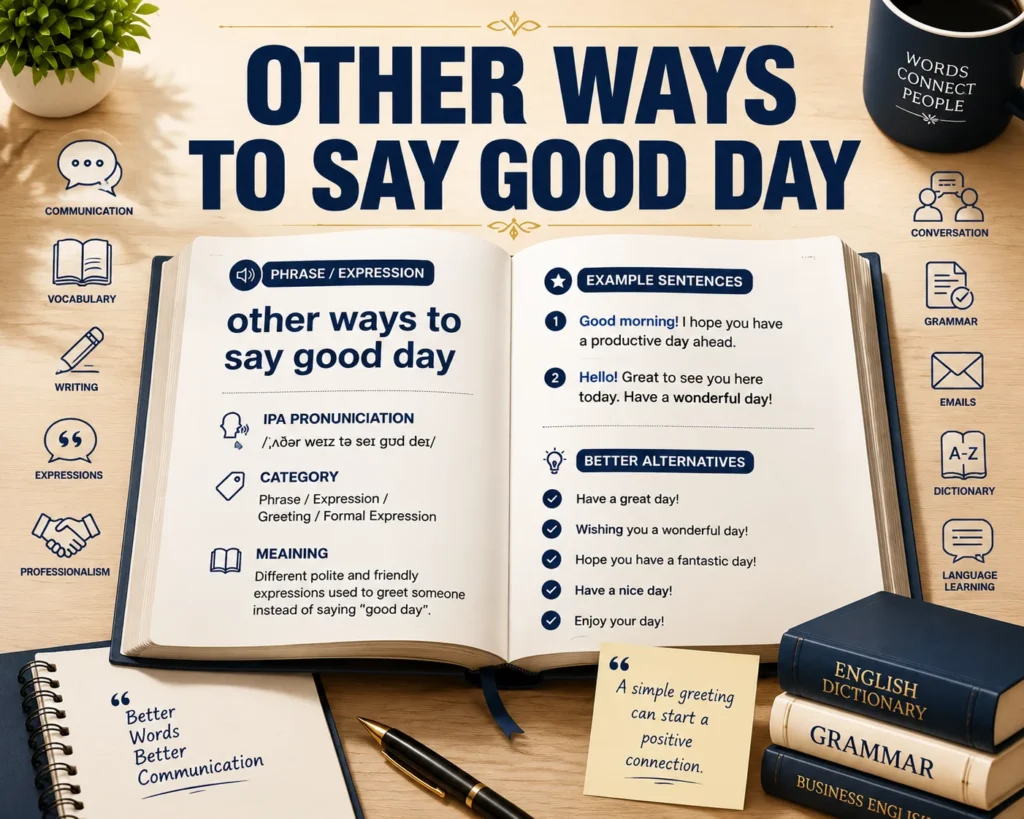
Looking for other ways to say good day? Whether you’re writing a business email, greeting a client, speaking with coworkers, or starting a casual conversation, using different greetings can make your communication sound more natural and engaging.
Although “good day” is a polite and timeless greeting, it isn’t always the best choice for every situation. In professional communication, the right greeting helps create a positive first impression, sets the tone for the conversation, and reflects good email etiquette. Choosing an appropriate alternative can also make your message sound warmer, more modern, or more formal depending on your audience.
This guide explores the best professional ways to say “good day,” formal alternatives, friendly greetings, and workplace expressions. You’ll also find practical examples to help improve your professional communication, business emails, networking conversations, and customer interactions.
What Does “Good Day” Mean?
“Good day” is a polite greeting used to wish someone well during the day. It can also be used as a farewell in some English-speaking countries.
Literal Meaning
The phrase simply means:
“I hope you have a pleasant day.”
It expresses goodwill and courtesy while beginning or ending a conversation.
Tone
“Good day” usually sounds:
- Polite
- Respectful
- Friendly
- Professional
- Traditional
Depending on where it’s used, it may sound slightly formal or old-fashioned.
Purpose
People use “good day” to:
- Politely greet someone
- Start an email or conversation
- Welcome customers
- Show professionalism
- Create a positive first impression
Emotional Context
Unlike casual greetings such as “Hi” or “Hey,” “good day” carries a sense of respect and courtesy. It works well when speaking with someone you don’t know well or when you want to maintain a professional tone.
Examples
Business Email
Good day, Ms. Carter. Thank you for your email.
Customer Service
Good day! How may I assist you today?
Networking
Good day. It was a pleasure meeting you at the conference.
Workplace
Good day, everyone. Let’s begin today’s meeting.
Casual Conversation
Good day! I hope you’re doing well.
Why People Look for Other Ways to Say “Good Day”
Although “good day” is polite, using it repeatedly can sound repetitive or too formal. Different situations call for different greetings.
People often search for alternatives because they want to:
- Sound more professional in emails.
- Make greetings feel warmer and more natural.
- Match the level of formality.
- Improve workplace communication.
- Write stronger business emails.
- Build better relationships with clients and coworkers.
- Follow modern email etiquette.
Using the right greeting helps your message feel appropriate and engaging.
Professional Usage of “Good Day”
Knowing when to use “good day” is an important part of professional communication.
1. Business Emails
“Good day” works well when writing to someone you don’t know personally or when maintaining a respectful tone.
Example:
Good day, Mr. Wilson. Thank you for contacting our support team.
2. Workplace Communication
In meetings or workplace discussions, “good day” creates a polite and welcoming atmosphere.
Example:
Good day, everyone. Let’s review today’s agenda.
3. Client Communication
When communicating with clients, a respectful greeting shows professionalism.
Example:
Good day, Ms. Davis. We appreciate the opportunity to work with you.
4. Networking
Professional networking often begins with a courteous greeting.
Example:
Good day. It was great connecting with you at yesterday’s seminar.
5. Customer Service
Customer-facing roles frequently use polite greetings to create a positive experience.
Example:
Good day! Thank you for calling. How can I help you today?
Professional Alternatives to “Good Day”
These greetings are ideal for business emails, workplace communication, and professional conversations.
1. Good Morning
Meaning: A greeting used before noon.
Tone: Professional
Best Use: Business emails and meetings
Example:
Good morning, Sarah. I hope you’re doing well.
2. Good Afternoon
Meaning: A greeting used after midday.
Tone: Professional
Best Use: Client communication
Example:
Good afternoon, Mr. Lee. Thank you for your message.
3. Good Evening
Meaning: A greeting used later in the day.
Tone: Professional
Best Use: Evening emails and meetings
Example:
Good evening, everyone. Thank you for joining us.
4. Greetings
Meaning: A neutral and professional greeting.
Tone: Formal
Best Use: Business emails
Example:
Greetings. Thank you for your inquiry.
5. Hello
Meaning: A universal greeting suitable for almost any situation.
Tone: Neutral
Best Use: Emails and workplace conversations
Example:
Hello, Jessica. I hope your week is going well.
6. Welcome
Meaning: A warm greeting for visitors or customers.
Tone: Friendly professional
Best Use: Customer service
Example:
Welcome! We’re happy to have you here.
7. It’s a Pleasure to Meet You
Meaning: A polite greeting when meeting someone new.
Tone: Professional
Best Use: Networking
Example:
It’s a pleasure to meet you, Mr. Brown.
8. Nice to Meet You
Meaning: A friendly greeting after an introduction.
Tone: Warm
Best Use: Business networking
Example:
Nice to meet you. I look forward to working together.
9. I Hope You’re Doing Well
Meaning: A polite opening that shows concern for the reader.
Tone: Professional
Best Use: Business emails
Example:
I hope you’re doing well. I’m writing regarding our upcoming meeting.
10. I Hope You’re Having a Great Day
Meaning: A friendly greeting.
Tone: Warm professional
Best Use: Customer communication
Example:
I hope you’re having a great day. Thank you for contacting us.
11. Warm Greetings
Meaning: A welcoming and respectful greeting.
Tone: Professional
Best Use: Formal emails
Example:
Warm greetings from our entire team.
12. Season’s Greetings
Meaning: A greeting used during holidays.
Tone: Formal
Best Use: Holiday messages
Example:
Season’s greetings and best wishes for the New Year.
13. Delighted to Connect
Meaning: Expresses enthusiasm about making contact.
Tone: Professional
Best Use: Networking emails
Example:
Delighted to connect with you after yesterday’s event.
14. Thank You for Reaching Out
Meaning: A courteous opening that acknowledges contact.
Tone: Professional
Best Use: Customer support and email replies
Example:
Thank you for reaching out. I’d be happy to assist you.
15. Welcome Back
Meaning: Greets someone returning after an absence.
Tone: Friendly professional
Best Use: Workplace and customer communication
Example:
Welcome back! We hope you had a relaxing vacation.
Formal Alternatives to “Good Day”
These expressions are best suited for official correspondence, executive communication, legal writing, and formal business interactions.
1. Good Day to You
Meaning: A traditional and highly respectful greeting.
Tone: Very formal
Best Use: Formal conversations and ceremonial settings
Example:
Good day to you, Madam.
2. Greetings and Salutations
Meaning: A classic formal greeting.
Tone: Formal
Best Use: Formal letters or speeches
Example:
Greetings and salutations to all attendees.
3. A Pleasant Day to You
Meaning: Wishes the recipient a pleasant day.
Tone: Formal and courteous
Best Use: Customer service and hospitality
Example:
A pleasant day to you. How may I assist you?
4. Wishing You a Pleasant Day
Meaning: A polite opening or closing phrase.
Tone: Formal
Best Use: Business emails
Example:
Wishing you a pleasant day as we begin our partnership.
5. Best Wishes for the Day
Meaning: Offers positive wishes for the day ahead.
Tone: Formal
Best Use: Professional correspondence
Example:
Best wishes for the day and thank you for your continued support.
6. Respectful Greetings
Meaning: A courteous and professional opening.
Tone: Very Formal
Best Use: Official emails and business letters
Example:
Respectful greetings. Thank you for your continued partnership.
7. Allow Me to Greet You
Meaning: A traditional and respectful greeting.
Tone: Formal
Best Use: Speeches and ceremonial occasions
Example:
Allow me to greet you and thank you for attending today’s event.
8. I Trust You Are Well
Meaning: A polite alternative that wishes someone well.
Tone: Professional
Best Use: Business emails
Example:
I trust you are well. I’m writing to discuss our upcoming project.
9. Wishing You a Wonderful Day
Meaning: A warm and respectful greeting.
Tone: Formal
Best Use: Client communication
Example:
Wishing you a wonderful day. Thank you for your continued support.
10. It’s a Pleasure to Connect
Meaning: Expresses appreciation for making contact.
Tone: Professional
Best Use: Networking and introductions
Example:
It’s a pleasure to connect with you regarding this opportunity.
Friendly Alternatives to “Good Day”
These greetings are perfect for friends, classmates, teammates, neighbors, and casual conversations.
1. Hi
Meaning: A simple everyday greeting.
Tone: Casual
Best Use: Friends and coworkers
Example:
Hi! How’s your day going?
2. Hello There
Meaning: A warm and welcoming greeting.
Tone: Friendly
Best Use: Casual conversations
Example:
Hello there! It’s great to see you.
3. Hey
Meaning: An informal greeting.
Tone: Casual
Best Use: Friends and close colleagues
Example:
Hey! How have you been?
4. Good to See You
Meaning: Expresses happiness about meeting someone.
Tone: Warm
Best Use: Friends and coworkers
Example:
Good to see you again!
5. How’s It Going?
Meaning: Starts a friendly conversation.
Tone: Casual
Best Use: Everyday conversations
Example:
How’s it going today?
6. What’s New?
Meaning: Asks about recent updates.
Tone: Friendly
Best Use: Friends and acquaintances
Example:
What’s new since we last talked?
7. Hope You’re Having a Great Day
Meaning: A cheerful greeting.
Tone: Warm
Best Use: Messages and chats
Example:
Hope you’re having a great day!
8. Great to See You
Meaning: Shows enthusiasm.
Tone: Friendly
Best Use: Reuniting with someone
Example:
Great to see you after so long!
9. Hope Everything’s Going Well
Meaning: Shows genuine interest.
Tone: Friendly
Best Use: Texts and emails
Example:
Hope everything’s going well with you.
10. Have a Wonderful Day
Meaning: A positive greeting or farewell.
Tone: Warm
Best Use: Everyday conversations
Example:
Have a wonderful day!
Email Alternatives to “Good Day”
These greetings are widely used in professional emails and follow good email etiquette.
1. Hello
Meaning: A universal email greeting.
Tone: Professional
Best Use: Business emails
Example:
Hello John, thank you for your email.
2. Good Morning
Meaning: Morning greeting.
Tone: Professional
Best Use: Morning emails
Example:
Good morning, Emma.
3. Good Afternoon
Meaning: Afternoon greeting.
Tone: Professional
Best Use: Afternoon correspondence
Example:
Good afternoon, Mr. Adams.
4. Greetings
Meaning: A formal email opening.
Tone: Professional
Best Use: Official communication
Example:
Greetings, and thank you for contacting us.
5. Dear
Meaning: Traditional professional greeting.
Tone: Formal
Best Use: Client and executive emails
Example:
Dear Ms. Wilson,
6. I Hope You’re Doing Well
Meaning: A polite opening line.
Tone: Warm professional
Best Use: Follow-up emails
Example:
I hope you’re doing well. I’m following up on our previous conversation.
7. Thank You for Your Email
Meaning: Acknowledges the recipient’s message.
Tone: Professional
Best Use: Replies
Example:
Thank you for your email. Here’s the information you requested.
8. Welcome
Meaning: Greets a new customer or employee.
Tone: Friendly professional
Best Use: Welcome emails
Example:
Welcome to our team!
9. Thank You for Reaching Out
Meaning: Appreciates the reader’s contact.
Tone: Professional
Best Use: Customer support
Example:
Thank you for reaching out. We’re happy to help.
10. It’s Great to Connect
Meaning: A friendly networking greeting.
Tone: Professional
Best Use: Introduction emails
Example:
It’s great to connect with you.
Workplace Alternatives to “Good Day”
These greetings help create a positive and professional workplace environment.
1. Good Morning, Everyone
Meaning: Welcomes a group.
Tone: Professional
Best Use: Meetings
Example:
Good morning, everyone. Let’s get started.
2. Welcome, Team
Meaning: Opens a meeting positively.
Tone: Friendly professional
Best Use: Team meetings
Example:
Welcome, team. Thanks for joining.
3. Glad You’re Here
Meaning: Makes others feel appreciated.
Tone: Warm
Best Use: Team discussions
Example:
Glad you’re here today.
4. Thanks for Joining
Meaning: Appreciates attendance.
Tone: Professional
Best Use: Virtual meetings
Example:
Thanks for joining today’s meeting.
5. Hope Everyone Is Doing Well
Meaning: Friendly workplace greeting.
Tone: Professional
Best Use: Team emails
Example:
Hope everyone is doing well this morning.
6. Welcome, Everyone
Meaning: Opens meetings politely.
Tone: Professional
Best Use: Presentations
Example:
Welcome, everyone. We’ll begin shortly.
7. It’s Great to Have You Here
Meaning: Welcomes attendees.
Tone: Friendly
Best Use: Workshops and training
Example:
It’s great to have you here today.
8. Hope You’re Having a Productive Day
Meaning: Encouraging workplace greeting.
Tone: Professional
Best Use: Internal emails
Example:
Hope you’re having a productive day.
9. Thank You for Being Here
Meaning: Shows appreciation.
Tone: Professional
Best Use: Meetings
Example:
Thank you for being here today.
10. Wishing Everyone a Great Day
Meaning: Positive group greeting.
Tone: Warm professional
Best Use: Team announcements
Example:
Wishing everyone a great day and a successful week ahead.
Quick Comparison Table
| Alternative | Tone | Best Use |
| Hello | Neutral | General emails |
| Good Morning | Professional | Morning meetings |
| Good Afternoon | Professional | Afternoon emails |
| Greetings | Formal | Business correspondence |
| Dear | Very Formal | Clients and executives |
| Welcome | Friendly Professional | Customer service |
| I Hope You’re Doing Well | Warm Professional | Follow-up emails |
| Thank You for Reaching Out | Professional | Customer support |
| Hi | Casual | Friends and coworkers |
| Hey | Informal | Close colleagues |
| Good to See You | Friendly | In-person meetings |
| How’s It Going? | Casual | Everyday conversations |
| Welcome, Team | Professional | Team meetings |
| Thanks for Joining | Professional | Virtual meetings |
| Hope Everyone Is Doing Well | Professional | Internal emails |
| It’s Great to Connect | Professional | Networking |
| Wishing You a Wonderful Day | Formal | Client communication |
| Respectful Greetings | Very Formal | Official letters |
| Good Day | Neutral | General professional greeting |
| Have a Wonderful Day | Friendly | Casual farewell |
Email Examples
Client
Good morning, Ms. Carter. Thank you for considering our proposal. We look forward to working with you.
Manager
Hello, Mr. Davis. I’ve attached the updated report for your review.
Colleague
Hi Sarah, thanks for your help with yesterday’s presentation.
Customer
Thank you for reaching out. We’re happy to assist you with your request today.
Networking
It’s a pleasure to connect with you. I enjoyed meeting you at yesterday’s conference.
Meeting Follow-up
Hello Team, thank you for joining today’s meeting. Please find the action items attached below.
Common Mistakes When Using “Good Day”
1. Using It in Every Email
Repeating “Good day” in every message can make your writing feel repetitive. Vary your greetings based on the situation.
2. Choosing the Wrong Level of Formality
“Hey” is suitable for close coworkers but not for clients or senior executives.
3. Ignoring the Time of Day
Use Good Morning, Good Afternoon, or Good Evening when appropriate instead of the more general “Good Day.”
4. Making Greetings Too Long
Avoid overly wordy openings. A simple greeting is usually more effective.
Less Effective:
I sincerely hope you’re having the most wonderful day imaginable.
Better:
I hope you’re doing well.
5. Forgetting Your Audience
Always choose a greeting that matches your relationship with the reader. Professional communication becomes more effective when your tone fits the context.
Related Phrases to “Good Day”
These expressions are closely related to “good day” and can be used in greetings, email openings, workplace conversations, or polite farewells.
| Phrase | Meaning | Example |
| Good Morning | A greeting used before noon. | Good morning, everyone. |
| Good Afternoon | A greeting used after 12 PM. | Good afternoon, Mr. Adams. |
| Good Evening | A greeting used later in the day. | Good evening, and welcome. |
| Hello | A universal greeting for any situation. | Hello, Sarah. |
| Hi | A casual greeting. | Hi, how are you? |
| Hey | An informal greeting for friends. | Hey, what’s up? |
| Greetings | A formal greeting used in letters and emails. | Greetings from our team. |
| Welcome | A warm greeting for guests or customers. | Welcome to our office. |
| Nice to Meet You | Said after meeting someone for the first time. | Nice to meet you today. |
| It’s a Pleasure to Meet You | A more formal introduction. | It’s a pleasure to meet you, Ms. Brown. |
| I Hope You’re Doing Well | A polite email opening. | I hope you’re doing well this week. |
| Have a Great Day | A friendly farewell or closing. | Have a great day! |
| Have a Wonderful Day | A warm way to wish someone well. | Have a wonderful day ahead. |
| Wishing You a Great Day | A positive greeting or closing. | Wishing you a great day and success. |
| Best Wishes | Sends goodwill in professional or personal messages. | Best wishes for your new role. |
| Warm Regards | A professional email closing. | Warm regards, Emma. |
Phrase Comparison
Choosing the right greeting depends on your audience, setting, and level of formality.
| Phrase | Tone | Formality | Best Use |
| Good Day | Polite | Medium | General professional greeting |
| Hello | Neutral | Medium | Emails and conversations |
| Hi | Friendly | Low | Coworkers and friends |
| Hey | Casual | Low | Close friends |
| Greetings | Professional | High | Business emails |
| Good Morning | Professional | Medium | Morning meetings |
| Good Afternoon | Professional | Medium | Afternoon emails |
| Good Evening | Professional | Medium | Evening events |
| Welcome | Warm | Medium | Customer service |
| I Hope You’re Doing Well | Friendly Professional | Medium | Email introductions |
| Nice to Meet You | Friendly | Medium | First meetings |
| It’s a Pleasure to Meet You | Professional | High | Networking |
| Have a Great Day | Friendly | Low | Email closing |
| Wishing You a Wonderful Day | Warm | Medium | Clients |
| Best Wishes | Professional | Medium | Email closing |
Cultural Usage of “Good Day”
US English
In American English, “Good day” is understood but is less common than “Hello,” “Hi,” or “Good morning.” It may sound slightly formal or traditional, especially in everyday conversation.
UK English
In British English, “Good day” is polite but is also less common in daily speech. Greetings such as “Hello,” “Good morning,” and “Good afternoon” are generally preferred in professional settings.
Corporate Communication
Most companies use greetings that feel professional yet approachable.
Popular choices include:
- Hello
- Good Morning
- Good Afternoon
- Greetings
- I Hope You’re Doing Well
These greetings help create a respectful and welcoming tone in business communication.
Customer Service
Customer-facing teams often choose warm greetings to make customers feel valued.
Examples include:
- Good morning! How may I help you?
- Hello! Welcome to our support team.
- Thank you for reaching out.
These expressions create a positive first impression.
Networking
When meeting new professional contacts, choose greetings that are polite and confident.
Examples:
- It’s a pleasure to meet you.
- Nice to meet you.
- Hello, it’s great to connect with you.
These greetings help build rapport and start conversations naturally.
FAQs
What are other ways to say “good day” professionally?
Professional alternatives include Good Morning, Good Afternoon, Hello, Greetings, I Hope You’re Doing Well, and It’s a Pleasure to Connect.
What is a formal alternative to “good day”?
Formal alternatives include Greetings, Good Day to You, Respectful Greetings, Wishing You a Pleasant Day, and I Trust You Are Well.
Is “good day” professional?
Yes. “Good day” is a polite and professional greeting, although many workplaces now prefer Hello or Good Morning because they sound more natural.
What is the best greeting for business emails?
Some of the best options are:
- Hello
- Good Morning
- Good Afternoon
- Dear (for formal emails)
- Greetings
Can I use “good day” in customer service?
Yes. It creates a respectful and welcoming tone, especially in phone calls, emails, and face-to-face interactions.
Is “hello” better than “good day”?
It depends on the situation. Hello is more common and versatile, while Good Day sounds more formal and traditional.
What greeting should I use when networking?
Try:
- It’s a pleasure to meet you.
- Nice to meet you.
- Hello.
- It’s great to connect.
These greetings sound warm and professional.
What is the difference between “good day” and “good morning”?
Good Morning is used only before noon, while Good Day can be used more generally during the daytime.
Is “good day” old-fashioned?
In some regions, yes. While still polite, it may sound traditional compared with modern greetings like Hello or Hi.
What greeting works best in workplace communication?
Hello, Good Morning, Good Afternoon, and Welcome, Team are among the most effective workplace greetings because they are professional, friendly, and appropriate in most situations.
Final Summary
Using different ways to say “good day” helps you communicate more naturally, professionally, and confidently. Whether you’re writing a business email, greeting a client, welcoming a customer, or speaking with coworkers, choosing the right greeting sets a positive tone from the very beginning. Professional options such as “Hello,” “Good Morning,” and “Greetings” work well in formal communication, while friendly alternatives like “Hi” and “Hope you’re having a great day” suit casual conversations. Matching your greeting to the situation strengthens workplace communication, improves email etiquette, and helps build stronger professional relationships.
Conclusion
Learning other ways to say “good day” allows you to communicate with greater confidence in both professional and personal settings. The best greeting depends on your audience, the time of day, and the level of formality you want to convey. In business communication, greetings such as “Hello,” “Good Morning,” and “Greetings” create a polished first impression. For casual conversations, expressions like “Hi,” “Hey,” and “Good to See You” feel warm and natural. By varying your greetings thoughtfully, you can improve your communication, make stronger connections, and leave a positive impression in every conversation.