
Introduction
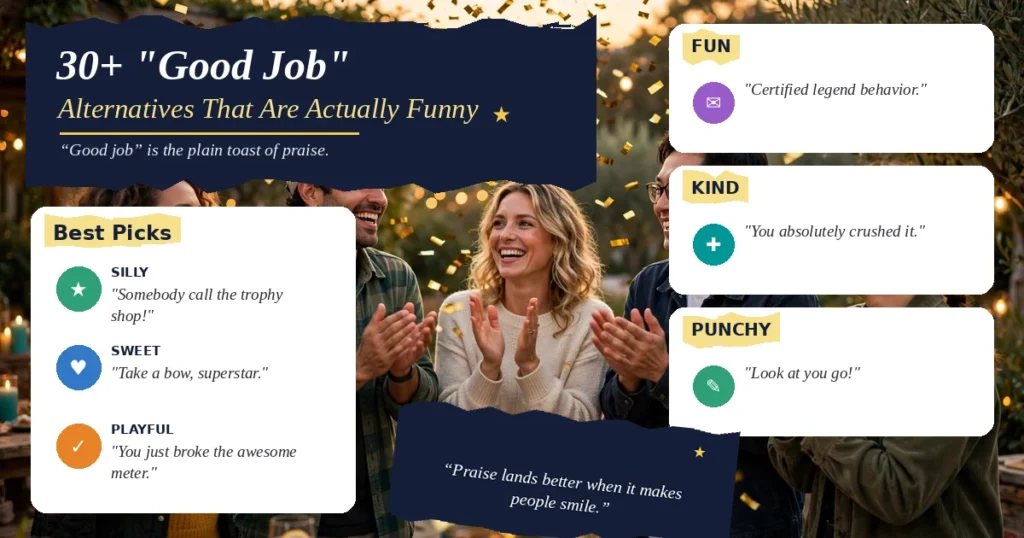
“Good job” is the plain toast of praise — safe, polite, and completely forgettable. If you’re hunting for funny ways to say good job that actually make people smile, you’re in the right place. Whether you need a funny way to say “good job” to your best friend, your kid, a coworker who finally fixed the printer, or your group chat legend, this list gives you 30 alternatives grouped by vibe: silly and over-the-top, wholesome and sweet, sarcastic-but-kind, and short one-liners. Each one comes with a quick example, so you can steal your favorite and start handing out better compliments today.
What “good job” actually means
“Good job” is a casual compliment that means “you did well” or “I’m impressed by what you accomplished.” It works as quick praise rather than a detailed review — most people say “thanks” and move on. Its tone is warm and approving, which is exactly why a funnier version lands so well with people you actually like.
The phrase is everywhere: classrooms, offices, group chats, soccer sidelines. It’s so common it’s invisible. That’s the problem: it rewards effort without adding any energy. A funny alternative fixes that in one line — it says “I noticed” and “you’re fun” at the same time.
When funny praise works best
Cheering on friends
Your best friend doesn’t need a performance review. A funny compliment after their win sets the tone for the whole celebration and shows your personality. This is the number one place to use these.
Praising kids
Kids remember the funny praise way longer than the formal kind. “Somebody call the trophy shop!” after a spelling test beats a flat “good job” every single time — it makes effort feel like an event.
Congratulating coworkers
Work wins deserve better than a thumbs-up emoji. A playful line in the team chat (“Look who’s making the rest of us look bad”) celebrates the person and lifts the whole room. Just keep it kind and HR-safe.
Social media comments
“Good job” gets buried under a hundred identical comments. A funny, specific compliment stands out, gets liked, and sometimes starts the best thread on the post. Be the comment people screenshot.
When to skip the jokes
Humor needs the right moment. Praising someone after a genuine struggle or a serious achievement? A joke can feel cheap — sometimes they just need to hear you mean it. And if someone’s going through a hard time, drop the comedy and tell them you miss them or that you’re proud of them, plainly. Read the room first.
30 funny ways to say good job
Here are 30 funny alternatives, grouped by vibe so you can pick the ones that fit your personality.
Silly and over-the-top
- “Somebody call the trophy shop!” — Dramatic and celebratory; best for big wins. Example: “You passed the bar exam? Somebody call the trophy shop!”
- “Take a bow, superstar.” — Theatrical and warm; best for friends who love the spotlight. Example: “Sold out your art show? Take a bow, superstar.”
- “You just broke the awesome meter.” — Goofy and exaggerated; best for group chats. Example: “Fixed the bug in ten minutes? You just broke the awesome meter.”
- “Slow clap… turning into a standing ovation.” — Playful build-up; best delivered in person. Example: “You cooked all that yourself? Slow clap… turning into a standing ovation.”
- “Certified legend behavior.” — Internet-flavored praise; best for younger friends. Example: “Drove four hours to help me move? Certified legend behavior.”
- “Somebody give this person a cape.” — Hero-themed and fun; best for helpful wins. Example: “You covered my shift and finished the report? Somebody give this person a cape.”
- “You make the rest of us look unemployed.” — Roast-flavored praise; best for close friends. Example: “Promotion AND a bonus? You make the rest of us look unemployed.”
- “Hall of fame, first ballot.” — Sports-flavored and grand; best for competitive friends. Example: “Won the tournament undefeated? Hall of fame, first ballot.”
Wholesome and sweet
- “You absolutely crushed it.” — Enthusiastic and sincere; best for genuine big moments. Example: “You absolutely crushed it — that presentation was flawless.”
- “Proud is an understatement.” — Heartfelt and warm; best for kids and family. Example: “First place in the science fair? Proud is an understatement.”
- “Look at you go!” — Cheerful and encouraging; best for everyday wins. Example: “Finished the 5K? Look at you go!”
- “You did that!” — Celebratory internet slang; best for friends. Example: “Got the job offer? You did that!”
- “Knocked it out of the park.” — Classic with energy; best for work wins. Example: “The client loved the pitch — you knocked it out of the park.”
- “Couldn’t have done it better myself.” — Humble and sweet; best for mentors praising mentees. Example: “This report is perfect — couldn’t have done it better myself.”
- “Gold star for you.” — Playful and nostalgic; best for small victories. Example: “Remembered everyone’s coffee order? Gold star for you.”
Sarcastic-but-kind
- “Okay, show-off.” — Teasing and affectionate; best for close friends. Example: “Another promotion? Okay, show-off.”
- “Look who’s making the rest of us look bad.” — Roast with love; best for team chats. Example: “Finished the project a week early? Look who’s making the rest of us look bad.”
- “Wow, saving some talent for the rest of us?” — Dry and funny; best for friends who can take a joke. Example: “Straight A’s again? Wow, saving some talent for the rest of us?”
- “Someone’s been practicing.” — Mock-suspicious; best for surprising skills. Example: “You learned guitar in a month? Someone’s been practicing.”
- “Calm down, overachiever.” — Playful jealousy; best for siblings and best friends. Example: “Marathon AND a promotion this year? Calm down, overachiever.”
- “Alright, alright, we get it — you’re amazing.” — Fake-exasperated; best delivered with a grin. Example: “Alright, alright, we get it — you’re amazing. Now teach me how.”
- “Try to leave some success for the rest of us.” — Self-deprecating and sweet; best for group settings. Example: “Employee of the month again? Try to leave some success for the rest of us.”
- “Not bad… for a human.” — Deadpan and nerdy; best for gamer friends. Example: “Beat the final boss on hard mode? Not bad… for a human.”
Short and punchy
- “Nailed it.” — The classic short praise; best for anyone, anywhere casual. Example: “Nailed it. That landing was perfect.”
- “Crushed it.” — Punchy and confident; best for texts. Example: “Crushed it. Knew you would.”
- “Chef’s kiss.” — Internet-flavored perfection; best for creative wins. Example: “That design? Chef’s kiss.”
- “Big W.” — Ultra-short slang for a big win; best for DMs. Example: “Got the internship? Big W.”
- “Iconic.” — One word, maximum drama; best for social media comments. Example: “This performance? Iconic.”
- “10/10.” — Rating-style praise; best for quick replies. Example: “Your speech? 10/10.”
- “Flawless victory.” — Gamer-flavored and grand; best for competitive wins. Example: “Won every match today? Flawless victory.”
And when the win came from someone doing you a favor, don’t forget the sincere version too — take a second to thank them for taking care of it before the jokes start.
Quick comparison
| Alternative | Vibe | Best use |
|---|---|---|
| “Somebody call the trophy shop!” | Silly, grand | Big wins and celebrations |
| “Take a bow, superstar.” | Theatrical | Friends who love the spotlight |
| “You absolutely crushed it.” | Wholesome | Genuine big moments |
| “Proud is an understatement.” | Heartfelt | Kids and family |
| “Okay, show-off.” | Sarcastic-but-kind | Close friends |
| “Calm down, overachiever.” | Teasing | Siblings and best friends |
| “Nailed it.” | Short, classic | Any casual situation |
| “Chef’s kiss.” | Internet slang | Creative wins |
| “Big W.” | Ultra-short | DMs and texts |
Text and social examples
Texting a friend
Keep it personal. “Okay, show-off” works because it sounds like you. And if their win secretly involved helping you out, skip the comedy for a second and tell them you need their help again soon — friends respect honesty more than a punchline.
Congratulating a coworker
Work praise needs warmth without weirdness. “You knocked it out of the park — the client loved it” is safe, specific, and way better than a thumbs-up. Save “you make the rest of us look unemployed” for the work friends who know you’re joking.
Praising your kid
Go big and silly. “Somebody call the trophy shop!” turns a good grade into a core memory. Kids don’t remember the exact words — they remember that you made a big deal out of their effort.
Commenting on social media
Stand out from the “good job!!!” crowd. “This performance? Iconic.” or “Certified legend behavior” gets noticed and liked. Specific + funny beats generic every time.
Celebrating in the group chat
Group chats run on energy. “Hall of fame, first ballot” after someone’s big news gets reactions and inside jokes. Drop it in and watch the chat light up.
Common mistakes
1. Roasting someone who needed sincerity
Sarcastic praise is a friendship privilege. “Okay, show-off” is hilarious to your best friend and crushing to someone who worked for years and just needed to hear “I’m proud of you.” Know your audience.
2. Praising the result, ignoring the effort
“Flawless victory” for a lucky break feels hollow. The best funny praise still notices the work — “Someone’s been practicing” lands because it honors the grind behind the win.
3. Using edgy humor at work
“Calm down, overachiever” is perfect for your best friend and risky in a performance review. Keep the funny versions friendly at the office and save the roasts for people who know your heart.
4. Joking when they need empathy
If someone shares good news through tears — a hard-won recovery, a comeback after failure — drop the comedy. Show them you understand what it cost them first; the jokes can wait for a better day.
5. Making it about you
“Wow, you’re amazing — I could never” turns their moment into your insecurity. Keep the spotlight on them. Funny praise celebrates the winner; it never asks for reassurance back.
Related phrases
- Well done! — The classic formal praise; warm and safe everywhere. Example: “Well done on the promotion!”
- Great work! — Professional and upbeat; common at the office. Example: “Great work on the quarterly report.”
- Nice going! — Casual and friendly; good for everyday wins. Example: “Nice going — you finished early!”
- Way to go! — Cheerful and encouraging; great for kids. Example: “Way to go, champ!”
- Kudos! — Short and slightly formal; popular at work. Example: “Kudos to the whole team.”
- Bravo! — Theatrical applause in a word; best for performances. Example: “Bravo! That solo gave me chills.”
- Hats off to you. — Respectful and warm; honors real effort. Example: “Hats off to you — thanks for the help!”
- You rock! — Casual and fun; good for friends. Example: “You rock — thanks for the help!”
- Attaboy / Attagirl. — Old-school and affectionate; best for people you know well. Example: “Attaboy! Knew you had it in you.”
- Pat yourself on the back. — Playful self-praise instruction; light and funny. Example: “Go ahead, pat yourself on the back — you earned it.”
- You’re a star. — Sweet and simple; works for anyone. Example: “You’re a star for staying late to help.”
- Outstanding! — Formal and strong; good for official praise. Example: “Outstanding performance this quarter.”
- Impressive! — One word of genuine admiration; safe everywhere. Example: “Impressive — how long did that take?”
- You nailed it. — Confident and casual; the longer cousin of “nailed it.” Example: “You nailed it — the demo was perfect.”
- Keep it up! — Encouraging and forward-looking; great for ongoing effort. Example: “Keep it up — you’re on a roll.”
- Phenomenal! — Big-word praise for big wins; slightly dramatic. Example: “Phenomenal work on the launch.”
One more note: when someone’s effort genuinely moved you, don’t hide behind humor — take a moment to show you appreciate them sincerely. Funny and heartfelt can share the same conversation.
Phrase comparison: good job vs the alternatives
“Good job” is the all-purpose casual praise — neutral, safe, and invisible. “Well done” is its slightly warmer twin, a touch more formal and a touch more likely to feel meaningful. “Great work” sits in the professional zone; it praises output without getting personal.
The funny alternatives trade neutrality for personality. They signal humor, closeness, and attention before the other person has finished reading. Use plain “good job” when the praise doesn’t matter much — quick acknowledgments, strangers, low-stakes moments. Use a funny one when the praise is the point: making someone’s day, celebrating properly, or showing you actually noticed. On the warmth ladder, it runs from “noted” at the bottom up through “good job,” “well done,” “you crushed it,” and finally “somebody call the trophy shop” at the top — each step says “I care” a little louder.
Cultural usage
United States
Americans love enthusiastic praise — the bigger the reaction, the better. “You crushed it,” “nailed it,” and “let’s gooo” are everywhere from Little League to boardrooms. Sarcastic-but-kind roasts are a love language among close friends.
United Kingdom
Brits lean drier: “not bad at all” can be high praise, and “well played” covers everything from sports to promotions. The over-the-top American style (“certified legend!”) is understood but reads as very American — younger Brits use it freely online.
The generational divide
Gen Z runs on “big W,” “iconic,” and “ate that.” Millennials grew up on “nailed it” and “you’re a rockstar.” Older speakers stick with “well done” and “congratulations.” Pick the version your audience actually speaks.
Workplace culture
Modern workplaces reward specific, enthusiastic praise — “you knocked it out of the park on the client call” beats “good job” in every engagement survey ever run. Keep it public, keep it kind, and keep the roasts for after-work friends.
Internet and meme culture
The internet turned praise into a sport: “chef’s kiss,” “10/10 no notes,” and “mother is mothering” all started as memes and became everyday compliments. Meme culture rewards the most dramatic versions — the bigger the reaction GIF energy, the better the praise lands.
Frequently asked questions
Is “good job” rude?
No. It’s polite, not rude — just bland. Among friends it can even feel dismissive if the win was big. Match the energy of the achievement and you’ll never go wrong.
What’s a funny way to say good job to a friend?
Try “okay, show-off,” “certified legend behavior,” or “you make the rest of us look unemployed.” The best ones are short, a little roasty, and clearly affectionate.
How do you praise a kid without overdoing it?
Praise the effort, not just the result: “You practiced so hard — look at you go!” Funny and specific beats generic every time, and it teaches them that work matters more than talent.
Can I say “good job” in a work email?
You can, but “great work on the presentation” is stronger — specific praise reads as more genuine. Save the funny versions for team chats and friendly colleagues.
What’s the difference between “good job” and “well done”?
“Good job” is casual and American; “well done” is slightly more formal and common in British English. Both are safe, but “well done” carries a touch more weight in professional settings.
What does “big W” mean?
It’s slang for a big win — “W” stands for win. It’s common in texts, DMs, and gaming chats. Don’t use it in a formal email to your CEO.
How do you congratulate someone on social media without sounding generic?
Be specific and add personality: “This launch? Iconic. So proud of you!” beats “good job!!!” every time. Specificity proves you actually looked.
Is sarcastic praise ever okay?
Yes — with people who know you love them. “Calm down, overachiever” to your best friend is affection; to a stranger it’s confusing. The relationship is the permission slip.
What’s a funny way to praise a coworker?
“Look who’s making the rest of us look bad” or “you knocked it out of the park” — warm, team-spirited, and HR-safe. Keep it public and kind.
How do you say good job in British slang?
“Well played” is the go-to — it covers sports, work, and life. “Not bad at all” is classic British understatement that secretly means “brilliant.”
What’s a wholesome alternative to “good job”?
“Proud is an understatement,” “look at you go,” and “you did that” — all warm, all genuine, none of them boring.
Should you praise effort or results?
Effort, mostly — research consistently shows praising hard work builds resilience while praising talent builds pressure. “Someone’s been practicing” honors the grind; “you’re so smart” just adds weight.
How do you respond when someone praises you?
“Thank you!” is enough — or match their energy: “tried my best!” Deflecting every compliment (“oh it was nothing”) trains people to stop giving them.
Is “chef’s kiss” appropriate at work?
In casual team chats, absolutely. In a formal review or client email, stick with “excellent work.” Know the room.
What should you avoid when praising someone?
Avoid backhanded compliments (“finally, you did something right”), comparing them to others, and making their win about you. Praise should feel like a gift, not a transaction.
Conclusion
The shortlist, if you only remember a few:
- Silly: “Somebody call the trophy shop!” and “Take a bow, superstar.”
- Wholesome: “Proud is an understatement” and “You absolutely crushed it.”
- Sarcastic-but-kind: “Okay, show-off” and “Calm down, overachiever.”
- Short and punchy: “Nailed it” and “Chef’s kiss.”
The best praise is the kind that makes someone replay the moment in their head later. Pick a vibe, steal a line, and give their win the celebration it actually deserves.
For the dictionary definition of the phrase, see Cambridge Dictionary’s entry on “good job”.




