Introduction
The phrase “looking forward to speaking with you” is a friendly way to end an email or close a conversation. You have probably used it many times before a call or a meeting. It shows the other person that you are glad the talk is happening. This guide covers other ways to say looking forward to speaking with you so you never sound like a broken record.
You will find 35 fresh alternatives sorted by tone. Some are professional. Some are formal. Some are friendly. There are also picks made for emails and the workplace. Each one comes with a short example so you can use it right away. You will also learn when to use each phrase and what mistakes to avoid. By the end, you will have the right words for every call, meeting, and follow-up message.
This phrase works well because it mixes warmth with clear intent. It tells the listener you care about the conversation, not just the task. That is why people use it in job interviews, client emails, and friendly check-ins. When you vary it with new options, your writing sounds more natural and personal.
Meaning
Other ways to say “looking forward to speaking with you” are polite phrases that show you are glad about an upcoming call or meeting. They express warmth and interest before the talk happens. People use them in emails, messages, and at the end of business notes to build a friendly tone.
The literal meaning is simple. You are saying, “I feel good about the fact that we will talk soon.” The word “looking forward” means you expect something with pleasure. The word “speaking” points to the call or meeting itself. Together, they form a small promise of attention.
The tone of the phrase is warm and respectful. It sits between casual and formal. It is not stiff like “I await our discussion,” and it is not loose like “See ya later.” Most people read it as friendly professionalism.
The purpose is twofold. First, it closes a message on a positive note. Second, it confirms the upcoming talk without sounding demanding. It keeps the door open and builds goodwill.
Here are some simple examples of the phrase in action:
- “Thanks for your email. I am looking forward to speaking with you on Monday.”
- “I have attached the report. Looking forward to speaking with you about it.”
- “It was nice to meet you at the event. I look forward to speaking with you soon.”
Professional usage
Emails
In professional emails, this phrase often appears in the last line before the sign-off. It softens the close and signals that the conversation is not over. Keep it brief. One sentence is enough. Place it after the main point of your email so the reader ends on a warm note.
Workplace
In the workplace, people use this phrase before one-on-one meetings, reviews, and check-ins. It tells a colleague you value their time. Say it with a calm, steady voice in person. In chat apps, keep it short so it reads as friendly, not heavy.
Clients
With clients, the phrase builds trust. It says you are ready to listen, not just to sell. Use it after you confirm a call time. Pair it with thanks for a stronger effect. For example, thank the client for their time, then add that you look forward to the talk. Clients remember that kind of warmth.
Networking
In networking, this phrase shows genuine interest in the other person. It works well in follow-up notes after events and on LinkedIn. Since networking is about people, not just deals, the warm tone fits perfectly. It turns a cold contact into a friendly one. Many people say it when they reach out to a new connection.
Customer service
In customer service, the phrase tells the customer they matter. It works well when you promise a callback. It calms the customer down because it shows care. Keep it simple and honest. Only use it when you truly plan to call back.
Alternatives
Professional
I look forward to our conversation. A polished and steady choice for work emails. Example: “I look forward to our conversation on Friday morning.”
I am excited about our upcoming call. A warm and upbeat line that shows real interest. Example: “I am excited about our upcoming call and the plans we will discuss.”
I look forward to connecting with you soon. A smooth modern pick for emails and LinkedIn notes. Example: “I look forward to connecting with you soon about the project.”
I am looking forward to our discussion. A clear and confident option for scheduled talks. Example: “I am looking forward to our discussion on the new proposal.”
It will be great to talk with you. A friendly yet professional sentence for most work settings. Example: “It will be great to talk with you and hear your ideas.”
I look forward to hearing your thoughts. A respectful way to show you value their view. Example: “I look forward to hearing your thoughts in our meeting.”
I am keen to discuss this with you. A crisp line that shows focus and purpose. Example: “I am keen to discuss this with you before the deadline.”
Formal
I anticipate speaking with you soon. A formal and graceful option for official letters. Example: “I anticipate speaking with you soon about the contract.”
I look forward to our scheduled discussion. A precise phrase for calendars and formal invites. Example: “I look forward to our scheduled discussion on Tuesday.”
I eagerly await our conversation. A dignified line for high-stakes meetings. Example: “I eagerly await our conversation with the board.”
I look forward to speaking with you at your convenience. A courteous choice when the other person picks the time. Example: “I look forward to speaking with you at your convenience next week.”
I await our upcoming discussion with interest. A classic formal sentence for senior audiences. Example: “I await our upcoming discussion with interest and respect.”
It will be a pleasure to speak with you. A refined and charming way to close a formal note. Example: “It will be a pleasure to speak with you about this matter.”
I look forward to our forthcoming meeting. A traditional phrase for official schedules. Example: “I look forward to our forthcoming meeting in April.”
Friendly
Can’t wait to chat! A cheerful and casual line for friends and close colleagues. Example: “Can’t wait to chat! Call me when you are free.”
Looking forward to catching up with you. A warm pick for old friends and warm contacts. Example: “Looking forward to catching up with you this weekend.”
Excited to talk soon! A bright and simple sentence for texts and DMs. Example: “Excited to talk soon! I have so much to tell you.”
Can’t wait to hear your voice. A sweet and personal line for people you miss. Example: “Can’t wait to hear your voice on the call tonight.”
It will be great to catch up. A relaxed option for friendly work chats. Example: “It will be great to catch up after the long break.”
Looking forward to our chat. A light and easy line for informal plans. Example: “Looking forward to our chat over coffee tomorrow.”
Talk soon! I’m excited. A short and happy sign-off for messages. Example: “Talk soon! I’m excited to hear your news.”
Looking forward to our call. A clean email classic that fits any inbox. Example: “Looking forward to our call at 3 p.m. today.”
I will speak with you soon. A simple and confident email closing line. Example: “I will speak with you soon about the details.”
See you on the call. A casual email line for video and phone meetings. Example: “See you on the call. Please bring your notes.”
Talk to you soon. A short and friendly email sign-off for regular contacts. Example: “Talk to you soon about the launch plan.”
I’ll connect with you shortly. A modern line that hints at a quick follow-up. Example: “I’ll connect with you shortly after the review.”
Looking forward to hearing from you soon. A gentle line that invites a reply or a call. Example: “Looking forward to hearing from you soon with your feedback.”
I’ll reach out at our scheduled time. A clear and reliable email promise. Example: “I’ll reach out at our scheduled time on Monday.”
Workplace
Let’s sync up soon. A casual workplace line for quick alignment. Example: “Let’s sync up soon and review the timeline.”
Looking forward to our one-on-one. A specific pick for manager and team check-ins. Example: “Looking forward to our one-on-one tomorrow afternoon.”
I’ll catch up with you at the meeting. A natural line for in-office plans. Example: “I’ll catch up with you at the meeting and share the update.”
Eager to brainstorm with you. A lively line for creative teams and projects. Example: “Eager to brainstorm with you on the new campaign.”
Looking forward to collaborating. A team-spirited choice for shared work. Example: “Looking forward to collaborating on the product launch.”
Let’s connect this week. A light and open line for flexible scheduling. Example: “Let’s connect this week to go over the budget.”
Happy to discuss this further with you. A helpful line that offers more time and care. Example: “Happy to discuss this further with you after lunch.”
Quick comparison
| Alternative | Tone | Best Use |
|---|---|---|
| I look forward to our conversation | Professional | Work emails and client calls |
| I am excited about our upcoming call | Professional | Warm business follow-ups |
| I anticipate speaking with you soon | Formal | Official letters and senior leaders |
| It will be a pleasure to speak with you | Formal | Elegant client communication |
| Can’t wait to chat! | Friendly | Friends and close colleagues |
| Looking forward to catching up with you | Friendly | Old contacts and warm reunions |
| Looking forward to our call | Everyday professional emails | |
| I’ll reach out at our scheduled time | Confirmed appointments | |
| Let’s sync up soon | Workplace | Team check-ins and quick updates |
| Looking forward to our one-on-one | Workplace | Manager and employee meetings |
Email examples
Email to a client
Subject: Our call on Thursday
Hi Sarah,
Thank you for sharing the project brief. I have reviewed the key points, and I am ready to discuss them with you. I look forward to our conversation on Thursday at 2 p.m. Please let me know if you would like to add anything to the agenda.
Best regards,
James
Email to your manager
Subject: Check-in this Friday
Hi Mr. Carter,
I have finished the first draft of the report. I would like your feedback on the main findings. I look forward to our one-on-one on Friday. Thank you for your guidance.
Kind regards,
Priya
Email to a colleague
Subject: Quick sync
Hi Tom,
Great job on the presentation yesterday. I have a few ideas for the next phase, and I would love your input. Let’s sync up soon and go through them together.
Cheers,
Aisha
Email to a customer
Subject: Your support call is scheduled
Hi Daniel,
Thank you for contacting our support team. I have scheduled a call for you with our specialist tomorrow at 11 a.m. I look forward to connecting with you soon. If the time does not work, just reply to this email.
Warm regards,
Support Team
Email for networking
Subject: Great meeting you at the summit
Hi Laura,
It was wonderful to meet you at the marketing summit last week. I enjoyed our chat about brand storytelling. I am excited about our upcoming call and the chance to learn more about your work.
Best,
Nina
Meeting follow-up email
Subject: Follow-up to today’s meeting
Hi Mark,
Thank you for the productive meeting today. I have noted the action items and will share them by tomorrow. I am looking forward to our discussion next week on the next steps. Thank you for the clarification on the budget details.
Regards,
Sam
Common mistakes
1. Saying it when no call is planned
Do not use the phrase if no call is on the calendar. It confuses the reader and sounds empty. Only say it when a real talk is set.
2. Repeating it in every email
Using the same line in back-to-back emails looks lazy. Vary your words with the alternatives above. Your writing will feel fresh and thoughtful.
3. Pairing it with a rude tone
Do not mix this warm phrase with a cold or sharp message. The mismatch feels fake. Keep the whole email friendly if you plan to end with warmth.
4. Making it too long
One short sentence is enough. A long paragraph about how excited you are feels heavy. Keep the closing line light and clean.
5. Using it with strangers too soon
With a brand-new contact, a very warm phrase can feel too close. Start with a neutral line and save the warm words for later messages.
6. Forgetting to confirm the time
Saying you look forward to the call is nice, but the reader still needs the time. Always include the date and hour, or the phrase loses its point.
Related phrases
Eager to talk. Means you want to speak soon and feel excited. Example: “I am eager to talk about the new plan.”
Hope to chat soon. Means you wish to speak in the near future. Example: “Hope to chat soon about your trip.”
Awaiting our call. Means you are waiting for the scheduled talk. Example: “I am awaiting our call at noon.”
Excited for our meeting. Means you feel happy about the planned meeting. Example: “I am excited for our meeting on Monday.”
Glad we will connect. Means you feel pleased about the upcoming talk. Example: “I am glad we will connect this week.”
Ready when you are. Means you can talk at the other person’s time. Example: “Ready when you are for the video call.”
Hoping to hear from you. Means you want a reply or a call soon. Example: “Hoping to hear from you about the offer.”
Keen to catch up. Means you want to share news and updates soon. Example: “I am keen to catch up over lunch.”
Looking forward to our talk. Means you expect the conversation with joy. Example: “Looking forward to our talk on Friday.”
Waiting for our chat. Means you are holding time for the conversation. Example: “I am waiting for our chat at 4 p.m.”
Thrilled to speak soon. Means you feel very happy about the coming call. Example: “I am thrilled to speak soon about the results.”
Counting down to our call. Means you are marking time until the talk. Example: “I am counting down to our call this evening.”
Hope we can talk. Means you wish for a chance to speak. Example: “I hope we can talk about this tomorrow.”
Excited to connect. Means you feel eager to make contact. Example: “I am excited to connect on the project.”
Glad to talk anytime. Means you are open to speak whenever needed. Example: “I am glad to talk anytime this week.”
Looking forward to your call. Means you expect their call with pleasure. Example: “Looking forward to your call on Thursday morning.”
Phrase comparison
The main phrase, “looking forward to speaking with you,” is warm and safe. It works in almost any setting. It never sounds rude, and it never sounds too casual. That is its greatest strength. It is also its weakness. Because everyone uses it, it can feel plain. A hiring manager may read it a hundred times a week.
“I look forward to our conversation” keeps the same safe tone but sounds a touch more polished. It fits client emails where you want to look sharp. “I am excited about our upcoming call” adds real energy. It tells the reader you care, not just that you are polite. Use it when you want to show genuine interest.
Formal options like “I anticipate speaking with you soon” raise the level. They suit letters to senior leaders and official bodies. They can sound stiff in a friendly email, so match the formality to the reader. Friendly picks like “Can’t wait to chat!” drop the formality completely. They are perfect for friends and close coworkers, but they would shock a new client.
Email-specific lines such as “Looking forward to our call” are short and clean. They suit busy inboxes where every word counts. Workplace lines like “Let’s sync up soon” feel natural among team members. They build a team mood that formal phrases cannot.
The key is to read the room. A client you just met deserves polish. A friend deserves warmth. A boss deserves respect with a light touch. When you pick the right level, the reader feels seen. That small choice can change how the whole message lands.
Cultural usage
US English
In the US, people use this phrase often and with ease. The tone is warm and direct. Americans also like upbeat twists like “Excited to talk soon!” Business culture values energy, so a little enthusiasm fits well. Keep it short and honest.
UK English
In the UK, people use the phrase too, but the tone is often softer. British speakers may prefer “I look forward to our conversation” over very excited lines. Understatement is common. A calm, polite close works best in formal British emails.
Corporate communication
In corporate emails, the phrase is a safe standard. It shows respect without getting too personal. Most companies use it in client and vendor emails. Stick to the professional and formal groups for these messages. Avoid slang and exclamation marks.
Customer service
In customer service, the phrase builds trust and calm. It tells the customer that help is on the way. Use it when you promise a callback or a follow-up. Keep the language simple so every customer understands it. Honesty matters most here.
Networking
In networking, the phrase turns a first contact into a friendly link. People use it on LinkedIn and in follow-up emails after events. A warm tone helps you stand out. Many networkers also thank the person for reaching out before adding this line. That small habit builds real connections.
Frequently asked questions
Is “looking forward to speaking with you” formal or casual?
It sits in the middle. The phrase is warm but still professional. You can use it in work emails, client notes, and friendly messages. For very formal letters, pick a more polished line from the formal group.
Can I use this phrase in a job application email?
Yes, you can. It is a polite way to close a cover note or a thank-you email after an interview. It shows you are eager without sounding pushy. Just make sure the rest of the email is professional too.
What is a shorter way to say it?
“Looking forward to our call” is the shortest safe option. “Talk soon” works for friendly contacts. “Let’s sync up soon” fits workplace chats. Pick the one that matches your tone.
Is it okay to say “looking forward to speaking to you” instead?
Both versions are fine. “Speaking with you” feels a bit warmer and more personal. “Speaking to you” can sound slightly more formal. Most people will not notice the difference.
Can I use this phrase on LinkedIn?
Yes, it works well on LinkedIn. Use it in connection requests and follow-up messages after events. It adds warmth to a short note. Keep the message brief so it reads well on mobile.
How do I say it to a boss?
Use a respectful option like “I look forward to our conversation.” It shows respect without sounding stiff. You can also say “I look forward to our one-on-one.” That line is specific and professional.
What should I say instead in a very formal letter?
Try “I anticipate speaking with you soon.” It carries more weight and suits official letters. “I await our upcoming discussion with interest” also works. Save these for senior leaders and formal bodies.
Is “can’t wait to chat” too casual for work?
It depends on the relationship. With close colleagues and friends, it is fine. With new clients or senior leaders, it is too casual. Read the room and pick a calmer line when in doubt.
Can I end a text message with this phrase?
Yes, you can. Short forms like “Excited to talk soon!” fit texts well. For a friend, “Can’t wait to chat!” is perfect. Keep it light and match the other person’s tone.
What is the difference between “speaking with you” and “talking to you”?
They mean almost the same thing. “Speaking with you” sounds a touch more formal. “Talking to you” sounds a bit more casual. Both are polite and widely used in daily English.
Should I include the date and time with this phrase?
Yes, when you can. A warm closing line plus a clear time is the best mix. For example, “I look forward to our call on Thursday at 2 p.m.” This keeps the message both friendly and useful.
Can I use it more than once in the same email?
No, once is enough. Repeating it looks careless. If you need to mention the call again, just state the time. One warm line at the end does the job.
What is a good alternative for customer service replies?
“I look forward to connecting with you soon” works well. It is warm and clear. You can also say “I will speak with you soon.” Both lines calm the customer and promise action.
How do I reply when someone says this to me?
You can say “Likewise! I look forward to it too.” That is simple and warm. You can also say “Me too. See you on Thursday.” Keep your reply short and match their energy.
Is this phrase common in American and British English?
Yes, both use it. Americans often add more energy, like “Excited to talk soon!” British speakers often keep it calm, like “I look forward to our conversation.” Both styles are correct and polite.
Conclusion
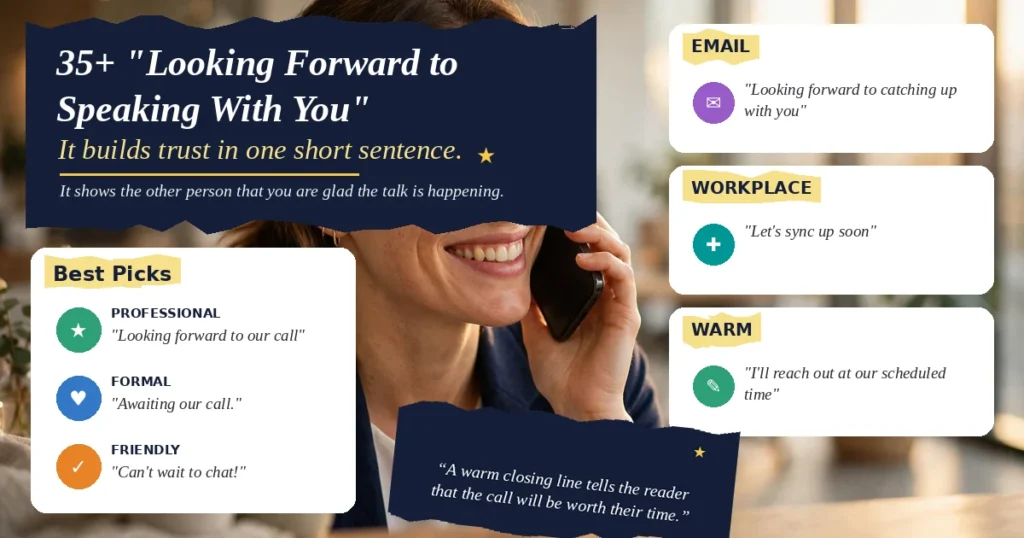
The best picks by tone are short and easy to remember. For a professional tone, use I look forward to our conversation or I am excited about our upcoming call. For a formal tone, choose I anticipate speaking with you soon or It will be a pleasure to speak with you. For a friendly tone, try Can’t wait to chat! or Looking forward to catching up with you. For emails, Looking forward to our call or I’ll reach out at our scheduled time work best. For the workplace, Let’s sync up soon or Looking forward to our one-on-one fit perfectly.
Words shape how people feel before the talk even starts. A warm closing line tells the reader that the call will be worth their time. It builds trust in one short sentence. So pick the line that fits your reader, keep it honest, and say it with care. When in doubt, show real interest, say thanks like you mean it, and let your tone do the rest. You can also look up the verb speak to see its full meaning and usage notes.