Introduction
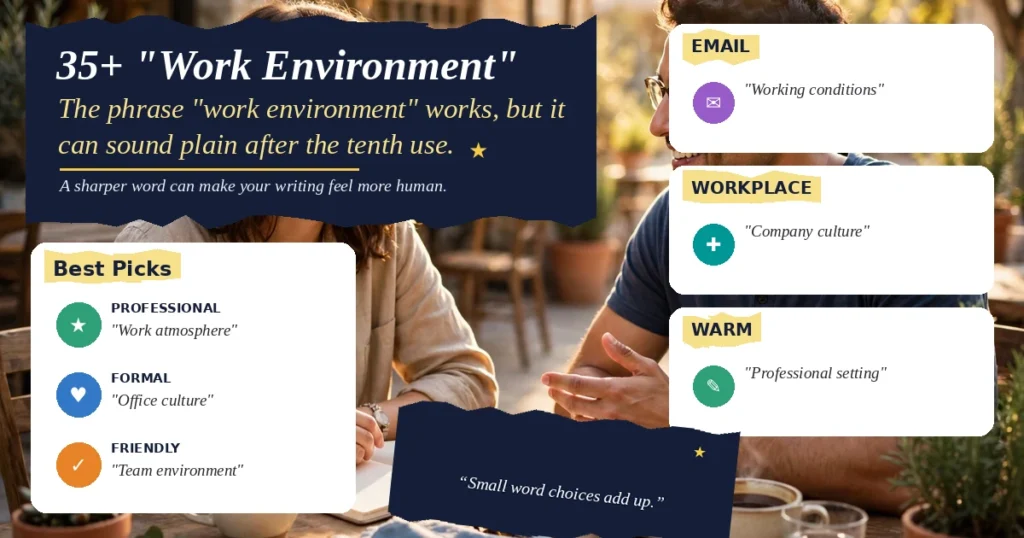
People search for other ways to say work environment every day. They want fresh words for resumes, emails, and reviews. The phrase “work environment” works, but it can sound plain after the tenth use. A sharper word can make your writing feel more human.
Maybe you are writing a cover letter. Maybe you are giving feedback to your team. Or maybe you just want to sound less robotic in an email. The right alternative changes the tone in seconds.
This guide gives you 35 options. You will find them grouped by tone: Professional, Formal, Friendly, Email, and Workplace. Each one comes with a short usage note and an example. You will also get email samples, a comparison table, common mistakes, and answers to 15 common questions.
By the end, you will know exactly which phrase fits which moment.
Meaning
A work environment is the total setting where you do your job. It includes the people you work with, the mood of the team, the rules you follow, the physical space around you, and the shared culture that shapes daily life. Together, these parts decide how work feels each day.
Literal meaning: The word “work” points to your job or tasks. The word “environment” points to the surroundings. Put them together, and you get everything that surrounds you while you work.
Tone: The phrase is neutral and safe. It fits almost every setting, from job interviews to formal reports. It never sounds rude, but it also never sounds exciting.
Purpose: People use it to describe where and how work happens. Job seekers use it to ask about company culture. Managers use it to talk about team morale. HR teams use it in policies and surveys.
Examples:
- “The work environment here supports new ideas.”
- “I asked about the work environment before I accepted the job.”
- “A healthy work environment helps people stay longer.”
The problem is simple. Everyone uses it. When you reach out to a company about a role, repeating “work environment” three times in one email sounds dull. A good alternative keeps your message fresh.
Professional usage
In emails
Use alternatives to “work environment” in emails when you write to managers, recruiters, or clients. A phrase like “team environment” feels warmer than “work environment” in a thank-you note. Keep the tone clean and direct.
In the workplace
Managers can name the setting in meetings and reviews. “Office culture” works when you talk about values. “Working conditions” works when you talk about hours, pay, or safety. Match the word to the topic.
With clients
Clients care about results, not jargon. Use simple phrases like “professional setting” or “team setting.” These words sound confident without sounding stiff. They also show you understand their needs clearly.
In networking
Networking is about people, not places. Phrases like “team spirit” or “collaborative space” spark better conversations than “work environment.” They invite the other person to share a story.
In customer service
Service teams talk about the workplace to explain how they help. “A calm professional setting lets us focus on your case.” That line sounds more caring than “our work environment is good.” When you thank a customer for explaining an issue, pair it with a warm workplace phrase.
Alternatives
Here are 35 alternatives, grouped by tone. Each entry shows the phrase in bold, a short tone and usage note, and one example sentence.
Professional
Work atmosphere: Neutral and modern. Best for everyday office talk and team updates. Example: “Our work atmosphere encourages open conversation.”
Office culture: People-first and warm. Best when you talk about values and habits. Example: “The office culture here rewards honest feedback.”
Team environment: Team-focused and supportive. Best for describing how a group works together. Example: “She joined a team environment that values every voice.”
Working conditions: Slightly formal and practical. Best for hours, pay, safety, and space. Example: “The working conditions improved after the office move.”
Company culture: Brand-level and confident. Best for hiring pages and interviews. Example: “Our company culture puts personal growth first.”
Professional setting: Polished and clear. Best for reports and client messages. Example: “This professional setting supports deep focus.”
Work climate: Mood-based and observant. Best for describing attitudes at work. Example: “A positive work climate lifts team morale.”
Formal
Organizational environment: Formal and broad. Best for policy documents and audits. Example: “The organizational environment supports staff development.”
Corporate environment: Formal and large-scale. Best for big companies and official writing. Example: “The corporate environment follows strict safety rules.”
Occupational environment: Technical and HR-focused. Best for health, safety, and legal contexts. Example: “Every occupational environment must meet health standards.”
Employment setting: Formal and contract-ready. Best for job offers and agreements. Example: “The employment setting offers flexible hours.”
Institutional culture: Formal and mission-driven. Best for schools, hospitals, and agencies. Example: “The institutional culture puts patient care first.”
Business environment: Formal and wide. Best for business writing and strategy talk. Example: “The business environment here welcomes new ideas.”
Professional milieu: Very formal, almost literary. Best for academic or high-level writing. Example: “The professional milieu shapes how teams behave.”
Friendly
Workplace vibe: Casual and chatty. Best for relaxed teams and informal chats. Example: “The workplace vibe here is easy and relaxed.”
Team spirit: Warm and upbeat. Best for praise and motivation. Example: “Strong team spirit keeps everyone moving forward.”
Office energy: Informal and lively. Best for describing the daily mood. Example: “The office energy picks up after lunch.”
Work family: Friendly and close. Best for tight-knit teams. Example: “My work family celebrated the launch together.”
Day-to-day scene: Casual and honest. Best for real talk with friends or peers. Example: “The day-to-day scene is calm and friendly.”
Our little world at work: Playful and personal. Best for blogs and casual posts. Example: “Our little world at work runs on coffee and jokes.”
The way we work together: Warm and human. Best for heartfelt messages. Example: “The way we work together makes Mondays easier.”
Our shared workspace: Neutral and email-safe. Best for group updates and welcome notes. Example: “Our shared workspace keeps everyone in the loop.”
Current working setup: Clear and modern. Best for remote or hybrid teams. Example: “Your current working setup may change next quarter.”
Team setting: Short and clean. Best for quick status emails. Example: “The team setting will stay the same this month.”
Day-to-day work life: Friendly and readable. Best for personal emails to colleagues. Example: “Day-to-day work life here stays flexible.”
Internal office culture: Values-based. Best for emails about mission and habits. Example: “Our internal office culture is built on trust.”
Daily work setting: Simple and direct. Best for scheduling and routine updates. Example: “The daily work setting suits most schedules.”
Collaborative space: Teamwork-focused. Best for onboarding and project emails. Example: “A collaborative space helps new hires settle in fast.”
Workplace
Shop floor: Practical and hands-on. Best for factories, retail, and warehouses. Example: “The shop floor runs on clear daily routines.”
Office space: Physical and visual. Best for describing the actual room or building. Example: “The office space feels bright and open.”
Workplace culture: Standard and reliable. Best for HR talks and surveys. Example: “A strong workplace culture cuts staff turnover.”
Worksite: Direct and physical. Best for construction and field jobs. Example: “The worksite follows strict safety rules.”
Job setting: Plain and clear. Best for interviews and job ads. Example: “The job setting includes two remote days a week.”
Team dynamic: Relationship-focused. Best for describing how people interact. Example: “A healthy team dynamic helps projects finish on time.”
Office life: Everyday and relatable. Best for casual workplace writing. Example: “Office life here includes Friday demos.”
Quick comparison
| Alternative | Tone | Best Use |
|---|---|---|
| Work atmosphere | Professional | Team updates and daily talk |
| Office culture | Professional | Values, habits, interviews |
| Company culture | Professional | Hiring pages and brand copy |
| Organizational environment | Formal | Policies and audits |
| Occupational environment | Formal | Health, safety, legal writing |
| Workplace vibe | Friendly | Casual chats with peers |
| Team spirit | Friendly | Praise and motivation |
| Current working setup | Remote and hybrid teams | |
| Team setting | Short status emails | |
| Workplace culture | Workplace | HR talks and surveys |
Email examples
To a client
Subject: Project Update
Hi Sarah,
I wanted to share a quick update. Our team environment stayed focused this week, and we finished the first draft ahead of time. We appreciate your patience while we polish the details. I will send the final version on Friday.
Best,
James
To your manager
Subject: Feedback on Team
Hi Mark,
I wanted to say the office culture on our floor has really improved. People share ideas faster now, and the daily standups feel more open. Thanks for making space for that change.
Regards,
Priya
To a colleague
Subject: Welcome
Hi Ana,
Welcome to the team! The day-to-day work life here is pretty relaxed, but we take deadlines seriously. Grab me for coffee any time this week and I will walk you through our tools.
Cheers,
Tom
To a customer
Subject: Your Request
Hi Lisa,
Thanks for writing in. Our professional setting lets us give your case full attention. I have flagged it as urgent, and a specialist will call you today. It is always our pleasure to help.
Warm regards,
Nina
For networking
Subject: Great Meeting You
Hi David,
It was great meeting you at the event. I loved hearing about the collaborative space your team built. I am looking forward to our call next week to explore how we might work together.
Best,
Rita
Meeting follow-up
Subject: Follow-Up on Yesterday
Hi team,
Quick follow-up from yesterday’s meeting. We agreed that our work climate needs one small fix: shorter meetings. Starting Monday, all standups run 15 minutes max. Thanks,
Sam
Common mistakes
1. Using “work environment” in every sentence
Repeating the same phrase sounds robotic. Swap in one or two alternatives per email or page.
2. Picking a formal phrase for a casual chat
“Professional milieu” in a team chat sounds strange. Save formal words for formal writing.
3. Mixing up “working conditions” and “work culture”
“Working conditions” covers pay, hours, and safety. “Work culture” covers values and habits. They are not the same.
4. Using “shop floor” for an office job
“Shop floor” means factories and stores. Use “office space” or “team setting” for desk jobs.
5. Forgetting the reader
A client wants simple words. A policy reader expects formal ones. Match the phrase to the person reading it.
Related phrases
Here are 15 related expressions, each with a one-line meaning and a short example.
- Company values: The beliefs that guide a business. Example: “Our company values include honesty and teamwork.”
- Team morale: How happy and motivated a team feels. Example: “Team morale rose after the bonus news.”
- Office politics: Unofficial power games at work. Example: “She avoids office politics and focuses on results.”
- Work-life balance: Healthy split between job and personal life. Example: “Flexible hours help my work-life balance.”
- Corporate culture: Shared habits of a large company. Example: “The corporate culture here is fast-paced.”
- Employee engagement: How involved staff feel in their work. Example: “High employee engagement cuts sick days.”
- Job satisfaction: How happy someone is with their role. Example: “Her job satisfaction grew after the promotion.”
- Team building: Activities that bring a team closer. Example: “Our team building trip starts Friday.”
- Workplace diversity: Mix of backgrounds on a team. Example: “Workplace diversity sparks better ideas.”
- Onboarding: The process of settling a new hire in. Example: “Onboarding takes two weeks here.”
- Open-door policy: Managers stay open to talk any time. Example: “Our open-door policy builds trust.”
- Remote work: Doing your job from outside the office. Example: “Remote work suits her schedule best.”
- Hybrid model: Mix of office and home work. Example: “The hybrid model gives us three office days.”
- Staff turnover: Rate at which people leave a company. Example: “Low staff turnover shows people are happy.”
- Burnout: Extreme tiredness from overwork. Example: “Long hours can lead to burnout fast.”
- Psychological safety: Feeling safe to speak up at work. Example: “Psychological safety helps teams share ideas.”
Phrase comparison
“Work environment” is the safe default. It works everywhere and offends no one. But safe can also mean forgettable. When you write a cover letter, recruiters read hundreds of lines with the same words. A sharper pick stands out.
“Office culture” and “company culture” feel warmer than “work environment.” They point to people and values, not just the building. Use them when you want to sound human, like in interviews and welcome emails. They also fit hiring pages, where you sell the team as much as the job.
“Working conditions” is narrower and more serious. It talks about pay, hours, safety, and space. Use it for contracts, surveys, and formal reviews. It sounds factual, not emotional. “Occupational environment” goes one step further. It belongs in legal and safety documents, not in a friendly email.
On the casual side, “workplace vibe” and “team spirit” add color. They fit peer chats, team blogs, and social posts. They would feel out of place in a board report. “Work atmosphere” sits in the middle. It works in meetings, updates, and most emails without sounding too stiff or too loose.
“Current working setup” fits the remote era best. It covers home offices, hybrid schedules, and digital tools in one short phrase. Use it when the physical office is not the point. “Professional setting” does the opposite job. It adds polish to client emails and formal messages.
The best approach is simple. Keep “work environment” as your fallback. Then match the alternative to your reader and your goal. Ask yourself: who reads this, and what should they feel? The answer picks the phrase for you.
Cultural usage
US English
American workplaces favor direct, upbeat words. “Team environment,” “office culture,” and “company culture” appear often in job ads. “Workplace vibe” is common in startups and tech firms.
UK English
British workplaces lean slightly more formal. “Working conditions” and “employment setting” appear often in contracts. “Office life” is a friendly favorite in everyday talk.
Corporate communication
Corporate writing needs precision. “Organizational environment” and “corporate environment” fit memos and reports. Avoid slang like “work fam” or “vibe” in these documents.
Customer service
Service teams need warmth plus trust. “Professional setting” and “calm team environment” reassure customers. Pair them with clear action words so the message stays helpful.
Networking
Networking thrives on stories. “Team spirit” and “collaborative space” invite real conversation. They sound personal, which helps people remember you after the event.
Frequently asked questions
What does “work environment” mean in simple words?
It means everything that surrounds you while you work. That includes the people, the mood, the rules, and the physical space. A good one helps you do your best work.
What is the most professional alternative to “work environment”?
“Professional setting” is one of the safest picks. “Organizational environment” works for very formal writing. Both sound polished in reports, emails, and interviews.
How do I describe a good work environment on a resume?
Use words like “collaborative team environment” or “positive office culture.” Then add proof, like a result or achievement. Vague claims alone do not impress hiring managers.
What is the difference between “work environment” and “company culture”?
“Work environment” is the broad setting of your job. “Company culture” is the values and habits of the people in it. Culture is one part of the environment, not the whole thing.
Can I say “work environment” in a formal email?
Yes, it is always safe in formal emails. If you use it twice in one message, swap the second one for “team setting” or “professional setting” to keep the writing fresh.
What is a casual way to say “work environment”?
“Workplace vibe” is the most common casual pick. “Office energy” and “day-to-day scene” work too. Save these for peers, friends, and informal chats.
How do I ask about the work environment in an interview?
Try: “How would you describe the team environment here?” or “What is the office culture like day to day?” These questions sound natural and show real interest in the role.
What words describe a toxic work environment politely?
Use “challenging work climate” or “difficult team dynamic.” These phrases stay professional in interviews. Never badmouth a past employer, even when you leave for good reasons.
Is “working conditions” the same as “work environment”?
Not exactly. “Working conditions” covers pay, hours, safety, and space. “Work environment” is broader and includes people, mood, and culture. Use the narrower term when you mean the practical stuff.
What is the best phrase for a remote job?
“Current working setup” fits remote and hybrid roles well. “Virtual team environment” works too. Both make it clear the office building is not the focus.
How many times can I use “work environment” in one email?
Once is ideal, twice is the max. After that, the writing feels repetitive. Rotate in alternatives like “team setting” or “office culture” to keep it smooth.
What is the difference between “workplace culture” and “office culture”?
They mean almost the same thing. “Workplace culture” covers any job site, including factories and field work. “Office culture” points more at desk-based teams. Pick the one that matches your setting.
Can I use these alternatives on LinkedIn?
Yes, LinkedIn is a great place for them. “Collaborative team environment” and “positive company culture” read well on profiles. They sound confident without sounding stiff.
Which phrase should managers use in reviews?
“Team dynamic” and “work climate” fit reviews well. They focus on people and behavior. Pair them with specific examples so the feedback feels fair and clear.
How do I describe my work environment in a cover letter?
Name one or two traits, then connect them to results. For example: “In a fast-paced, collaborative team environment, I cut response times by half.” Specific beats generic every time.
Conclusion
Here are the best picks from each tone group:
- Professional: Work atmosphere, Office culture
- Formal: Organizational environment, Business environment
- Friendly: Team spirit, Workplace vibe
- Email: Team setting, Current working setup
- Workplace: Workplace culture, Team dynamic
New words only help when you use them with care. Pick the phrase that fits your reader, keep your sentences short, and back every claim with a real example. Small word choices add up. They shape how people see your professionalism long before they meet you in person. For the dictionary definition of the word itself, see work environment.